
A conversation about what your period is telling you
“Akriti, I think my periods have become lighter. Is that a good thing or should I be worried?”
Sukriti asked this while looking at her menstrual calendar. Her periods had always been fairly predictable, but over the last few months, she had noticed less bleeding than usual. Akriti replied, “Maybe it’s nothing to worry about. But how do we know what counts as light, moderate or heavy bleeding? Is there an actual medical definition, or are we just guessing from how often we change our pads?”
It is a fair question. Many women judge their menstrual flow by the number of pads they use, the colour of their blood or how many days they bleed. These details can be useful, but none of them tells the whole story. Understanding menstrual flow means looking at how much you bleed, how your pattern changes during your period, what is normal for your body and whether the bleeding affects your health or daily life.
“Before we label a period as light or heavy, can we understand why we bleed in the first place?” Sukriti asked.Akriti explained that the uterus develops a lining called the endometrium during the menstrual cycle. This lining responds to reproductive hormones, particularly oestrogen and progesterone. If pregnancy does not occur, hormone levels fall and the lining begins to break down and leave the body through the vagina.
Menstrual fluid contains blood, tissue from the uterine lining and other secretions. It is not simply blood flowing from a wound. The amount of bleeding depends partly on how the uterine lining develops and sheds, but hormonal patterns, contraception, age and certain health conditions can also influence the flow. According to the NHS, a period commonly lasts around two to seven days, with bleeding often heaviest during the first two days. Cleveland Clinic also emphasises that individual patterns differ: what is normal for one person may not be normal for another.
“So, there isn’t one perfect amount that every woman should bleed?” Sukriti asked. “Exactly,” Akriti replied. “The important thing is to understand your usual pattern and notice meaningful changes.”
There is no single universally reliable home test that assigns every period to a precise flow category. In everyday language, these descriptions are useful starting points, but symptoms and changes over time matter more than the label alone.
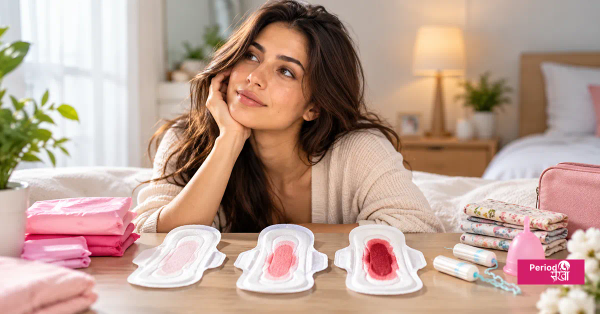
A light period generally means that bleeding is relatively small in amount. You might notice only a little blood on your menstrual product, light bleeding for part of the day or a short period that gradually tapers off.
Light flow can be normal, particularly when it follows a familiar pattern. It can also occur when using hormonal contraception, including some contraceptive pills and hormonal intrauterine systems, because these methods can make the uterine lining thinner.
However, a period that suddenly becomes much lighter than usual deserves attention if the change persists or comes with other symptoms.
“Suppose someone usually has five days of bleeding, but now she only notices spotting for a day or two. Is that automatically a problem?” Sukriti asked.
“Not automatically,” Akriti replied. “But the reason for the change matters.”
Possible explanations include hormonal contraception, stress, substantial weight loss, intense exercise, thyroid problems and pregnancy. If pregnancy is possible, a pregnancy test may be appropriate, especially if the period is late or unusually light.
A light period does not automatically mean that your hormones are unhealthy, nor does it prove that you are fertile or infertile.
Moderate flow is a practical description for bleeding that feels manageable, follows your usual pattern and does not repeatedly overwhelm your menstrual protection or interrupt everyday activities.
You may notice more bleeding during the first couple of days, followed by a gradual reduction. Your period may also contain occasional small clots.
There is no official universal medical threshold that every person must meet to qualify as having a moderate flow. Menstrual products have different absorbencies, and people change them at different intervals, so product use alone cannot measure blood loss accurately.
A useful question is whether your bleeding follows a familiar pattern without causing persistent leaking, frequent urgent changes, significant fatigue or disruption to your routine.
“Does moderate flow mean the same amount every day?” Sukriti asked.
“No,” Akriti replied. “Your flow can naturally rise and fall during the same period. A heavier first day followed by lighter days is a common pattern.”
Heavy menstrual bleeding is more than simply having a period that feels inconvenient. It may involve excessive bleeding, prolonged bleeding or blood loss that affects your physical health and daily life.
The NHS advises seeking medical assessment if you regularly need to change a pad or tampon every one to two hours, use two types of menstrual protection together, bleed for more than seven days, pass clots larger than about 2.5 cm, bleed through clothes or bedding, or feel frequently tired or short of breath.
Other warning signs include needing to change protection repeatedly overnight or avoiding work, exercise, social activities or travel because of bleeding.
“Could someone have heavy periods even if she has always had them?” Sukriti asked.
“Yes,” Akriti replied. “A long-standing pattern does not mean you have to tolerate it without help. Heavy bleeding can be treatable, and it may sometimes cause iron-deficiency anaemia.”
Heavy periods can have several causes, including fibroids, adenomyosis, thyroid problems, conditions affecting ovulation and bleeding disorders. Some medicines can also influence bleeding. A clinician can assess the likely cause rather than assuming that every heavy period is the same.
Sukriti looked thoughtful. “My period is not identical every month. Should I be tracking every small difference?”
Akriti explained that some variation is expected. A slightly different flow or a small change in duration does not automatically indicate illness. What matters is whether the changes become persistent, pronounced or unusual for that person.
Several factors can affect menstrual bleeding:
Hormonal contraception: The pill, implant, injection and hormonal intrauterine system can alter the uterine lining and change the amount or pattern of bleeding. Some people experience lighter periods; others notice irregular spotting, particularly after starting or changing a method.
Stress and major lifestyle changes: Significant stress, substantial weight loss, restrictive eating or excessive exercise can affect the hormonal signals that regulate the menstrual cycle. Periods may become lighter, irregular or stop altogether.
Life stage: Bleeding can be less predictable during the first years after periods begin and during the transition towards menopause. A new or marked change should not automatically be attributed to age, however.
Underlying health conditions: Thyroid disorders, conditions affecting ovulation, uterine fibroids and adenomyosis can alter bleeding patterns. Pregnancy-related bleeding can also be mistaken for a light period.
Medicines and bleeding disorders: Blood-thinning medicines and some other treatments may affect menstrual bleeding. A history of unusually heavy periods, easy bruising or prolonged bleeding after dental work may be worth discussing with a clinician.
“Sometimes my period starts brown and then becomes bright red. Does that mean my flow is changing?” Sukriti asked.
Akriti explained that menstrual blood can range from bright red to dark red or brown. Bright red blood may be seen when bleeding is flowing more actively, while brown blood often reflects blood that has taken longer to leave the body and has darkened with time.
Colour can vary across the same period. Brown blood does not automatically mean poor health, and bright red blood does not automatically mean heavy bleeding.
It is more useful to consider colour alongside the amount of bleeding, its duration and any accompanying symptoms. Seek medical advice if you notice persistent unusual bleeding, bleeding between periods or after sex, or bleeding accompanied by significant pain or other concerning symptoms.
Understanding your flow can help you choose protection that is comfortable and practical. This is not about finding a product that proves your period is normal; it is about managing bleeding safely and noticing when your usual product suddenly becomes inadequate.
For light flow: A liner or light-absorbency menstrual product may be sufficient, depending on your comfort and how much you bleed.
For moderate flow: A pad, tampon, menstrual cup, disc or period underwear may work, depending on your preference and the product instructions.
For heavier flow: You may prefer a higher-absorbency product or a product designed for overnight use. If you repeatedly need to change protection every one to two hours, experience flooding or have frequent leaks despite appropriate use, seek medical advice rather than relying only on a more absorbent product.
Change and empty products according to their instructions and your bleeding. Tampons should not be left in for more than eight hours, and reusable products need appropriate cleaning and handling.
A useful distinction: needing a different product during the first two days of a period can be normal. Needing to double up, changing protection very frequently or repeatedly bleeding through it may signal heavy menstrual bleeding.
Akriti told Sukriti, “You don’t need to panic about every variation. But you shouldn’t have to plan your whole life around bleeding, either.”
Consider arranging a medical appointment if:
Your period becomes noticeably lighter or heavier than your usual pattern and the change persists.
Bleeding lasts longer than seven days or repeatedly requires changing protection every one to two hours.
You pass large clots, bleed through clothes or bedding, or need to combine products to manage the flow.
You feel unusually tired, weak, dizzy or short of breath, which can be signs of anaemia.
You experience severe period pain, bleeding between periods or bleeding after sex.
Your periods stop unexpectedly, or you have a missed period and pregnancy is possible.
Seek urgent medical care if bleeding is extremely heavy and you feel faint, collapse, develop severe weakness or have difficulty breathing. If pregnancy is possible and unusual bleeding occurs with severe abdominal or pelvic pain, seek urgent assessment.
A clinician may ask about your cycle history, medicines, contraception and other symptoms. Depending on the situation, assessment may include blood tests to check for anaemia or other causes, and sometimes an ultrasound or other investigations.
Treatment depends on the cause and your preferences. Options may include medicines to reduce bleeding or hormonal treatments; the appropriate choice should be discussed with a qualified healthcare professional.
No. Lighter bleeding is not automatically healthier, and heavier bleeding is not always a sign of disease. The pattern, symptoms and impact on daily life matter. Persistent heavy bleeding should be assessed because it can cause anaemia or reflect an underlying condition.
The NHS describes menstrual blood loss as roughly 20–90 ml across a period, although individual amounts vary. Measuring this accurately at home is difficult, and menstrual products absorb different amounts. Clinical assessment focuses on symptoms, bleeding patterns and how the bleeding affects your life, rather than relying on an exact home measurement.
Significant stress can affect the hormonal system that regulates menstruation. It may contribute to changes in timing, flow or missed periods, but it is not the only possible cause. Persistent changes should not automatically be blamed on stress.
Brown blood often indicates that blood has taken longer to leave the body and has darkened. This is commonly noticed at the beginning or end of a period. Colour alone cannot establish whether bleeding is normal or abnormal.
One lighter period may reflect ordinary variation, contraception or a temporary change in your routine. If pregnancy is possible, consider taking a pregnancy test. Speak to a clinician if the change continues, your periods stop, or you develop other symptoms.
Yes. Repeated heavy blood loss can reduce the body's iron stores and may lead to iron-deficiency anaemia. Tiredness, weakness and shortness of breath are reasons to seek assessment, particularly when they occur alongside heavy periods.
Sukriti closed her menstrual calendar. “So, the goal isn’t to have a light period or a moderate period. It’s to understand what is normal for me and recognise when something changes.” “Exactly,” Akriti replied. “Your period does not have to look like anyone else’s but if bleeding becomes difficult to manage, changes significantly or affects your health, you deserve an explanation and appropriate care.”
Light, moderate and heavy are useful descriptions, but they are not diagnoses. Tracking the days you bleed, the amount of protection you use, any leaks or clots, and symptoms such as fatigue or pain can help you recognise your usual pattern and give your doctor clearer information when needed.
Menstrual health is not about silently putting up with discomfort. It is about knowing your body, asking questions and getting help when you need it.
NHS. Periods – Period problems. https://www.nhs.uk/conditions/periods/period-problems/
NHS. Heavy periods. https://www.nhs.uk/conditions/heavy-periods/
Cleveland Clinic. How Long Should Your Period Last? https://health.clevelandclinic.org/how-long-should-your-period-last
Cleveland Clinic. Menorrhagia (Heavy Menstrual Bleeding). https://my.clevelandclinic.org/health/diseases/17734-menorrhagia-heavy-menstrual-bleeding
About PeriodSakhi
PeriodSakhi is your trusted companion for understanding your menstrual health. With easy-to-use tools, it helps you track your periods, ovulation, fertility, moods, and symptoms, while providing insights into your overall reproductive and hormonal health. PeriodSakhi also serves as a supportive online community where women can share experiences, find reliable information, and access expert-backed guidance on menstrual health, PCOS, pregnancy, lifestyle, and more.
Disclaimer
The views, thoughts, and opinions expressed in this article/blog are solely those of the author and do not necessarily reflect the views of PeriodSakhi. Any omissions, errors, or inaccuracies are the responsibility of the author. PeriodSakhi assumes no liability or responsibility for any content presented. Always consult a qualified medical professional for specific advice related to menstrual health, fertility, pregnancy, or related conditions.