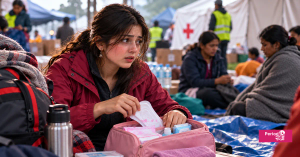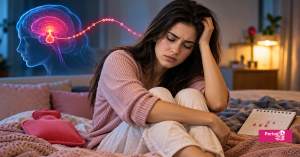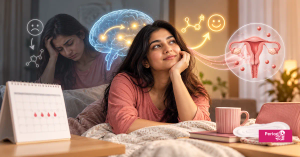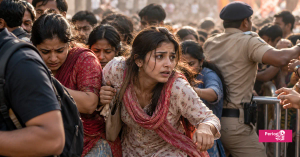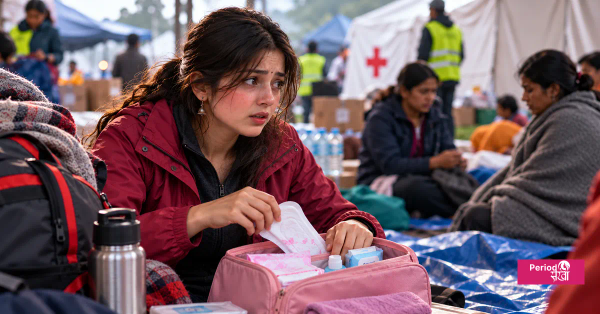

I often think about what a woman must go through when she has to leave her home in a hurry. Imagine being asked to evacuate because floodwater is entering your neighbourhood. You have a few minutes to collect your belongings. You pick up your phone, some clothes and important documents but what happens if your period starts while you are staying in a crowded relief camp?
Where will you find sanitary pads? Will there be a clean toilet? Can you wash your hands? Where will you change your clothes without feeling exposed? These may sound like small questions when we talk about a disaster. For a woman who is menstruating, these can become a major part of daily struggles. While reading reports about the 2018 Kerala floods, I came across accounts of women who had to leave their homes with almost nothing. Some reached relief camps in wet clothes. Sanitary napkins and other personal supplies were not always available, and the safe disposal of used pads became another challenge.
I was struck by one simple fact: a disaster may destroy homes, but it should not take away a woman's dignity. Menstruation is a normal part of life. It does not stop during floods, cyclones, earthquakes or other emergencies. That is why menstrual hygiene must be included in disaster planning, not treated as an afterthought.
In August 2018, severe floods affected large parts of Kerala. Thousands of people were moved to relief camps, where food, shelter, medical care and clean water became urgent needs.However, menstrual hygiene was also a serious issue. Reports from the floods described shortages of sanitary napkins and difficulties with waste disposal at relief camps. Even when pads were donated, disposing of them safely was not always easy. Toilets and waste systems were already under pressure because so many people were using them.The experience showed us that giving out sanitary pads is only one part of the solution. Women also need clean water, soap, underwear, privacy, toilets and a safe way to dispose of used products.
There were also examples of people stepping in to help. During the 2019 Kerala floods, rescuer Renjini helped move people to safety and carried underwear and sanitary pads to a camp housing women and children. Her efforts remind us that small, thoughtful actions can make a real difference during a crisis. These experiences should guide us when we prepare for the next emergency. We cannot prevent every flood or cyclone, but we can plan better for the needs of the people affected.
Menstrual hygiene means being able to manage your period safely, comfortably and with privacy.
Under normal circumstances, a woman may have access to her preferred menstrual product, a clean bathroom, running water and a place to dispose of waste. During an emergency, these basic facilities may not be available.
A woman may have to stay in a crowded school building or relief camp. Water may be limited, toilets may be damaged, and shops may remain closed for days. Girls may feel too embarrassed to ask for pads, while older women or women with disabilities may need additional support.
Here is what should be available in an emergency shelter:
Sanitary pads, clean reusable cloth pads or other suitable menstrual products.
Clean underwear, soap, water and a towel.
Toilets that are safe, usable and accessible.
A private place to change and wash.
Covered bins and a safe waste collection system.
Clear information about where women can obtain supplies without embarrassment.
Women should also be asked what they need. A product that works for one person may not suit another. Relief supplies must respect personal choices, cultural practices and health needs.
If you are preparing for a flood, cyclone or another emergency, a small menstrual hygiene kit can help.
Keep essential supplies ready. Store sanitary pads or your preferred menstrual products in a waterproof bag. Add spare underwear, soap, tissues, a small towel, hand sanitiser and a few disposal bags. Keep medicines you regularly use, if any, with your essential supplies.
Carry clean water when possible. Clean water is important for handwashing and washing reusable menstrual products. If water is unsafe or limited, follow local public health advice and use disposable products if they are suitable and available.
Change products as recommended. Follow the instructions for your menstrual product. Wash your hands before and after changing it. If you use reusable cloth pads, they need to be washed with safe water and dried fully before reuse. If there is no suitable place to wash and dry them, another available product may be more practical.
Dispose of used products safely. Wrap used disposable pads and place them in a designated bin. Do not flush them down toilets or throw them into rivers, drains or floodwater. If waste collection is disrupted, ask relief workers about the safest local method.
Protect your privacy. If you are staying in a relief camp, ask a female volunteer or camp coordinator where you can change safely. You should not have to explain your menstrual needs in front of a crowd.
Seek medical help when needed. Severe pain, unusually heavy bleeding, faintness, fever or other worrying symptoms should not be ignored. Contact a healthcare worker at the camp or seek medical care.
Most importantly, menstruation is not something to be ashamed of. Asking for sanitary products or a private place to change is a normal health need.
Schools and colleges are often used as temporary shelters during emergencies. They may provide classrooms for sleeping, kitchens for meals and open spaces for relief activities. But if they are to shelter people, they must be prepared for women's health needs too.
I believe educational institutions can take five practical steps.
1. Include menstrual kits in emergency supplies. Schools should maintain a basic stock of sanitary pads, underwear, soap, disposal bags and other essential items. Supplies should be checked and replaced regularly.
2. Train teachers and staff. Teachers, wardens and support staff should know how to respond when a student or woman asks for menstrual products. They should be taught to handle these requests privately and without judgement.
3. Teach menstrual health before emergencies happen. Menstrual hygiene should be part of health education. Students need to know how to use products safely, wash their hands and manage periods when regular facilities are unavailable.
4. Make toilets safe and usable. Institutions should have clean toilets, water, lighting, doors that lock and bins for menstrual waste. Where buildings are used as relief centres, these facilities should be checked before people arrive.
5. Involve girls and women in planning. Student groups, female teachers, school nurses and local women's organisations can help identify what is missing. Their views should be included in emergency drills and disaster plans.
Preparation should not begin when floodwater reaches the school gate. It should be part of the institution's regular safety planning.
Disaster management is not the job of one person or organisation. It requires government departments, emergency services, health workers, local communities and voluntary groups to work together.
In India, several bodies have important roles.
National Disaster Management Authority (NDMA): Develops national policies and guidelines for disaster management.
National Disaster Response Force (NDRF): Carries out specialised rescue and response operations during disasters.
National Institute of Disaster Management (NIDM): Supports training, research and capacity-building in disaster management.
State Disaster Management Authorities and district administrations: Prepare local plans, coordinate response efforts and organise relief at state and district levels.
Ministry of Home Affairs: Coordinates central government disaster response and works with relevant national and state agencies.
International organisations also provide useful guidance. The United Nations Population Fund (UNFPA) and WaterAid India developed a framework for menstrual health and hygiene management during emergencies in India. It explains that emergency planning must cover products, water and sanitation, information, waste management, health services and protection.
The Sendai Framework for Disaster Risk Reduction, adopted by United Nations member states in 2015, is another important global framework. It encourages countries to understand disaster risks, strengthen preparedness and build safer communities.
These frameworks provide direction, but their value depends on what happens on the ground. A guideline only helps a woman if the pad, toilet, water or support she needs is actually available.
We often think that disaster management belongs to the government. Government agencies have major responsibilities, but citizens can also help before, during and after an emergency.
Donate what is actually needed. Ask relief organisers what supplies are missing. Sanitary pads, underwear, soap and disposal bags may be more useful than unwanted clothing or products that are unsuitable for the local conditions.
Respect privacy. If a woman asks for menstrual supplies, help without making jokes or asking unnecessary personal questions. A simple, respectful response can make it easier for her to seek help.
Volunteer responsibly. Work with recognised relief groups, local authorities or community organisations. Follow instructions on collection, storage and distribution rather than sending supplies without checking whether they can be used.
Share reliable information. Help people find official emergency updates, shelter locations and verified helplines. Avoid spreading rumours about rescue operations or missing people.
Include women in local planning. Resident welfare associations, community groups and local volunteers should discuss women's needs when preparing emergency kits and evacuation plans. Women should be involved in decisions, not only treated as recipients of aid.
Keep emergency contacts accessible. Save important numbers and help older people, children and neighbours who may need support using them.
A well-prepared community is one where people think about everyone's needs before a crisis begins.
Keep these numbers saved and confirm local services through official government sources, as state-level arrangements can differ.
112 — National emergency response: For urgent police, fire, rescue and other emergency assistance.
1070 — State-level relief commissioner or disaster control: Listed for disaster-related assistance; confirm the active number for your state.
1078 — NDMA helpline listed in the official disaster management directory: Check current availability and local arrangements.
181 — Women Helpline: Provides support and information for women, including connection to emergency services and One Stop Centres.
1098 — Child Helpline: For children who need care, protection or urgent support.
102 — National Ambulance Service: Ambulance assistance, subject to local service availability.
In an immediate threat to life, call 112. If you are in a relief camp, also contact the camp coordinator, local health worker or district control room for help with menstrual supplies and sanitation.
Include your preferred menstrual products, spare underwear, soap, a small towel, disposal bags and hand sanitiser. If possible, add a waterproof pouch and any essential personal medicines. Choose supplies that match your needs and the conditions where you may be staying.
Reusable cloth pads can be used if you have access to safe water, a way to wash them properly and a place to dry them fully. During flooding, these conditions may be difficult to maintain. If you cannot clean and dry a reusable product safely, consider a suitable alternative if one is available.
They should provide suitable menstrual products, clean water, soap, private changing areas, safe toilets and a clear system for disposing of menstrual waste. Women should be consulted about what they need, including the needs of adolescents and people with disabilities.
You can donate through trusted organisations, contribute money to verified relief efforts, share official information and help collect supplies requested by relief coordinators. Avoid sending products that have not been requested or cannot be safely stored and distributed.
Schools may become temporary shelters, and students may also be affected by disrupted transport, water supply or access to shops. Planning ahead helps ensure that menstrual products, safe toilets and trained staff are available when normal routines are interrupted.
When I think about women living through floods, cyclones and other emergencies, I am reminded that survival is only the first part of recovery. People also need safety, privacy, healthcare and the ability to meet their everyday needs with dignity.
India's experience, including the 2018 Kerala floods, has shown that menstrual hygiene problems can become serious when products, clean water, toilets and waste disposal systems are overlooked. It has also shown how much difference trained responders, volunteers and caring citizens can make.
We need disaster plans that include menstrual health from the beginning. Schools must prepare, relief agencies must listen to women, governments must provide essential facilities, and citizens must support those affected without judgement.
At PeriodSakhi, our conversations began with periods, but women's health cannot be separated from the conditions in which women live. During an emergency, access to menstrual products and safe sanitation is not a luxury. It is a basic part of health, safety and dignity.
A disaster may be beyond our control. Making sure women are not forgotten during it is not.
UNFPA India and WaterAid India. Menstrual Health and Hygiene Management During Emergencies: A Framework for Action in India. https://india.unfpa.org/en/publications/menstrual-health-and-hygiene-management-during-emergencies
Government of Kerala, State Disaster Management Authority. Study report on the 2018 Kerala floods and gender-related concerns. https://sdma.kerala.gov.in/wp-content/uploads/2020/08/CSSC-ABC-STUDY-REPORT-ON-KERALA-FLOODS-2018_compressed-1.pdf
Ministry of Home Affairs, Government of India. Emergency Response Support System (112). https://www.mha.gov.in/en/commoncontent/emergency-response-support-system-erss
Ministry of Women and Child Development, Government of India. Women Helpline 181. https://wcd.gov.in/women/help
National Disaster Management Division, Ministry of Home Affairs. Responsibilities and contact information. https://ndmindia.mha.gov.in/ndmi/responsibilities
United Nations Office for Disaster Risk Reduction. Sendai Framework for Disaster Risk Reduction 2015–2030. https://www.undrr.org/implementing-sendai-framework/what-sendai-framework
Dr. Akanksha is a dedicated dental professional and health educator who believes that healthcare goes beyond treatment-it is about creating awareness, building trust, and empowering individuals to make informed decisions about their well-being. Alongside her clinical expertise in dentistry, she is deeply passionate about public health education, with a special focus on menstrual health, hygiene, and women's wellness.
About PeriodSakhi
PeriodSakhi is your trusted companion for understanding your menstrual health. With easy-to-use tools, it helps you track your periods, ovulation, fertility, moods, and symptoms, while providing insights into your overall reproductive and hormonal health. PeriodSakhi also serves as a supportive online community where women can share experiences, find reliable information, and access expert-backed guidance on menstrual health, PCOS, pregnancy, lifestyle, and more.
Disclaimer
The views, thoughts, and opinions expressed in this article/blog are solely those of the author and do not necessarily reflect the views of PeriodSakhi. Any omissions, errors, or inaccuracies are the responsibility of the author. PeriodSakhi assumes no liability or responsibility for any content presented. Always consult a qualified medical professional for specific advice related to menstrual health, fertility, pregnancy, or related conditions.