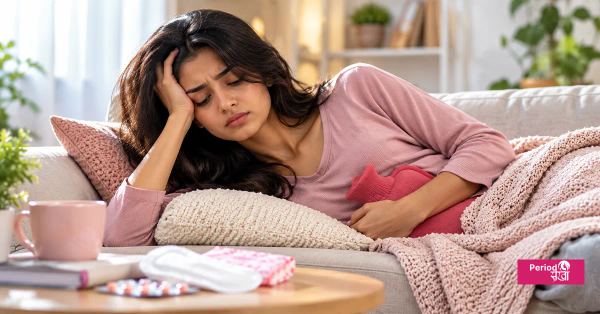

“Why am I so tired? I barely did anything today.”
You wake up after what feels like a full night of sleep. You get ready for work, college or your usual routine, but something feels different. Your body feels heavier. Your eyes feel sleepy. Even simple tasks seem to need more effort. Then you check your period tracker. Your period is here and suddenly you wonder, “Is my period making me this tired?”
Yes, it can.
Feeling more tired around your period is common. Some women notice it a few days before bleeding starts, while others feel it more strongly during the first few days of menstruation. Fatigue can also come along with cramps, headaches, bloating, mood changes or disturbed sleep. Premenstrual syndrome (PMS), for example, commonly includes tiredness and sleep problems.
But there is something important to remember: not every kind of period fatigue should simply be blamed on menstruation. Sometimes, your body may be asking for more rest. Sometimes, heavy periods may be contributing to low iron or anaemia. And sometimes, tiredness that continues throughout the month may have nothing to do with your period at all. So, what exactly is happening?
A menstrual cycle is not just the few days when you bleed.
Throughout the cycle, your hormone levels are changing. These changes are part of the normal process that prepares the body for ovulation and, if pregnancy does not occur, leads to menstruation. As the period approaches, some women become more sensitive to these hormonal changes. This can contribute to symptoms such as tiredness, mood changes, bloating, headaches and breast tenderness. NHS guidance lists tiredness and difficulty sleeping among common symptoms of PMS.
So when you are thinking, “Why do I suddenly have no energy?”, there may be more going on than simply losing menstrual blood. Your body is responding to the changing hormonal environment of the cycle.
Think of your energy like your phone battery.
Normally, you may wake up with enough charge to get through your day. But during certain parts of your menstrual cycle, your body may be dealing with several things at once — hormonal changes, cramps, headaches, bloating, emotional changes and poorer sleep.
Your “battery” can therefore feel lower.
This does not mean that menstruation is making your body weak. It means that the menstrual cycle can affect how you feel physically and emotionally.
For some women, the change is barely noticeable.
For others, it can feel like someone has suddenly pressed the low-energy button.
Imagine trying to work while someone is repeatedly squeezing your lower abdomen.
That is what significant menstrual cramping can feel like.
Pain itself can be exhausting. If you are dealing with cramps for several hours, your body is spending energy coping with discomfort while you are still trying to study, work, travel, exercise or take care of your home.
And if the pain is disturbing your sleep, you may be starting the next day already tired.
This is one reason period fatigue should not always be viewed separately from other menstrual symptoms. Sometimes, the pain is part of why you feel drained.
Have you ever noticed that you are unusually sleepy during your period but still do not feel properly rested?
Sleep and menstruation can influence each other.
Some women experience difficulty sleeping around their period, while others may sleep more than usual. PMS itself can include tiredness and sleep problems.
And there is a simple connection here.
Poor sleep → less energy the next day.
Less energy → everything feels harder.
So if you are already experiencing cramps, mood changes or bloating and then sleep badly, your period may feel much more exhausting than usual.
This is where we need to pay a little more attention.
Menstrual bleeding means that your body is losing blood. For many women, the amount lost during a normal period does not cause a significant problem but heavy menstrual bleeding can contribute to iron deficiency and iron-deficiency anaemia.
Let us make this very simple.
Your red blood cells contain haemoglobin.
Haemoglobin helps carry oxygen around your body.
Iron is needed to make haemoglobin.
So when your body does not have enough iron and develops iron-deficiency anaemia, its ability to carry oxygen to tissues is reduced. This can lead to symptoms such as fatigue, weakness, dizziness and shortness of breath. That is why a woman with heavy periods may sometimes feel much more exhausted than someone whose menstrual bleeding is lighter.
It is not simply:
“I am on my period, so I am tired.”
It could be:
“I am losing a lot of blood every month, and my iron stores may not be keeping up.”
That difference matters.
This is probably the most important question.
If you feel slightly more tired for a few days around your period and then return to your usual energy levels, it may simply be part of how your body experiences the menstrual cycle.
But if you are constantly exhausted, struggling to concentrate, becoming unusually weak or breathless, feeling dizzy, or noticing symptoms even when you are not menstruating, it deserves attention.
Iron-deficiency anaemia can cause fatigue, weakness, dizziness, paleness, noticeable heartbeats and shortness of breath.
Your period may be revealing the problem rather than actually being the entire cause.
Many women grow up hearing:
“Periods are supposed to be painful.”
Or:
“Everyone feels weak during their period.”
Or:
“You just have to tolerate it but menstrual symptoms vary greatly from person to person.
WHO notes that menstrual difficulties such as very heavy bleeding, severe pain or symptoms that disrupt normal activities can sometimes be associated with underlying conditions and deserve appropriate evaluation. So, if you are regularly changing your menstrual product because of very heavy flow, bleeding for unusually long periods, passing large clots, feeling faint or becoming extremely tired, it is worth speaking with a healthcare professional.
Start with the basics.
Eat regularly.
When you are tired, skipping meals can make you feel even worse. Try to include a balanced combination of carbohydrates, protein, vegetables, fruits and healthy fats in your meals.
Pay attention to iron-rich foods.
Foods such as lentils, beans, leafy green vegetables, meat, eggs and iron-fortified foods can contribute to your dietary iron intake. Vitamin C-rich foods can also help the body absorb iron from plant-based foods.
If you think you may have iron deficiency, however, do not automatically start taking high-dose iron supplements. A healthcare professional can decide whether testing or supplementation is appropriate.
Drink enough fluids.
You do not need a special “period detox” drink. Plain water is perfectly useful. Staying hydrated can also be helpful when you are dealing with bloating, headaches or feeling generally unwell.
Give yourself permission to slow down.
You do not have to prove that you are productive every minute of the day.
If your body is asking for an earlier night, a slower workout or a little more rest, listening to it is not laziness.
Not necessarily.
If you feel comfortable, gentle movement such as walking, stretching, yoga or your usual exercise may be perfectly fine.
But you also do not have to force an intense workout when you are exhausted or experiencing significant pain.
Your menstrual cycle does not have to follow a rigid rule of:
“Period = no exercise.”
Nor does it need to become:
“Period = push through everything.”
Your body can tell you what level of activity feels manageable that day.
Period fatigue is not always about your muscles feeling tired.
Sometimes your brain feels tired. You may find it harder to concentrate. You may feel less motivated. Small tasks may feel irritating. You may want to stay quiet rather than attend another meeting or social event. Hormonal changes throughout the menstrual cycle can be associated with mood changes, and PMS can include irritability, anxiety, low mood and tiredness. This does not mean that every emotional change is caused by your hormones. Stress, work pressure, relationships, poor sleep and many other things affect mood too but if you repeatedly notice the same pattern before or during your period, tracking your symptoms for a few cycles can help you understand your own pattern.
Instead of simply writing:
“Period started.”
Try noticing:
Day 1 — heavy flow, cramps, very tired.
Day 2 — moderate flow, headache, low energy.
Day 3 — better energy.
Day 4 — normal routine.
After a few cycles, you may start seeing a pattern.
This can also be useful when speaking with a doctor, especially if your symptoms are affecting work, studies, exercise or your relationships. NHS guidance also recommends keeping a symptom diary for at least two menstrual cycles when evaluating PMS symptoms.
Please do not simply accept severe or persistent fatigue as “just my period”.
Consider speaking with a healthcare professional if:
your fatigue is severe or keeps returning;
you feel exhausted even outside your period;
your periods are very heavy or unusually long;
you frequently feel dizzy or faint;
you become breathless with ordinary activities;
you notice unusual paleness or a racing/noticeable heartbeat;
your pain is severe;
your menstrual symptoms are interfering with work, studies or everyday life.
A doctor may consider your menstrual history and symptoms and, when appropriate, blood tests to look for problems such as anaemia or other causes of persistent tiredness.
Having a few low-energy days around your period can be part of your individual menstrual experience.
But feeling completely drained every month should not automatically be normalised.
Your period is giving you information about your body.
Sometimes that information is simply:
“I need a little more rest today.”
And sometimes it is:
“Something needs to be checked.”
Learning the difference is an important part of menstrual health.
So the next time you find yourself lying on the bed thinking, “Why am I so tired when I have barely done anything?”, pause before blaming yourself.
You are not necessarily being lazy.
Your body may simply be moving through another phase of its cycle.
And if that tiredness feels unusually strong, keeps returning or is affecting your everyday life, you deserve more than someone telling you to “just deal with it.”
You deserve to understand what your body is trying to tell you.
World Health Organization (WHO). Menstrual health. 2026. (World Health Organization)
World Health Organization (WHO). Anaemia. (World Health Organization)
NHS. Premenstrual syndrome (PMS). (nhs.uk)
NHS. Tiredness and fatigue. (nhs.uk)
World Health Organization (WHO). Daily iron supplementation for improving iron status and health among menstruating women. (World Health Organization)
About PeriodSakhi
PeriodSakhi is your trusted companion for understanding your menstrual health. With easy-to-use tools, it helps you track your periods, ovulation, fertility, moods, and symptoms, while providing insights into your overall reproductive and hormonal health. PeriodSakhi also serves as a supportive online community where women can share experiences, find reliable information, and access expert-backed guidance on menstrual health, PCOS, pregnancy, lifestyle, and more.
Disclaimer
The views, thoughts, and opinions expressed in this article/blog are solely those of the author and do not necessarily reflect the views of PeriodSakhi. Any omissions, errors, or inaccuracies are the responsibility of the author. PeriodSakhi assumes no liability or responsibility for any content presented. Always consult a qualified medical professional for specific advice related to menstrual health, fertility, pregnancy, or related conditions.