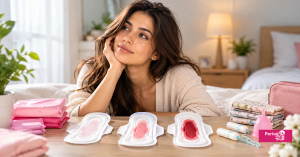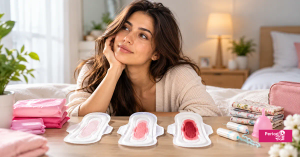

“Am I using the wrong pad?”
A few months ago, my friend Akriti told me something that sounded familiar.
She had bought a packet of sanitary pads before leaving for work. The packet said regular, so she assumed it would be enough for the day. But by lunchtime, she was worried about leakage. She had to check her clothes many times during the office hours and even kept thinking about what if she needed to change her pad.
That evening, she asked me, “How do I know which pad size I actually need? Does a larger pad mean it can hold more blood? And are tampons really better for heavy periods?” I realised how many of us have similar questions but rarely discuss them openly. We may have used period products for years and still feel unsure about what the labels mean. The truth is that choosing a period product is not just about selecting a size. It is about understanding your flow, finding something comfortable and knowing when to change it.
Before choosing a pad, tampon or menstrual cup, pay attention to how your period usually behaves.
Your flow may be light on the first day, become heavier over the next two days and then gradually decrease. For someone else, the heaviest day may be the first day. Both patterns can be normal.
You may notice that you need to change your product more often when you are travelling, exercising or spending long hours away from home. That does not necessarily mean your flow has changed; it may simply mean you need a product that suits your routine. A simple way to understand your flow is to notice how often your product becomes full, whether you experience leaks and how many days your period lasts. There is no need to measure every drop of blood. A basic understanding of your usual pattern is enough to help you make a better choice.
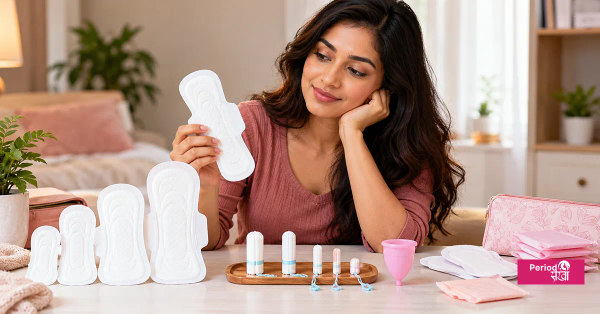
Sanitary pads come in different lengths, shapes and absorbencies. Words such as regular, large, XL and XXL are not standardised across every brand, so the labels alone do not tell you exactly how much blood a pad can absorb. Also, do not forget to look at the product's intended use and absorbency information, and consider how it fits your body.
Regular pads may work well on light or moderate flow days. They can be useful when you are going to college, working from home or spending a few hours outside. If your pad becomes full quickly or blood reaches the edges, you may need a higher absorbency or a different shape.
Longer pads provide more coverage from front to back. They can be helpful if you experience leaks while sitting for long periods or notice that blood reaches the ends of your regular pad. However, a longer pad is not automatically more absorbent. Length and absorbency are related but different features, so check the packaging.
Overnight pads are generally designed to offer extra coverage while you sleep. Some have wider backs to help reduce leaks when you lie down or change position. You can use an overnight pad during the day if it suits your flow and feels comfortable. The name does not mean it can only be used at night.
Wings fold around the sides of your underwear to help hold the pad in place. They may be useful if your pad moves around or blood tends to leak from the sides. The right pad should stay in place without rubbing, pinching or causing discomfort.
An useful rule: Choose a pad that manages your flow without becoming saturated too quickly. If you regularly leak despite changing it appropriately, try a different absorbency or fit.
Tampons absorb menstrual blood inside the vagina. They come in different absorbencies, commonly described as light, regular, super and higher absorbencies, depending on the brand.
The best choice is the lowest absorbency that adequately manages your flow.
If your flow is light, a light-absorbency tampon may be enough. If you have heavier bleeding, a higher absorbency may be suitable, provided you follow the product instructions.
A tampon should not cause ongoing pain when inserted or removed. If it feels uncomfortable, do not force it. You may need to try a different size, adjust the insertion technique or use another period product.
Tampons should generally be changed every four to eight hours and never left in for more than eight hours. Wash your hands before and after inserting or removing one.
Tampons are safe for many people when used correctly, but there is a rare risk of toxic shock syndrome (TSS), a serious illness associated with certain bacterial toxins. Follow the instructions carefully and seek urgent medical attention if you develop sudden fever, vomiting, diarrhoea, a rash, dizziness or faintness while using a tampon. You do not have to use tampons simply because other people prefer them. Pads, period underwear and menstrual cups are also options.
Menstrual cups and discs collect blood rather than absorb it. A menstrual cup is a flexible product inserted into the vagina, where it collects menstrual blood. A menstrual disc sits higher in the vagina, near the cervix. Both come in different designs and sizes. The right fit can depend on your anatomy, comfort, the product design and your experience using internal period products. Age or whether you have given birth does not determine the correct size on its own.
Cups and discs can be convenient for some people because they can hold menstrual fluid for several hours. However, the safe wearing time depends on the product, and the manufacturer's instructions should always be followed. Many cups can be worn for up to 8–12 hours, but they may need emptying sooner on heavy-flow days. Wash your hands before insertion and removal. Clean reusable products as directed, and sterilise cups between cycles if the manufacturer recommends it. If insertion or removal is painful, stop and seek advice if the discomfort continues. A cup or disc may take practice to use comfortably. It is perfectly fine if you decide it is not for you.
Period underwear has absorbent layers designed to collect menstrual blood. It may be used alone on light or moderate days, depending on its absorbency, or alongside another product for extra protection. Some women find it useful overnight, while travelling or as backup on heavier days.
Choose underwear according to its stated absorbency and change it when it becomes wet, saturated or uncomfortable. Follow the washing instructions carefully before wearing it again. Period underwear can be more expensive at first because you may need several pairs, but reusable pairs can reduce the number of disposable products you use over time.
There is no single product that works best for everyone. Your choice can change from one day to another.
Your situation | Products you could consider |
|---|---|
Light flow or spotting | Light-absorbency pad, liner or suitable period underwear |
Moderate flow | Regular pad, tampon or a suitable cup or disc |
Heavy-flow days | Higher-absorbency pad or tampon, or a cup or disc that suits your needs |
Leakage while sleeping | Overnight pad or suitable period underwear |
Long travel days | A product with adequate capacity, plus spare products and underwear |
Sensitive skin or irritation | Unscented products and breathable underwear; seek medical advice if irritation continues |
These are starting points, not strict rules. A product's absorbency, your comfort and how often you can change it matter more than its label.
Changing a product at the right time helps reduce leakage, discomfort and irritation.
Pads: Change every few hours, or sooner if the pad becomes wet, full or uncomfortable. Follow the packaging instructions.
Tampons: Change every four to eight hours, and never leave one in for longer than eight hours.
Menstrual cups: Empty according to the product instructions, often within 8–12 hours, and sooner if needed.
Period underwear: Change when it becomes saturated, wet or uncomfortable, following the manufacturer's guidance.
There is no need to wait until a product is completely full before changing it. If you are uncomfortable or worried about leakage, it is reasonable to change it earlier.
If you regularly soak through a pad or tampon every hour for several consecutive hours, need to double up to prevent frequent leaks, or experience dizziness or weakness with heavy bleeding, seek medical advice promptly.
Choosing a product only by its size label. A brand's XL may not have the same absorbency or shape as another brand's XL. Check the packaging.
Using a higher absorbency than you need. With tampons, use the lowest absorbency that manages your flow. A higher absorbency is not automatically better.
Keeping a product in for too long. Change it according to its instructions and your flow.
Ignoring irritation. Fragrances and certain materials can irritate some people. Try an unscented alternative if you notice irritation. Persistent itching, burning, unusual discharge or pain should be assessed by a healthcare professional.
Assuming you must use one product for your entire period. You can use pads on heavy days, period underwear at night and another product when travelling. Your routine is allowed to change.
If blood regularly reaches the edges or ends of the pad, or it becomes saturated quickly, try a different absorbency or shape. If you continue to experience frequent leaks despite changing it appropriately, discuss your bleeding pattern with a healthcare professional.
Yes. You can choose a longer pad if you find it more comfortable or want extra coverage. Make sure it fits well and does not rub against your skin.
Many teenagers can use tampons safely if they feel comfortable doing so and follow the instructions. A tampon does not need to be used just because someone is active or swimming. Pads and period underwear are also suitable options.
It can be safe if the tampon is inserted shortly before sleep and removed within eight hours. If you may sleep longer, a pad or period underwear may be a more suitable option.
The right product depends on your preferences and how much bleeding you experience. A higher-absorbency pad or tampon, or a suitable cup or disc, may help manage flow. However, very heavy bleeding should not simply be managed by switching to a larger product. Seek medical advice if you regularly soak through products quickly or your bleeding affects daily life.
Not necessarily. Some people use the same size throughout their period, while others prefer different products for lighter and heavier days. Choose what works for your flow and comfort.
Choosing a period product should not feel like a guessing game. Once you understand your flow, the differences between length and absorbency, and the instructions for each product, it becomes easier to find what suits you. You may prefer pads because they are simple to use. You may like tampons for swimming, cups for their reusability or period underwear for overnight protection. You can also use different products on different days.
There is no prize for using the smallest pad, the most expensive cup or the product your friends prefer. What matters is that you feel comfortable, stay hygienic and can get on with your day without unnecessary worry. At PeriodSakhi, we believe menstrual health information should be practical and free from shame. Understanding your options helps you make choices that suit your body, your routine and your needs. Your period is personal. Your period product should be, too.
NHS. Periods and the menstrual cycle. https://www.nhs.uk/conditions/periods/
American College of Obstetricians and Gynecologists (ACOG). Your First Period. https://www.acog.org/womens-health/faqs/your-first-period
U.S. Food and Drug Administration (FDA). The Facts on Tampons—and How to Use Them Safely. https://www.fda.gov/consumers/consumer-updates/facts-tampons-and-how-use-them-safely
NHS. Toxic shock syndrome. https://www.nhs.uk/conditions/toxic-shock-syndrome/
Cleveland Clinic. Menstrual Cups: How to Use Them and Benefits. https://my.clevelandclinic.org/health/articles/14624-menstrual-cup
Dr. Akanksha is a dedicated dental professional and health educator who believes that healthcare goes beyond treatment-it is about creating awareness, building trust, and empowering individuals to make informed decisions about their well-being. Alongside her clinical expertise in dentistry, she is deeply passionate about public health education, with a special focus on menstrual health, hygiene, and women's wellness.
About PeriodSakhi
PeriodSakhi is your trusted companion for understanding your menstrual health. With easy-to-use tools, it helps you track your periods, ovulation, fertility, moods, and symptoms, while providing insights into your overall reproductive and hormonal health. PeriodSakhi also serves as a supportive online community where women can share experiences, find reliable information, and access expert-backed guidance on menstrual health, PCOS, pregnancy, lifestyle, and more.
Disclaimer
The views, thoughts, and opinions expressed in this article/blog are solely those of the author and do not necessarily reflect the views of PeriodSakhi. Any omissions, errors, or inaccuracies are the responsibility of the author. PeriodSakhi assumes no liability or responsibility for any content presented. Always consult a qualified medical professional for specific advice related to menstrual health, fertility, pregnancy, or related conditions.