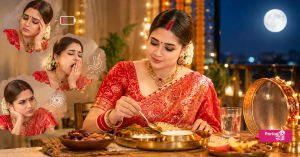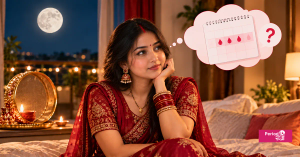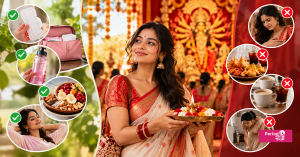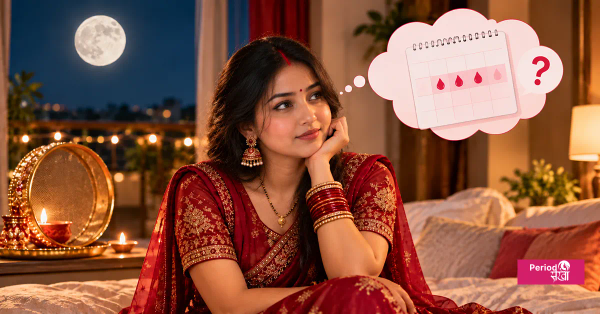

Picture Riya, a newly wedded bride who has been looking forward to Karva Chauth for weeks. She wakes up early for sargi, finishes her meal before sunrise and begins her fast. By afternoon, she has a headache and feels unusually weak. Her period is also expected in the next day or two. She wonders whether her menstrual cycle has anything to do with how she feels.
Karwa Chauth is an important festival for all married women. From sunrise to moonrise, the wives keep a fast for the safety of their husbands. Keeping a fast without drinking water and eating any food throughout the day is not easy, but the doting wives perform all these rituals with much love and respect for their husbands.
If we talk about the literal meaning of Karwa Chauth, it means offering ‘Argya’ to the moon using an earthen pot known as Karwa on the Chaturthi of the Karthika month. The festival falls on the fourth day of the dark fortnight in the Kartika month every year. Though the origin of this festival is still very hazy, there are some anecdotes associated with it. Listed below are some of the popular Karwa Chauth stories which show the reason behind this celebration:
Karva Chauth Story of Queen Veervati: Once upon a time there was a beautiful queen named Veervati who was the only sister among seven loving and caring brothers. On her first Karwa Chauth, she was at her parent’s place and began a strict fast after sunrise. In the evening, she was waiting eagerly for the moonrise as she was suffering from hunger and thirst. Seeing her suffering like this, pained her brothers. So, they installed a mirror in a Peepal tree that made it look as if the Moon is up in the sky. Now, the moment Veervati broke her fast, the news that her husband was dead arrived. She kept on weeping and was inconsolable. She instantly started home and met Goddess Parvati on her way. Maa Parvati revealed that she was tricked by her brothers. Then, she kept Karwa Chauth fast with full devotion and seeing her dedication, Yama, the lord of death restored life to her husband. This Karva Chauth Katha of Queen Veervati is quite popular and usually heard by women observing the fast.
Given the aforementioned Karva Chauth Katha, you would now be well-versed with the fact why the festival holds utmost importance in the Hindu culture. The prominence of this festival can be widely observed in the North and North Western regions of our country. A massive chunk of the male population of these regions were the soldiers of the Indian Army and officials of the Military Forces and for the safety of these people, women of these regions started fasting. These armed forces, policemen, soldiers, and military personnel protected the country from enemies and the women used to pray to God for the longevity of their men. The time of this festival coincides with the initiation of the Rabi cropping season which is the wheat sowing season in these aforementioned areas. The women of the families fill the earthen pot or Karwa with wheat grains and offer them to God praying for a great Rabi season.
In ancient India, women of 10-13 years of age were married. Hardly they could enjoy their childhood or early teenage in such a marriage. Communication was also a big obstacle in those days. So, they couldn't come to their parent's homes easily and it was also not considered good. So, from an early age, a woman had to take full responsibility for a new household. From cooking to cleaning, she was the in-charge. But, she was all alone away from her loved ones in an unknown house and without any friends too. Where would she go while feeling alone or missing home? So, to resolve this problem, the women started celebrating Karwa Chauth in a grand way where married women of the whole village and some nearby villages used to congregate in one place and spend the day in joy and laughter. They befriended each other and called each other God-friends or God-sisters. One can say that this festival started as a means of enjoyment and to forget the fact that they are alone at their in-laws' place.
Your menstrual cycle is controlled by hormones, mainly oestrogen and progesterone. These hormones change throughout the month and help prepare the body for a possible pregnancy.
The cycle is usually divided into four stages: menstruation, the follicular phase, ovulation and the luteal phase. A 28-day cycle is often used as a guide, but a healthy cycle can be shorter or longer.
Your energy, appetite, mood and physical comfort may change between these stages. However, these changes are not the same for everyone, and your body does not follow an exact calendar every month.
Understanding which phase you are in can help you prepare for the day. It cannot predict exactly how you will feel, but it can help you recognise patterns and make sensible choices.
The menstrual phase begins on the first day of bleeding. During this time, the lining of the uterus sheds, causing menstrual bleeding. The body also produces prostaglandins, substances that help the uterus contract and release its lining.
Higher prostaglandin activity can contribute to cramps, nausea, loose stools and discomfort. Some women also experience fatigue, headaches or lower back pain.
Now imagine observing a fast on a day when your cramps have already started. Going without water may increase the risk of dehydration, while not eating for many hours may add to weakness, dizziness or headaches. If your periods are heavy, you may already be at risk of iron deficiency, particularly if your iron intake is low.
What can help?
Eat a balanced meal before the fast begins, including whole grains, protein and fruit.
Drink enough water during the hours when drinking is permitted.
Choose iron-rich foods such as lentils, beans, leafy green vegetables and meat, if you eat it. Pair plant-based iron sources with vitamin C-rich foods to improve iron absorption.
Rest if you experience cramps or fatigue, and avoid strenuous exercise when you feel unwell.
Remember, these steps cannot remove all the effects of fasting. If you have heavy bleeding, severe cramps, a history of fainting or significant weakness, a strict fast without food or water may not be safe for you.
The days before menstruation are part of the luteal phase. After ovulation, progesterone rises and later falls if pregnancy does not occur. Changes in progesterone and oestrogen are associated with premenstrual symptoms in some women.
You may notice bloating, breast tenderness, mood changes, food cravings, tiredness or headaches. These symptoms are often grouped under premenstrual syndrome (PMS).
If Karva Chauth falls during this phase, you might find yourself feeling hungrier than usual or less comfortable going without food. Hormonal changes can affect appetite, while long fasting hours may make hunger and fatigue more noticeable.
How to prepare
Have a filling sargi meal with a mix of carbohydrates, protein, healthy fats and fibre. Oats, whole-wheat roti, eggs, curd, paneer, nuts or dal can help make the meal more balanced. Choose foods that you usually digest comfortably rather than trying unfamiliar dishes on the day.
Limit very salty foods if they worsen your bloating, and avoid relying on sweets alone for energy. Foods high in added sugar may provide quick energy but are not a substitute for a balanced meal.
If you regularly experience severe premenstrual symptoms that affect your daily life, speak to a healthcare professional. Severe symptoms should not simply be accepted as a normal part of being a woman.
Ovulation is when an ovary releases an egg. In a typical 28-day cycle, it often occurs around the middle of the cycle, but the timing varies considerably.
Oestrogen rises before ovulation, and some women notice changes in energy, appetite or sexual desire around this time. Others notice very little. A few experience mild pain on one side of the lower abdomen, known as ovulation pain.
There is no strong scientific evidence that fasting during ovulation is automatically more harmful or that women need a special diet for this phase. Your hydration, general health, usual eating pattern and any underlying medical conditions matter more than the phase alone.
If you are feeling well, you may notice no major difference. If you are prone to headaches, dizziness or dehydration, however, fasting without water can still be difficult.
The practical approach is simple: eat a balanced sargi, hydrate adequately beforehand and pay attention to how your body responds. Do not assume that being in the middle of your cycle means you can safely ignore symptoms.
sargi is a pre-dawn meal that married women receive from their mothers-in-law before starting their Karwa Chauth fast. This meal is eaten before sunrise and marks the beginning of the fasting day. The idea is simple yet meaningful; it gives women the energy to sustain themselves throughout the long fast, which lasts until they see the moon at night. Traditionally, sargi is more than just food. It’s a symbol of love, blessings, and the beautiful bond between a mother-in-law and daughter-in-law. When we talk about sargi meaning, it’s not just about what’s on the plate but the emotions and care behind it. Sargi is an important part of Karva Chauth for many women. Since it may be your last meal before a long period without food or water, what you eat can make a difference to your comfort and energy levels. The aim is not to eat as much as possible. It is to choose foods that provide lasting energy, protein and essential nutrients.
Try to include:
Complex carbohydrates: Whole-wheat roti, oats or other whole grains provide energy.
Protein: Eggs, paneer, curd, dal or nuts help make the meal more filling.
Fruits: Bananas, apples or other fruits provide carbohydrates, fibre and useful vitamins.
Healthy fats: A small portion of nuts or seeds adds energy and helps with satiety.
Water: Drink enough water before the fast begins, spreading your intake over the permitted hours rather than drinking a large amount all at once.
Avoid making sargi a meal full of sweets, fried snacks or very salty foods. They may leave you feeling uncomfortable or thirsty.
If you are fasting without water, remember that drinking extra water beforehand cannot fully prevent dehydration throughout the day. If your fast permits water, continue drinking regularly.
After a long day without food or water, it can be tempting to eat a large meal immediately. However, starting slowly may be easier on your stomach.
Begin by drinking water if your fast has ended, then have a modest, balanced meal. You could choose dal, roti, vegetables, curd or another meal that suits your usual diet. Eat slowly and give yourself time to recognise when you are comfortably full.
If you have been feeling bloated before your period, avoid rushing through a very large meal. Eating too quickly can increase discomfort, while a balanced meal helps you replenish energy and nutrients.
There is no special food that instantly restores every nutrient lost during a fast. Regular, balanced meals and adequate hydration afterwards are more useful than trying to compensate with one very large meal.
A single day of fasting does not automatically cause menstrual irregularities. However, prolonged or repeated restrictive fasting, inadequate calorie intake, significant weight loss and physical stress can affect the hormonal system that regulates ovulation and menstruation.
The brain communicates with the ovaries through a network of hormones. When the body consistently receives too little energy, this signalling can be disrupted. In some women, this may lead to irregular periods or missed periods.
It is important not to confuse a possible risk with a guaranteed outcome. There is limited direct research on a single Karva Chauth fast and its effects on the menstrual cycle. Much of what we know about hormonal effects comes from research on prolonged energy restriction and other forms of fasting.
If your period becomes repeatedly irregular or stops for three months, consult a healthcare professional. Do not assume that fasting is the only possible cause; stress, pregnancy, thyroid problems and other health conditions may also affect your cycle.
Karva Chauth and your menstrual cycle do not have to be in conflict. Understanding your cycle can help you prepare for the day, choose nourishing foods and recognise when your body needs extra care.
If your period is approaching, plan for possible cramps, cravings or fatigue. If you are menstruating, pay attention to bleeding, pain and your energy levels. If you are around ovulation, remember that there is no scientifically established rule that makes fasting automatically safer or more dangerous during that phase.
Most importantly, do not compare your experience with another woman’s. One woman may feel comfortable throughout the day, while another may struggle with a headache or weakness. Both experiences are valid.
A festival is meant to hold meaning, love and connection. Caring for your health is part of that meaning, too. You can honour the traditions that matter to you while making informed decisions about your body. Listen to what it tells you, seek medical advice when needed and remember that looking after yourself is never something to feel guilty about.
Medical note: This article is for general education and is not a substitute for individual medical advice.
About PeriodSakhi
PeriodSakhi is your trusted companion for understanding your menstrual health. With easy-to-use tools, it helps you track your periods, ovulation, fertility, moods, and symptoms, while providing insights into your overall reproductive and hormonal health. PeriodSakhi also serves as a supportive online community where women can share experiences, find reliable information, and access expert-backed guidance on menstrual health, PCOS, pregnancy, lifestyle, and more.
Disclaimer
The views, thoughts, and opinions expressed in this article/blog are solely those of the author and do not necessarily reflect the views of PeriodSakhi. Any omissions, errors, or inaccuracies are the responsibility of the author. PeriodSakhi assumes no liability or responsibility for any content presented. Always consult a qualified medical professional for specific advice related to menstrual health, fertility, pregnancy, or related conditions.