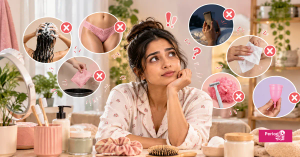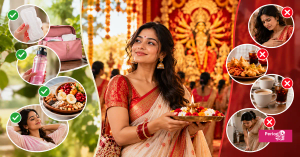

You have picked your outfit, charged your phone, planned your pandal-hopping route and decided where you are going for dinner. Everything is sorted and then your period arrives. Of course, it does. Because sometimes your menstrual cycle seems to have its own plans, completely different from yours!
Now you are wondering whether your cramps will ruin the evening, whether your pad will last through three pandals, whether you should wear white, and whether there will be a clean toilet anywhere nearby. Suddenly, a fun evening feels like a small logistical challenge.
If this sounds familiar, take a breath. Getting your period during Durga Puja does not mean you have to give up on your plans. You may need a little preparation, a few smart choices and a backup plan for those unexpected moments. So, before you head out to see the lights, admire the idols and enjoy the festive food, let us talk about some simple dos and don’ts that can make your Puja days a lot more comfortable.
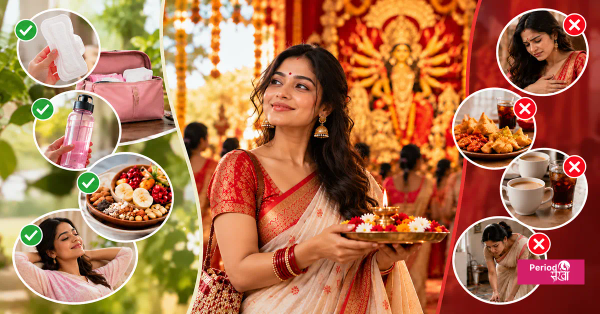
You do not need to carry your entire bathroom in your handbag. A small pouch with a few essentials is enough for most outings. Keep your preferred menstrual products, a spare pair of underwear, some tissues and a small disposal bag. If you usually experience leaks, an extra pad or another product you are comfortable using can save you from unnecessary stress.
You could also carry a small packet of unscented wipes for situations where water is not easily available. However, wipes are not a replacement for handwashing, and scented products should not be used around the vaginal area.
If you take medication for period pain, plan ahead rather than waiting until the cramps become unbearable. Use medicines only if they are suitable for you, follow the instructions and avoid taking someone else's prescription medicine. The idea is simple: pack what you normally need, plus one or two extras. You will probably not use everything, but you will feel better knowing it is there.
When you are enjoying Puja, it is easy to lose track of time. You may visit one pandal, stop for photographs, meet a friend and then walk to another location. Before you know it, several hours have passed.
But your period does not follow your sightseeing schedule.
Change your menstrual product regularly, according to your flow and the product instructions. If your flow is heavy, you may need to change it more often. Do not wait until the pad feels uncomfortable or starts leaking.
Tampons should generally be changed every four to eight hours and never worn for more than eight hours at a time. Menstrual cups also need to be emptied and cleaned according to the manufacturer's instructions and your flow.
Before leaving home, think about where you might find a toilet along your route. Shopping centres, restaurants and other public facilities may offer options, although availability and cleanliness can vary.
A little planning can make a big difference when you are standing in a long queue and your nearest toilet suddenly feels miles away.
Durga Puja outfits are a big part of the fun. Sarees, kurtas, dresses, jeans, festive tops there is plenty to choose from. If you are worried about leaks, you might feel more comfortable wearing a darker bottom, carrying a spare layer or choosing an outfit that allows you to move easily. Period underwear may also offer additional reassurance if you already use it and know it works well for your flow but here is the important part: you do not have to avoid your favourite outfit just because you are menstruating.
White clothes are not medically off-limits during periods. Neither are fitted clothes or traditional outfits. Choose what makes you feel good, and make practical adjustments only if they help you feel more confident. Also, remember that standing and walking for hours in an uncomfortable outfit can make an already tiring day feel worse. If your saree is difficult to manage or your footwear starts hurting after the first pandal, you may enjoy the evening less. Wear what you love, but make sure you can comfortably spend a few hours in it.
You have waited all year for the festivities, so it is tempting to push through the pain. You may tell yourself that you will rest after visiting just one more pandal.
But if your cramps are getting worse, you do not have to prove anything by continuing to walk.
Period pain happens when the uterus contracts during menstruation. For some women, it feels like mild discomfort. For others, it can spread to the lower back and thighs and make ordinary activities difficult.
A warm shower or a heat pack used safely before leaving home may help. Gentle movement, such as walking at a comfortable pace, can also ease discomfort for some people. If you usually take a suitable pain-relief medicine, follow the instructions and check with a healthcare professional if you are unsure whether it is appropriate for you.
During pandal hopping, take short breaks. Sit down when you can, drink water and avoid planning an exhausting route if you are already feeling unwell and please do not dismiss severe pain as something every woman must simply tolerate. If your period pain is unusually severe, keeps getting worse or stops you from carrying out your normal activities, seek medical advice.
A long Puja evening can easily turn into a series of snacks, photographs and promises to eat a proper meal later but if you are already feeling tired, skipping meals may leave you feeling even worse.
Try to eat a balanced meal before leaving home. Something with carbohydrates, protein and other nutrients can help you feel satisfied for longer. Carry a snack if you expect to be out for several hours, especially if you tend to feel weak when you go too long without eating.
Foods containing iron, such as lentils, beans, leafy green vegetables and meat, where eaten, can be part of a balanced diet. Pairing plant sources of iron with vitamin C-rich foods can help the body absorb iron.
This matters particularly if your periods are heavy, because repeated blood loss can contribute to iron deficiency. You do not need a special period diet to enjoy Durga Puja. Just try not to run on an empty stomach all evening.
Between the crowds, the walking and the excitement, drinking enough water may be the last thing on your mind. Carry a water bottle if possible and take regular sips throughout the day. If you are out in warm weather or walking for long periods, paying attention to fluids becomes especially important.
You do not need to force yourself to drink excessive amounts of water, and drinking water is not a guaranteed cure for period cramps. However, staying hydrated supports your general well-being and may help you feel better if you have been sweating or have not had enough fluids.
If you feel light-headed, weak or unusually dizzy, stop and sit somewhere safe. Drink water if you can, and seek help if the symptoms persist, are severe or occur alongside heavy bleeding. A festive evening is much more enjoyable when you are not feeling faint halfway through it.
When you are on your period and spending the day outside, it is natural to worry about feeling fresh. But you do not need a collection of special products to keep yourself clean. Wash the external genital area gently with water. The vagina cleans itself naturally, so there is no need to wash inside it or use vaginal cleansing products. Perfumed sprays, deodorants and scented products around the vulva can cause irritation for some people.
Wash your hands before and after changing your menstrual product. If you cannot find soap and water immediately, hand sanitiser may be useful as a temporary option when your hands are not visibly dirty, but wash them properly when facilities are available. If you use reusable products, follow their cleaning instructions. Do not reuse a disposable pad or tampon, and do not flush menstrual products down the toilet.
If you use a public toilet, look for a clean, private space where you can change comfortably. If the facilities are not suitable, consider whether you can use another nearby toilet rather than rushing through the process. Good menstrual hygiene is about staying comfortable and reducing irritation. It should not become another reason to feel anxious about your period.
Imagine trying a menstrual cup for the first time when you are already dressed for Puja, your friends are waiting downstairs and your cab has arrived that is a lot of pressure for one evening. If you want to try a new menstrual product, it is usually more comfortable to practise using it at home first. You can understand how it fits, how to change it and how to clean it without the added stress of a crowded public toilet.
The same applies to tampons, period underwear or any other product you have never used before. Read the instructions and make sure you understand how to use it safely. There is no single best menstrual product for everyone. Some women prefer pads, others use tampons or menstrual cups, and some choose period underwear. Your flow, comfort, access to clean facilities and personal preference all matter. You do not need to change your routine just because it is a festival. If your usual product works well for you, stick with it.
Let us be honest: a period leak can happen even when you have done everything right. It may happen because your flow is heavier than expected, your product shifts or you simply need to change it. It does not mean you have been careless. If you notice a stain, try not to panic. If possible, find a washroom or a private place to check and change. A spare pair of underwear or an extra layer of clothing can help you feel more comfortable.
If blood gets on your clothes, rinsing the stain with cold water as soon as practical can help. Avoid starting with hot water, which can make blood stains harder to remove and if a friend tells you that you have a stain, remember that a good friend is helping you out, not judging you. You would probably do the same for her. A leak may be inconvenient, but it does not have to end your evening. Take care of it, regroup and decide whether you want to continue with your plans.
Your friends may want to visit six pandals in one evening. Your family may have planned a long outing. Someone may insist that the next place is just a short walk away but you are allowed to have a different energy level. Menstruation affects people differently. Some women feel completely fine, while others experience fatigue, cramps, headaches or heavier bleeding. You might feel energetic in the morning and exhausted by evening.
If you need a break, take one. If you want to return home earlier, that is fine too. You can always choose a shorter route or meet your friends for dinner instead of joining the entire pandal-hopping plan. Enjoying Durga Puja is not a competition. You do not need to visit every pandal or stay out until midnight to make the festival worthwhile. Your body is not being difficult by asking for rest. It is giving you information about what it needs.
Most periods can be managed with ordinary self-care and suitable menstrual products. However, some symptoms should not be ignored simply because you are busy with the festivities.
Speak with a healthcare professional if you regularly need to change your pad or tampon every one to two hours because of heavy bleeding, your periods last longer than seven days, you frequently feel exhausted or breathless, or period pain is interfering with everyday life.
Seek urgent medical attention if you experience severe or unusual pain, fainting or significant dizziness, particularly alongside heavy bleeding. If you are taking medication for an existing condition, continue to follow your prescribed treatment and seek professional advice before changing it. The point is not to worry about every little symptom. It is to recognise when something is different from your usual period and deserves attention.
Before stepping out, ask yourself a few simple questions:
Have I packed enough menstrual products for the time I will be outside?
Do I have tissues, a disposal bag and spare underwear if I need them?
Have I eaten something and carried water?
Do I know where I can find a toilet along my route?
Am I wearing something comfortable enough for walking and standing?
If cramps or fatigue start, do I have a way to take a break or head home?
You do not need to prepare for every possible emergency. Just having the basics covered can help you feel more relaxed.
Periods and Durga Puja can happen at the same time. One does not have to cancel the other.
You can wear your favourite outfit, enjoy bhog, visit pandals, meet friends and celebrate in the way that feels right for you. You may need to carry a few extra essentials, plan toilet breaks or slow down when cramps appear, but these are practical adjustments and not reasons to miss out and if you decide to spend a quiet evening at home because you are tired or uncomfortable, that is perfectly fine too.
The aim is not to force yourself to celebrate in a particular way. It is to make sure your period does not become an unnecessary source of stress, embarrassment or fear. So, pack your little period pouch, drink some water, wear those earrings you have been saving for Ashtami and enjoy the festivities at your own pace. A little planning can help you manage your period. It should never make you feel that you have to put your life on hold because of it.
About PeriodSakhi
PeriodSakhi is your trusted companion for understanding your menstrual health. With easy-to-use tools, it helps you track your periods, ovulation, fertility, moods, and symptoms, while providing insights into your overall reproductive and hormonal health. PeriodSakhi also serves as a supportive online community where women can share experiences, find reliable information, and access expert-backed guidance on menstrual health, PCOS, pregnancy, lifestyle, and more.
Disclaimer
The views, thoughts, and opinions expressed in this article/blog are solely those of the author and do not necessarily reflect the views of PeriodSakhi. Any omissions, errors, or inaccuracies are the responsibility of the author. PeriodSakhi assumes no liability or responsibility for any content presented. Always consult a qualified medical professional for specific advice related to menstrual health, fertility, pregnancy, or related conditions.