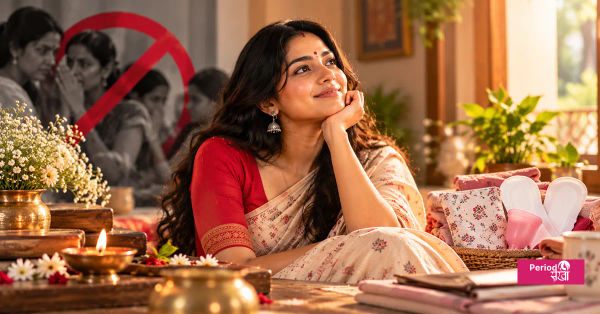

Imagine this. It is Mahalaya, the Puja countdown has begun, and you are already thinking about your Ashtami outfit. You have made plans with friends, saved a list of pandals to visit and promised yourself that this year, you will not miss the dhaak, the lights or the bhog.
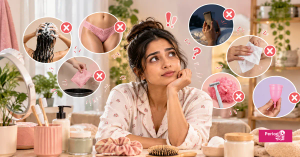
Then your period arrives. Your first thought might be about cramps or whether you have enough sanitary pads but perhaps another question crosses your mind: Am I even supposed to participate in Puja while menstruating? Maybe someone in your family has always said no. Maybe you have heard that women should stay away from religious rituals during their periods. Or perhaps you have never questioned the rule because it has simply been part of your household for as long as you can remember.
This is where an ordinary period can become a much bigger conversation. Durga Puja is a celebration of devotion, community, culture and, for many people, feminine strength. Menstruation, meanwhile, remains surrounded by questions that women do not always feel comfortable asking aloud. So, can you celebrate Durga Puja on your period? What does medical science say? And how can we discuss traditions without dismissing the beliefs that matter to our families?
From a medical perspective, menstruation does not make you unclean, contagious or physically unfit to participate in everyday activities. There is no medical requirement to avoid pandal hopping, meeting friends, walking, dancing or enjoying a festival simply because you are menstruating.
The World Health Organization (WHO) recognises that people who menstruate should have access to accurate information, appropriate care and the freedom to participate in different aspects of life without menstrual stigma. It also acknowledges that menstrual experiences differ: some people feel perfectly comfortable, while others experience pain, fatigue or symptoms that affect their daily routine.
Medical advice and religious customs are not the same thing. Rules about temple entry or participation in particular rituals vary across traditions, families and religious institutions. Science can explain menstruation and its effects on the body, but it cannot decide what a religious practice means to every believer.
Understanding that difference allows us to have a more balanced conversation. We can respect the fact that traditions are meaningful to some families while also ensuring that girls and women receive accurate information about their bodies.
Let's begin with the biology, because many period-related myths become easier to understand when we know what is happening inside the body.
Each menstrual cycle involves changes in reproductive hormones. The lining of the uterus thickens in preparation for a possible pregnancy. When pregnancy does not occur, that lining sheds and leaves the body through the vagina as menstrual bleeding.
This is a normal physiological process. Menstrual blood contains blood and tissue from the uterine lining. It is not a toxin, and menstruation is not the body getting rid of something dirty.
A doctor looking at menstruation from a medical perspective focuses on questions such as whether your bleeding is within your usual pattern, whether you are experiencing pain, whether you have symptoms of anaemia and whether you need treatment.
They do not diagnose a woman as medically impure because she has her period.
That distinction matters. If a girl grows up believing that menstruation makes her dirty, she may feel embarrassed about asking for a pad, changing her clothes or telling someone that she is in pain. Accurate health education helps replace that embarrassment with understanding.
The WHO also emphasises that menstrual health includes physical, psychological and social well-being. In other words, the way society treats menstruating people matters, too.
You might wonder why menstrual restrictions still exist when sanitary products, health information and conversations about women's health are more widely available than before. One reason is that beliefs are often passed from one generation to the next. A grandmother may have followed a particular custom, taught it to her daughter, and watched her daughter pass it on again. Over time, the original reason for a practice may become unclear, but the practice itself continues. In some households, menstruation is discussed only in whispers. Girls may be told what they cannot do without being told why. Others may receive practical instructions about using pads but very little explanation of how their menstrual cycle works.
UNICEF India has documented how limited information, social stigma and restrictions can affect girls' experiences of menstruation. Its community-based stories also show how menstrual health education and conversations between family members can help challenge misconceptions. Of course, not every tradition has the same origin, and not every family understands it in the same way. Some people observe restrictions because they see them as part of religious discipline. Others question them or choose different practices. The problem is not that families discuss tradition. The problem arises when a custom is presented as proof that a menstruating woman is dirty, dangerous or less worthy of respect. A conversation that begins with curiosity is far more helpful than one that begins with shame.
Yes, and this is perhaps the most important distinction in the entire discussion.A family may have a specific practice around menstruation and religious rituals. For some people, following that practice is a meaningful expression of faith. Others may interpret their religious traditions differently and feel comfortable participating in rituals while menstruating.
These experiences can coexist. From a medical standpoint, menstruation does not make a woman incapable of praying, visiting a public place or taking part in ordinary social activities. There is no scientific evidence that menstrual blood makes flowers wilt, that a menstruating woman contaminates food simply by touching it, or that her presence poses a special medical risk to people around her.
However, whether a person participates in a particular ritual is a religious and personal question, and customs vary. It is more accurate to acknowledge that variation than to claim that every family or religious institution follows one rule.You can ask questions about a tradition without mocking the people who follow it. Equally, you can respect a family's beliefs without accepting inaccurate medical claims about your body that is where a more informed conversation can begin.
Instead of relying on rumours or frightening explanations, it helps to look at what recognised health organisations actually emphasise.
1. The World Health Organization: Menstrual health is about dignity, not just hygiene.
WHO explains that menstrual health involves access to information, suitable menstrual products, sanitation facilities and appropriate healthcare. It also highlights the importance of allowing people to participate in everyday life without being stigmatised because they menstruate.
This is a broader view than simply telling someone to use a clean pad. It recognises that a person's emotional well-being and social experiences are also part of menstrual health.
2. UNICEF: Accurate information can help challenge harmful myths.
UNICEF's work in India has highlighted how menstrual health education can help girls understand their bodies, speak more confidently about periods and question misconceptions. It also shows why families, teachers and community members need to be part of the conversation.
When girls receive accurate information, they are better equipped to recognise what is normal, maintain menstrual hygiene and seek medical help when needed.
3. Healthcare professionals: Pain and heavy bleeding should not be dismissed.
Menstruation is a normal biological process, but that does not mean every menstrual symptom should be ignored.The NHS advises people to seek medical help when period pain is severe or affects daily life. Heavy bleeding that requires changing a pad or tampon every one to two hours is also a reason to consult a healthcare professional.
These recommendations are especially relevant during Puja, when women may feel pressure to keep up with family plans despite discomfort. The message from health experts is not that every woman must celebrate in a particular way. It is that she deserves accurate information, suitable care and the freedom to make informed decisions about her health.
From a medical perspective, yes. Menstruation itself does not prevent you from doing these things.
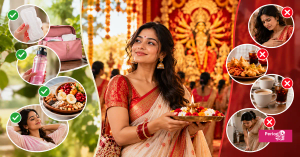
If you feel comfortable, you can walk around, admire the decorations, meet your friends, enjoy cultural performances and eat your favourite festive food. There is no medical reason to avoid ordinary food or flowers simply because you are on your period.
Religious participation may involve customs that differ between families and communities. You can decide how to approach those customs according to your beliefs, circumstances and comfort and if you are dealing with cramps or fatigue, you do not have to force yourself to complete an exhausting pandal-hopping route.
Take breaks, drink water, eat regularly and use a suitable period product. The important point is that the choice to rest should come from how you feel, not from the belief that your body is somehow unsuitable for the celebrations.
Let's move away from the debate for a moment and talk about the practical side. You may be completely comfortable during your period, or you may experience cramps, bloating, headaches, mood changes or tiredness. Both experiences are valid. If you plan to spend hours outside during Durga Puja, carry enough menstrual products for your expected time away from home. Keep spare underwear or a disposal bag if these help you feel prepared. Change your product according to your flow and the manufacturer's instructions, and wash your hands before and after changing it whenever possible.
Try to eat regular meals and drink water throughout the day. If warmth helps your cramps, a heat pack used safely before leaving home may provide relief. Gentle movement can also help some people manage period discomfort. Most importantly, do not ignore severe pain or unusually heavy bleeding just because it is Puja. If your symptoms are interfering with daily activities or are different from your usual experience, seek medical advice. Menstrual health is not about pretending that periods never cause discomfort. It is about understanding the body and responding to its needs without adding unnecessary shame.
This can be the most difficult part of the conversation.
You may understand the medical facts but still live in a family where menstrual restrictions are followed. You may not want to hurt your parents or elders, start an argument during the festival or feel forced to choose between your beliefs and your family's expectations.
You do not have to resolve every disagreement in one conversation. Start by asking what a particular tradition means to your family. Explain what you have learnt about menstruation and, if appropriate, share information from a trusted health organisation.
You might say, “I understand that this tradition is important to you. I have also learnt that menstruation is a normal biological process and does not make someone medically unclean. Can we talk about the difference between our customs and what medical science says?”
The other person may not change their mind immediately. That does not mean the conversation has failed. If you are a parent or an elder in the family, the same principle applies in reverse. A young girl may be curious, confused or worried about her first period. She needs an explanation she can understand, not a warning that makes her afraid of her body.
You can explain that your family follows a particular custom while also reassuring her that menstruation is normal and nothing to be ashamed of. Respectful conversations do not require everyone to have identical beliefs. They require people to listen, share accurate information and treat one another with dignity.
The word reclaiming can sound as though the only way forward is to reject everything that came before us. But change does not always have to work that way. Traditions are understood and practised differently across generations. Families can preserve the parts of a festival that matter to them while also reconsidering practices that cause unnecessary fear or exclusion.
For example, a family might begin by speaking more openly about menstruation, ensuring that girls have access to menstrual products, or making sure no one is teased for having a period during Puja. A school or community group might use the festival as an opportunity to share accurate information about menstrual health. Parents can encourage boys as well as girls to learn about periods, so that buying sanitary pads or talking about menstruation becomes an ordinary part of life rather than a source of embarrassment.
UNICEF's work in India has highlighted the value of involving family members and communities in menstrual health awareness. These conversations can gradually change how people understand and respond to periods. The goal is not to tell every family what it must believe. It is to ensure that girls and women are not made to feel ashamed of a normal bodily function, and that health-related decisions are guided by reliable information.
Instead of asking only, “Can a woman celebrate Puja while menstruating?”, perhaps we can also ask:
Does she have access to a clean toilet? Can she find menstrual products when she needs them? Can she tell her family that she is in pain without being dismissed? Can she ask questions about her body without feeling embarrassed? These questions bring the discussion closer to what menstrual health actually involves.
A woman may choose to participate in religious rituals, follow her family's customs, visit pandals or stay home and rest. Her experience of menstruation, her health and her personal beliefs will shape that decision. What she should not have to carry is the unnecessary belief that her period makes her dirty or less deserving of respect. Durga Puja is a time when families and communities come together. It can also be a time to make conversations about women's health a little more open, thoughtful and compassionate.
So, can you celebrate Durga Puja on your period?
From a medical perspective, menstruation alone is not a reason to avoid the festival or ordinary daily activities. Religious customs differ, and each person may approach them according to their own beliefs and circumstances.What matters is that decisions are made with accurate information rather than fear. Periods are a normal biological process, although symptoms such as severe pain or heavy bleeding deserve proper medical attention.
We do not have to turn every conversation about tradition into an argument but we can ask questions, challenge misinformation and make sure that the next generation grows up understanding its body without shame. This Durga Puja, let us celebrate with devotion, joy and a little more understanding. Let us make room for conversations that respect faith while recognising the importance of menstrual health because a period is not a personal failure, a sign of poor hygiene or something a woman should have to apologise for. It is part of life.
About PeriodSakhi
PeriodSakhi is your trusted companion for understanding your menstrual health. With easy-to-use tools, it helps you track your periods, ovulation, fertility, moods, and symptoms, while providing insights into your overall reproductive and hormonal health. PeriodSakhi also serves as a supportive online community where women can share experiences, find reliable information, and access expert-backed guidance on menstrual health, PCOS, pregnancy, lifestyle, and more.
Disclaimer
The views, thoughts, and opinions expressed in this article/blog are solely those of the author and do not necessarily reflect the views of PeriodSakhi. Any omissions, errors, or inaccuracies are the responsibility of the author. PeriodSakhi assumes no liability or responsibility for any content presented. Always consult a qualified medical professional for specific advice related to menstrual health, fertility, pregnancy, or related conditions.