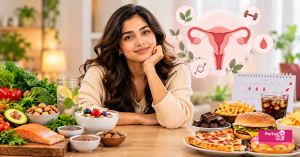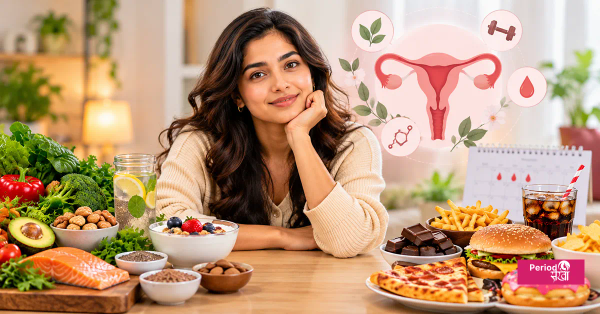

Yes, but the relationship is more complicated than many online posts suggest.
Your menstrual cycle is regulated by communication between the brain, the ovaries and reproductive hormones such as oestrogen and progesterone. Nutrition supports the body's overall functioning, including the processes involved in reproduction.
For example, eating too little for your body's needs, losing weight rapidly or exercising excessively without enough food can disrupt the hormonal signals involved in menstruation. In some cases, periods may become irregular or stop altogether.
On the other hand, eating a balanced diet helps provide the energy, protein, fats, vitamins and minerals your body needs but here is the important distinction: a healthy diet supports normal body functions; it does not guarantee a perfectly regular menstrual cycle. Conditions such as polycystic ovary syndrome (PCOS), thyroid disorders, pregnancy and other health issues can also affect periods.
A 2023 review published in Frontiers in Nutrition examined dietary approaches to premenstrual syndrome (PMS). The authors found that nutrition may help with symptom management, but the quality and consistency of the evidence were limited. More research is needed before specific diets or supplements can be recommended as reliable treatments for PMS. In other words, eating well is a sensible starting point, but food should not be treated as a replacement for medical assessment when something is wrong.
This is one of the most popular claims on social media.
You may have seen posts recommending seed cycling, hormone-balancing smoothies or a particular combination of nuts and seeds for every phase of your menstrual cycle.
Seeds, nuts and other nutritious foods can certainly be part of a healthy diet. They provide nutrients such as fibre, healthy fats, protein and minerals. But the claim that a particular food combination can reliably balance reproductive hormones or correct a hormonal disorder is not established by strong clinical evidence.
Hormones do not work like a simple switch that can be turned on or off by eating one ingredient.
For example, irregular periods associated with PCOS may require a personalised approach involving nutrition, physical activity and, depending on the symptoms and goals, medical treatment. Eating a particular seed mixture alone has not been established as a treatment for PCOS.
So, should you stop eating seeds or nuts? Absolutely not. Enjoy them for their nutritional value. Just be careful about expecting them to do something they have not been proven to do.
If you find yourself craving chocolate before your period, you are certainly not alone.
Some women notice stronger cravings for sweet or savoury foods during the days before menstruation. Changes in appetite can occur as part of premenstrual symptoms, and research suggests that energy intake may increase during the premenstrual phase for some people.
A 2025 systematic review and meta-analysis found higher average energy intake during the luteal phasE, the period between ovulation and the start of menstruation as compared with the follicular phase. However, the researchers also highlighted limitations in the available studies. This does not mean everyone will experience the same change.
What about chocolate?
You do not need to ban it during your period. A few pieces of chocolate can fit into a balanced diet. If eating it brings you pleasure, there is no reason to feel guilty about it. Dark chocolate contains some minerals, including magnesium, but that does not mean eating chocolate will reliably relieve cramps or correct a deficiency. The amount of a nutrient you obtain depends on the product and portion. If you find yourself reaching for sweets frequently, try having regular meals and snacks that include protein, fibre and other nutrients. This may help you feel satisfied, although it will not necessarily eliminate cravings. Your period is not a reason to feel guilty about food.
Have you ever been told not to drink cold water, eat ice cream or have food straight from the refrigerator because it might worsen period pain?
This is a common belief, but there is no good scientific evidence that ordinary cold foods or drinks make menstrual blood clot inside the uterus or directly cause period cramps. Period pain is commonly associated with prostaglandins, chemical messengers that help the uterus contract during menstruation. Stronger contractions can contribute to cramps. The temperature of a drink does not determine whether your menstrual flow is healthy. If warm water or a hot drink feels soothing, enjoy it. If you prefer chilled water, that is fine too. There is no need to force yourself to drink something warm simply because you are menstruating. What matters is staying hydrated and choosing foods and drinks that suit your preferences and overall health.
Jaggery and dates are often recommended during periods because they are believed to replenish the blood lost during menstruation. There is a useful idea behind this advice: menstruation involves blood loss, and iron is needed to make haemoglobin, the protein in red blood cells that carries oxygen around the body.However, the amount of iron in foods matters.Dates provide several nutrients, but they are not an especially concentrated source of iron. Jaggery can contain some iron, depending on how it is made and processed, but its iron content is variable. Neither should be relied upon as a treatment for iron deficiency or anaemia.
If you want to improve your iron intake, include foods such as lentils, beans, chickpeas, leafy green vegetables, iron-fortified cereals and meat or seafood, where eaten. Pairing plant sources of iron with vitamin C-rich foods, such as citrus fruits, guava, tomatoes or capsicum, can help your body absorb non-haem iron. Women with heavy menstrual bleeding have a higher risk of iron deficiency. If you frequently feel exhausted, weak, dizzy or breathless, speak with a healthcare professional. You may need blood tests and, if a deficiency is confirmed, appropriate treatment. Food is important, but treating anaemia may require more than changing your diet.
There is no special menstrual diet that everyone needs to follow. A practical approach is to eat a variety of foods that provide enough energy and the nutrients your body needs.
Iron deserves attention, particularly if your periods are heavy or you follow a diet that contains few iron-rich foods.
Include lentils, chickpeas, beans, leafy green vegetables and iron-fortified foods regularly. If you eat eggs, meat or seafood, these may also contribute nutrients to your diet.
Remember that feeling tired during your period does not automatically mean you have low iron. However, persistent fatigue, breathlessness or weakness, especially with heavy bleeding, deserves medical attention.
Protein supports muscles and other body tissues. It is not a special hormone-balancing nutrient, but getting enough protein is part of maintaining a balanced diet.
Everyday options include dal, curd, milk, paneer, tofu, beans, eggs, fish and chicken. You can combine different sources according to your preferences.
There is no need to buy expensive protein powders specifically for menstrual health if you can meet your needs through ordinary food. Supplements may be useful in some circumstances, but they are not essential for everyone.
Calcium is important for bone health and many other body functions. Some research also suggests that calcium may help reduce certain premenstrual symptoms. The American College of Obstetricians and Gynecologists (ACOG) discusses calcium-rich foods as one dietary measure that may help with PMS. Options include milk, yoghurt, calcium-fortified alternatives and some leafy green vegetables. However, the evidence for dietary interventions varies, and taking a supplement is not automatically better than obtaining nutrients through food. If you are considering high-dose calcium or other supplements, discuss it with a healthcare professional first.
Fruits, vegetables, whole grains and pulses provide fibre, vitamins, minerals and other beneficial compounds. You do not need to buy imported berries or expensive wellness products to eat well. Bananas, oranges, guavas, seasonal fruits, vegetables, oats, whole-wheat roti, rice and dal can all contribute to a balanced diet. The goal is variety over time, not perfection at every meal.
Possibly, but it is important to be realistic about what the evidence shows. Some studies have found associations between dietary habits and menstrual pain. For example, a 2019 systematic review reported that fruit and vegetable intake, along with certain other food groups, was associated with less menstrual pain in some observational studies. However, the findings were not consistent enough to prove that particular foods directly prevent cramps.
A more recent systematic review of nutritional practices for menstrual symptoms also found promising results for some interventions, including certain nutrients, but highlighted inconsistencies across studies and the need for better research.
So, should you eat more fruit and vegetables? Yes, as part of a balanced diet. Should you expect them to stop severe period pain completely? No. For cramps, other approaches may help, including heat applied safely, gentle exercise and suitable pain-relief medicines. If pain is severe, worsening or interfering with daily life, consult a healthcare professional rather than relying on dietary changes alone.
You do not have to eliminate sugar, salt or caffeine simply because you menstruate. But your own symptoms may help you decide whether changing your intake is worthwhile.
Some people notice that salty foods make them feel more bloated. Others find that too much caffeine affects their sleep, anxiety or headaches. Sugary foods may fit into the diet perfectly well, but relying heavily on them instead of balanced meals can make it harder to meet your nutritional needs.
ACOG suggests that some people with PMS may benefit from reducing salt, sugar and caffeine, although individual responses differ. Rather than creating a long list of forbidden foods, pay attention to patterns. If you regularly feel more uncomfortable after a particular food or drink, try adjusting the amount and observe whether it makes a difference. There is no need to feel guilty because you ate a packet of crisps or had a cup of coffee during your period.
This is a particularly important point, especially if you are trying to lose weight.
Eating less than your body needs, losing weight rapidly or exercising intensely without adequate nutrition can interfere with the hormonal signals that regulate ovulation and menstruation. In some cases, periods may become irregular or stop.
That does not mean every weight-loss plan affects menstruation. The concern is inadequate energy intake, especially when combined with excessive exercise or rapid weight loss.
If you are trying to lose weight, avoid crash diets and unnecessary food restrictions. Aim for a sustainable approach that provides enough energy, protein, fats, vitamins and minerals.
If your periods become irregular or stop after a major change in your diet, weight or exercise routine, speak with a healthcare professional. Do not assume that missing periods are simply a normal part of dieting. Menstrual changes can be an important sign that your body needs attention.
Supplements are widely marketed for PMS, period pain, PCOS and hormonal balance. Some contain calcium, magnesium, vitamin D, vitamin B6 or herbal ingredients. There is research into some of these nutrients, but the evidence differs by supplement, dose, health condition and symptom. A promising finding in a small study does not automatically mean a supplement is an established treatment.
Taking more is not necessarily better, either. Some vitamins and minerals can cause side effects at high doses or interact with medicines. Herbal products can also have side effects and may not be suitable for everyone. If you suspect a nutritional deficiency, a healthcare professional can help determine whether testing or supplementation is appropriate. If you have irregular periods or symptoms of PCOS, treatment should be guided by your individual needs rather than an online hormone-balancing plan. A supplement can be useful when there is a clear reason to take it. It should not be treated as a shortcut to fixing every menstrual problem.
Diet can support your general health, but it cannot explain every change in your menstrual cycle.
Seek medical advice if your periods become persistently irregular, stop unexpectedly, become unusually heavy, or cause severe pain that interferes with daily life. It is also worth discussing ongoing fatigue, dizziness or breathlessness, particularly if you have heavy bleeding.
If you have PCOS, thyroid problems or another diagnosed condition, your nutritional needs may be different. A doctor or registered dietitian can help you choose an approach that complements your treatment. Keeping a simple record of your periods, symptoms and eating habits may help you notice patterns. It can also give your healthcare professional useful information when discussing your concerns.
Your diet matters. It helps provide the nutrients your body needs, supports general health and may help some people manage premenstrual symptoms. Adequate nutrition is particularly important when periods are heavy or when restrictive eating threatens to disrupt the menstrual cycle but there is no single food that can balance all your hormones, guarantee painless periods or correct every irregular cycle. You can enjoy chocolate, drink cold water and eat your regular home-cooked meals. You do not need a complicated diet, expensive supplements or a strict list of period foods to take care of yourself. Start with the basics: eat enough, choose a variety of foods, include iron-rich sources, stay hydrated and pay attention to how you feel. Good menstrual health is not about eating perfectly. It is about giving your body what it needs, understanding its signals and knowing when to ask for help.
About PeriodSakhi
PeriodSakhi is your trusted companion for understanding your menstrual health. With easy-to-use tools, it helps you track your periods, ovulation, fertility, moods, and symptoms, while providing insights into your overall reproductive and hormonal health. PeriodSakhi also serves as a supportive online community where women can share experiences, find reliable information, and access expert-backed guidance on menstrual health, PCOS, pregnancy, lifestyle, and more.
Disclaimer
The views, thoughts, and opinions expressed in this article/blog are solely those of the author and do not necessarily reflect the views of PeriodSakhi. Any omissions, errors, or inaccuracies are the responsibility of the author. PeriodSakhi assumes no liability or responsibility for any content presented. Always consult a qualified medical professional for specific advice related to menstrual health, fertility, pregnancy, or related conditions.