
Bhai ko ye ek baat zaroor sikhao!
What if this Bhai Dooj, instead of asking your brother for another gift, you teach him something that could make life a little easier for you and millions of other girls? Yes, we are talking about periods!
Think this: You are experiencing painful cramps, and your brother casually asks why you are lying on the sofa all day. Or perhaps you ask him to pick up a packet of sanitary pads from the pharmacy, and he returns looking more embarrassed than someone who has just appeared for an unexpected viva!
Sounds familiar?
Menstruation is a natural part of reproductive health, yet conversations around periods can still feel uncomfortable in many Indian households. Girls are often taught about menstrual hygiene, sanitary products and period pain, but boys may grow up knowing very little about the subject and that is exactly why we need to change the conversation.
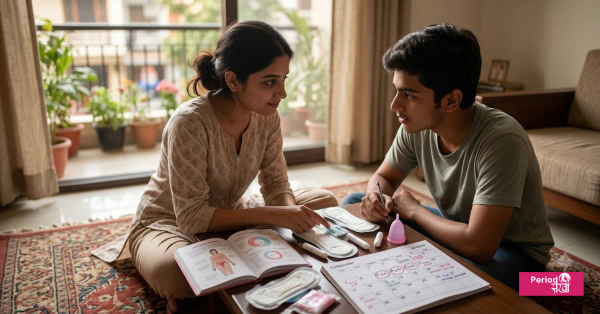
Knowing how to talk to your brother about periods is not just about explaining a biological process. It is about teaching empathy, equality, respect and basic human values. After all, a brother does not need to experience menstruation to understand what his sister goes through. This Bhai Dooj, let's make the sibling bond a little more meaningful by discussing five things every brother should know about periods.
The first lesson is simple: menstruation is not dirty, shameful or embarrassing.
But before explaining this, let's understand what actually happens during a menstrual cycle.
The menstrual cycle is controlled by hormones, primarily oestrogen and progesterone. During each cycle, the lining of the uterus (womb) becomes thicker in preparation for a possible pregnancy. Usually, an ovary releases an egg during ovulation. When pregnancy does not occur, hormone levels change, and the uterine lining sheds. This blood and tissue leave the body through the vagina, resulting in menstrual bleeding.
A menstrual cycle averages around 28 days, although cycles between 21 and 35 days are common in adults. Menstrual bleeding generally lasts between two and seven days.
Now, how can you explain this to your brother?
You can simply tell him that periods are as natural as any other biological process. There is no reason to whisper about them, hide sanitary pads or feel uncomfortable discussing menstrual health.
For instance, if your sister asks you to buy sanitary pads, it should be as ordinary as purchasing toothpaste, soap or medicines.
A little moral science: Never make someone feel ashamed of something they cannot and should not have to hide. Respect begins when we stop treating natural bodily functions as secrets.
Have you ever heard someone say, "It's just periods. Why are you making such a fuss?"
Well, this is precisely the kind of statement brothers need to avoid.
Period pain, medically known as dysmenorrhoea, is a genuine physical experience. It happens because the uterus contracts to shed its lining. These contractions are influenced by substances called prostaglandins. Higher prostaglandin levels can cause stronger contractions and more painful cramps.
Some people experience mild abdominal discomfort, while others may have pain extending to the lower back and thighs. Headaches, nausea, fatigue and digestive changes can also occur.
Hormonal fluctuations may influence mood, sleep and energy levels. Some people also experience premenstrual syndrome (PMS), which can include bloating, breast tenderness, irritability, food cravings and emotional changes.
However, every woman's experience is different. Not everyone experiences the same symptoms or intensity of pain.
So, how can a brother help?
Offer a hot-water bag or heating pad to ease cramps.
Help with household chores if your sister is uncomfortable.
Ask whether she needs anything from the pharmacy.
Avoid making jokes about her mood or physical discomfort.
Give her space when she needs rest.
And one more important thing: severe period pain should never be dismissed as something every woman must tolerate. Conditions such as endometriosis, adenomyosis and fibroids can cause significant menstrual pain. Medical consultation is important when pain becomes severe, persistent or interferes with everyday activities.
A little moral science: Empathy means acknowledging someone else's discomfort even when you have never experienced it yourself.
When discussing how to talk to your brother about periods, menstrual hygiene deserves special attention.
Your brother may not need to know every detail about menstrual products, but understanding the basics can help him become more supportive.
Here are some common menstrual products he should know about:
Sanitary pads: These absorb menstrual blood externally and are available in different sizes and absorbencies.
Tampons: These absorb menstrual blood internally and should be changed according to product instructions, generally every four to eight hours.
Menstrual cups: These collect menstrual blood and can be reused after appropriate cleaning and care.
Period underwear: Specially designed underwear that absorbs menstrual flow.
Reusable cloth pads: Washable menstrual products that need proper cleaning and complete drying before reuse.
Choosing a menstrual product is a personal decision. Comfort, affordability, accessibility and individual preferences all matter.
Good menstrual hygiene also involves changing products regularly according to their instructions and menstrual flow, washing hands before and after changing products, and gently cleaning the external genital area with water.
Used disposable products should be wrapped and disposed of in an appropriate waste bin rather than flushed down the toilet.
And yes, brothers can participate in this too!
There is nothing unusual about buying sanitary pads, keeping an emergency packet at home or helping someone access menstrual products.
A little moral science: Healthcare is not a gender-specific responsibility. Understanding basic hygiene and respecting someone's needs are essential life skills.
Let's address one of the most common menstrual myths: girls become irrational, overly emotional or incapable of making decisions during their periods.
This is not scientifically correct.
Hormonal changes during the menstrual cycle can influence mood, sleep, energy and physical comfort. However, this does not mean that every woman becomes irritable or loses her ability to think clearly.
Similarly, menstruation does not automatically prevent someone from studying, working, exercising, travelling or participating in everyday activities.
Some women may prefer to rest because of cramps or fatigue, while others continue their usual routines without difficulty.
Imagine your sister sharing an opinion during a family discussion, and someone responds, "You must be on your period!"
That statement does not just make light of menstruation; it also dismisses her thoughts and feelings.
A woman's opinion deserves to be heard regardless of whether she is menstruating.
Brothers should also understand that there is no universal restriction against physical activity during periods. Walking, gentle stretching and yoga may help some people manage discomfort.
A little moral science: Equality means treating people fairly without allowing biological differences to become an excuse for discrimination.
This is perhaps the most important lesson of all.
Menstrual stigma often develops through small everyday behaviours. A boy may feel embarrassed to buy sanitary pads, make jokes about period stains or refuse to discuss menstruation because he has never been taught otherwise.
But these attitudes can change.
Here are a few simple things every brother can practise:
Don't make period jokes at someone's expense. Humour should never become a reason to embarrass someone about their body.
Don't treat sanitary products as secret objects. A packet of pads is a healthcare product, not something that needs to be hidden.
Respect your sister's privacy. Never announce that she is menstruating or share details about her menstrual cycle without her permission.
Share household responsibilities. Your sister should not be expected to manage every household task when she is experiencing discomfort.
Speak up against misinformation. If someone makes an insensitive comment or repeats a menstrual myth, explain why it is incorrect.
Be supportive without being controlling. Offer help, listen and respect her decisions rather than assuming she cannot manage things herself.
And remember, these lessons should not end with your sister. The same understanding should extend to female friends, colleagues, classmates and other women.
A little moral science: Respect is not just about how we treat people in public. It is reflected in our everyday conversations, behaviour and willingness to challenge unfair attitudes.
While menstruation is a normal biological process, certain symptoms should not be ignored.
Symptom | Why it matters |
|---|---|
Very heavy menstrual bleeding | May lead to iron deficiency or anaemia |
Severe or worsening cramps | Could indicate an underlying condition |
Suddenly irregular periods | May require hormonal or other medical evaluation |
Bleeding between periods | Deserves medical assessment |
Period pain affecting daily activities | Should not be dismissed as routine discomfort |
Unexpected absence of periods | May require evaluation depending on age and circumstances |
A brother should not feel that he needs to monitor his sister's menstrual cycle. However, he can encourage her to seek medical advice when something does not feel right.
Supporting someone's health also means understanding when professional care is necessary.
Bhai Dooj is a celebration of affection, trust and the beautiful bond between siblings. While gifts, sweets and family traditions make the occasion special, meaningful conversations can make the relationship even stronger.
So, this year, let's make one small change.
Teach your brother that periods are natural, period pain deserves attention, menstrual hygiene is essential and no girl should feel embarrassed about her body.
More importantly, teach him that empathy, equality, dignity and respect are not optional qualities. They are basic values that every individual should practise.
And to every brother reading this, remember: you do not have to experience periods to understand them. Sometimes, simply listening, buying a packet of sanitary pads without hesitation or offering a little help can make a world of difference.
This Bhai Dooj, let the promise be simple: no shame, no judgement, just understanding.
Happy Bhai Dooj!
Dr. Akanksha is a dedicated dental professional and health educator who believes that healthcare goes beyond treatment-it is about creating awareness, building trust, and empowering individuals to make informed decisions about their well-being. Alongside her clinical expertise in dentistry, she is deeply passionate about public health education, with a special focus on menstrual health, hygiene, and women's wellness.
About PeriodSakhi
PeriodSakhi is your trusted companion for understanding your menstrual health. With easy-to-use tools, it helps you track your periods, ovulation, fertility, moods, and symptoms, while providing insights into your overall reproductive and hormonal health. PeriodSakhi also serves as a supportive online community where women can share experiences, find reliable information, and access expert-backed guidance on menstrual health, PCOS, pregnancy, lifestyle, and more.
Disclaimer
The views, thoughts, and opinions expressed in this article/blog are solely those of the author and do not necessarily reflect the views of PeriodSakhi. Any omissions, errors, or inaccuracies are the responsibility of the author. PeriodSakhi assumes no liability or responsibility for any content presented. Always consult a qualified medical professional for specific advice related to menstrual health, fertility, pregnancy, or related conditions.