
Fatigue refers to a sub-health state without specific symptoms, such as psychological and physical fatigue. Work-related fatigue harms the efficiency, health, and safety of the nurses by producing symptoms, such as headache, dizziness, anxiety, depression, compulsion, and insomnia. It could also increase the risk of injures and medication errors of nurses, which are compounded by poorly designed working space and environment. The anxiety feelings and burnout due to lasting fatigue could reduce nurses' job satisfaction and encourage the change of occupations.
Environmental fatigue refers to the exhaustion that may develop when the body repeatedly has to adapt to challenging surroundings. Extreme temperatures, air pollution, inadequate ventilation, noise, poor sleep conditions and prolonged exposure to environmental stressors can all contribute to physical discomfort and tiredness.
The body is constantly adjusting to its surroundings. It regulates temperature, maintains fluid balance, responds to stress and protects essential organs. When these demands become prolonged, they may affect overall well-being.
For women, this raises an important question: can environmental stress also influence the menstrual cycle?
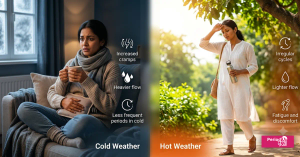
Summers in India are becoming increasingly difficult to manage, particularly in the regions where the temperatures remain high for extended and longer periods. High humidity can make the situation worse because sweat does not evaporate as easily, making it harder for the body to cool down.
During menstruation, some women already experience fatigue, headaches, abdominal discomfort and changes in appetite. Exposure to extreme heat may add to these symptoms.
Dehydration can cause headaches, dizziness, weakness and reduced physical stamina. It may also make an already uncomfortable period feel more difficult to manage.
There is an important distinction, though: heat-related discomfort does not automatically mean that the menstrual cycle has become irregular. Current research on the direct effect of ordinary seasonal heat on menstrual timing remains limited.
What can help?
Drink water regularly, especially when spending time outdoors.
Avoid prolonged exposure to direct sunlight during peak afternoon hours.
Wear breathable cotton clothing.
Take adequate rest when experiencing heat-related exhaustion.
Include water-rich foods such as cucumber, watermelon and oranges in your diet.
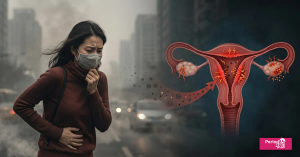
Air pollution is not just a respiratory health concern. Researchers are increasingly examining how long-term exposure to pollutants may affect reproductive health.
Fine particulate matter (PM2.5), nitrogen dioxide (NO₂) and sulphur dioxide (SO₂) are among the pollutants being studied.
Some air pollutants may interfere with normal hormonal signalling or contribute to oxidative stress. Oxidative stress occurs when harmful molecules called free radicals accumulate faster than the body can neutralise them. This can affect cells and tissues, including those involved in reproductive function.
A 2025 study published in The Lancet Planetary Health analysed more than 2.2 million menstrual cycles from over 92,000 app users across 230 cities in the United States, Brazil and Mexico. Researchers observed an association between long-term PM2.5 exposure and abnormal menstrual cycle length. However, short-term exposure did not show the same association.
Winter brings a different set of challenges. Shorter daylight hours, reduced outdoor activity, changes in appetite and disrupted sleep routines can influence how women feel throughout their menstrual cycle.
Some women notice that they feel less active, more tired or emotionally low during colder months. Others may experience increased cravings or find it difficult to maintain their usual exercise routine.
But does cold weather directly delay menstruation?
There is currently insufficient evidence to establish that ordinary exposure to cold temperatures directly changes menstrual cycle timing. A late period should not automatically be attributed to winter.
Factors such as stress, changes in body weight, inadequate nutrition, illness and hormonal conditions are more established explanations for menstrual irregularities.
Maintaining regular meals, staying physically active and getting sufficient daylight where possible can support general well-being during colder months.
Environmental exposure is not limited to temperature and air quality. Certain chemicals found in everyday products and surroundings are also being investigated for their effects on reproductive hormones.
These include endocrine-disrupting chemicals (EDCs), which may interfere with the body's hormonal signalling.
Some commonly studied examples include:
Bisphenol A (BPA): Used in the manufacture of certain plastics and epoxy resins.
Phthalates: Chemicals used in some plastics, fragrances and personal-care products.
Certain pesticides: Agricultural chemicals that may have endocrine-disrupting properties.
The endocrine system regulates several important functions, including ovulation, menstruation and reproductive development. Chemicals that interfere with hormone signalling may therefore have implications for reproductive health.
However, exposure does not necessarily mean that a woman will develop a menstrual disorder. The effects can depend on the chemical, dose, duration of exposure and individual susceptibility.
Simple precautions include avoiding heating food in unsuitable plastic containers, following safe pesticide-handling practices and using products according to their labels.
Have you noticed how difficult it becomes to maintain a regular sleep schedule during a heatwave, after a long commute or when pollution makes outdoor activities uncomfortable?
Environmental conditions can influence daily routines, and these changes may indirectly affect menstrual health.
Sleep and stress are closely connected with the hypothalamic-pituitary-ovarian (HPO) axis. This is the communication pathway between the brain and ovaries that helps regulate reproductive hormones.
Prolonged psychological or physical stress can affect the hypothalamus, which plays an important role in controlling the release of gonadotropin-releasing hormone (GnRH). Changes in this signalling pathway may influence ovulation and menstrual regularity.
This is one reason why major lifestyle disruptions, inadequate sleep, excessive exercise and significant calorie restriction can sometimes contribute to irregular periods.
Environmental fatigue may therefore affect menstrual well-being through several overlapping pathways rather than one isolated mechanism.
Environmental conditions are not the same everywhere. A woman living in Delhi during a period of severe air pollution may experience different environmental challenges from someone living in coastal Odisha or a hot, dry region of Rajasthan.
India's geographical and climatic diversity makes this an important area of women's health research.
Environmental condition | Possible effect on well-being |
|---|---|
Hot and humid weather | Dehydration, exhaustion and disturbed sleep |
High air pollution | Respiratory discomfort and possible reproductive health implications |
Extreme summer heat | Heat stress, headaches and physical fatigue |
Cold weather | Reduced activity and changes in sleep routines |
Floods and extreme weather | Stress, disrupted healthcare access and difficulty maintaining menstrual hygiene |
Women who work outdoors, commute long distances, work in poorly ventilated spaces or have limited access to clean water and cooling facilities may face additional challenges.
Extreme weather can also interrupt access to sanitary products, clean toilets and menstrual healthcare. For women in rural and economically disadvantaged communities, these difficulties can become particularly significant.
Environmental fatigue is therefore not just an individual health issue. It also has a public health and menstrual equity dimension.
Not every change in your period indicates a medical problem. However, persistent or significant changes should not be ignored or automatically blamed on environmental fatigue.
Consult a healthcare professional if you experience:
Repeatedly irregular periods or a sudden change in your usual cycle pattern.
Periods that stop for three months or longer when you are not pregnant.
Bleeding that lasts longer than seven days.
Very heavy menstrual bleeding, particularly if you feel weak, dizzy or breathless.
Severe menstrual pain that interferes with everyday activities.
Unexplained fatigue, persistent weakness or other symptoms that affect your daily routine.
Pregnancy, thyroid disorders, polycystic ovary syndrome (PCOS), changes in body weight and other hormonal conditions can also affect menstrual regularity. Appropriate evaluation helps identify the underlying cause.
1. Can hot weather make periods irregular?
Extreme heat can cause physical stress, dehydration and sleep disruption. These factors may influence general health, but there is not enough evidence to say that ordinary hot weather directly causes irregular periods.
2. Does air pollution affect menstrual health?
Emerging research suggests that long-term exposure to certain air pollutants, particularly fine particulate matter, may be associated with changes in menstrual cycle length. More research is needed to establish the underlying mechanisms and confirm causality.
3. Can seasonal changes delay periods?
Some women notice changes in their routines, sleep and physical activity during different seasons. These factors may indirectly influence menstrual health. However, seasonal temperature changes alone are not an established cause of delayed menstruation.
4. Can environmental fatigue cause period pain?
There is no conclusive evidence that environmental fatigue directly causes dysmenorrhoea (painful menstruation). However, poor sleep, stress and physical exhaustion can affect pain perception and make existing discomfort harder to manage.
5. Should I track my period alongside weather changes?
Yes. Recording your cycle dates, symptoms, sleep patterns and major environmental exposures can help you identify patterns. Remember that noticing a pattern does not necessarily establish that one factor caused the change.
Menstrual health is influenced by more than reproductive hormones alone. Sleep, nutrition, stress, physical activity and the conditions in which we live all contribute to overall well-being.
As environmental challenges such as extreme heat and air pollution become increasingly relevant to public health, understanding their possible relationship with reproductive health is important.
We should not assume that every delayed period or painful cycle is caused by the environment. Equally, we should not overlook the role that environmental conditions may play in women's health.
Sometimes, taking care of menstrual health also means paying attention to the air we breathe, the water we drink, the temperatures we live in and the routines we maintain.
Your surroundings are part of your health story. Menstrual health deserves to be part of the environmental health conversation, too.
1. deSouza PN et al. (2025). The effect of air pollution exposure on menstrual cycle health using self-reported data from a mobile health app: a prospective, observational study. The Lancet Planetary Health. Read study.
2. Choi J et al. (2026). Associations between Ambient Air Pollution Exposure and Menstrual Cycle Irregularity in Premenopausal Women. Yonsei Medical Journal. Read study.
3. Perimenarchal air pollution exposure and menstrual disorders. Human Reproduction (2018). Read study.
4. World Health Organization. Heat and health. WHO guidance.
5. American College of Obstetricians and Gynecologists (2026). The Effects of Climate Change on Obstetric and Gynecologic Health. Read guidance.
About PeriodSakhi
PeriodSakhi is your trusted companion for understanding your menstrual health. With easy-to-use tools, it helps you track your periods, ovulation, fertility, moods, and symptoms, while providing insights into your overall reproductive and hormonal health. PeriodSakhi also serves as a supportive online community where women can share experiences, find reliable information, and access expert-backed guidance on menstrual health, PCOS, pregnancy, lifestyle, and more.
Disclaimer
The views, thoughts, and opinions expressed in this article/blog are solely those of the author and do not necessarily reflect the views of PeriodSakhi. Any omissions, errors, or inaccuracies are the responsibility of the author. PeriodSakhi assumes no liability or responsibility for any content presented. Always consult a qualified medical professional for specific advice related to menstrual health, fertility, pregnancy, or related conditions.