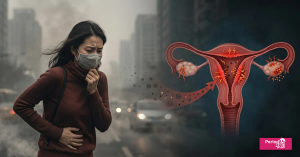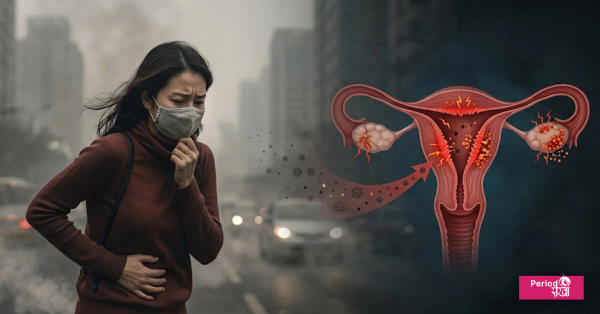

The air your teenage daughter breathes may be causing irregular menstrual cycles. Well documented negative health effects from air pollution exposure include infertility, metabolic syndrome and polycystic ovary syndrome. This study is the first to show that exposure to air pollution among teen girls (ages 14-18) is associated with slightly increased chances of menstrual irregularity and longer time to achieve such regularity in high school and early adulthood. “While air pollution exposures have been linked to cardiovascular and pulmonary disease, this study suggests there may be other systems, such as the reproductive endocrine system, that are affected as well,” said corresponding author Shruthi Mahalingaiah, MD, MS, assistant professor of obstetrics and gynecology at Boston University School of Medicine and a physician in obstetrics and gynecology at Boston Medical Center.
The menstrual cycle is responsive to hormonal regulation. Particulate matter air pollution has demonstrated hormonal activity. However, it was not known if air pollution was associated with menstrual cycle regularity, until now. The researchers used health and location data gathered in the Nurses’ Health Study 2 plus air pollution exposure metrics from the EPA air quality monitoring system to understand a participants’ exposure during a particular time window. They found exposure to air pollution in during high school was correlated with menstrual cycle irregularity.
Think about a typical day in a busy Indian city. You step out for work, pass through traffic, walk past construction sites and spend time in an environment where dust and vehicle emissions are difficult to avoid. During winter, the problem may become more noticeable as smog and poor air quality settle over several cities. Most people associate air pollution with coughing, breathing difficulties, allergies and lung disease. But researchers are also investigating a less discussed possibility: its effect on women's reproductive health. Emerging studies suggest that prolonged exposure to certain air pollutants may be associated with changes in menstrual cycle patterns. This has raised questions about whether polluted air can influence reproductive hormones, ovulation and menstrual regularity.
Air pollution refers to the presence of harmful gases, particles and other substances in the air at concentrations that may affect human health.
In India, common sources include vehicle emissions, industrial activity, construction dust, burning of crop residue, household fuels and waste burning. The combination of pollutants varies by location and season.
Some of the pollutants researchers study include:
Air pollutant | What it means | Common sources |
|---|---|---|
PM2.5 | Fine particles measuring 2.5 micrometres or less | Vehicle exhaust, industrial emissions, combustion and biomass burning |
PM10 | Inhalable particles measuring 10 micrometres or less | Road dust, construction activity and industrial processes |
Nitrogen dioxide (NO₂) | A gas produced mainly during fuel combustion | Traffic, power plants and industrial emissions |
Sulphur dioxide (SO₂) | A gas released when fuels containing sulphur are burned | Industries, power plants and certain combustion processes |
Ozone (O₃) | A gas formed through chemical reactions involving other pollutants in sunlight | Reactions between nitrogen oxides and volatile organic compounds |
PM2.5 is particularly important because these tiny particles can travel deep into the respiratory system. Some components and associated substances can enter the bloodstream or trigger inflammatory responses.
The menstrual cycle depends on a carefully coordinated hormonal process involving the brain, ovaries and uterus. Researchers are investigating whether exposure to environmental pollutants can interfere with this communication.
There are several possible biological pathways.
The endocrine system produces and regulates hormones that influence menstruation, ovulation and reproductive function.
Certain environmental chemicals are known to have endocrine-disrupting properties. These substances may interfere with hormone production, transport, metabolism or signalling.
Some components of air pollution have been investigated for similar effects. If normal hormonal signalling is disrupted, it could potentially influence the timing of ovulation or the menstrual cycle.
However, it is important not to assume that every exposure produces a measurable hormonal change. The effects may depend on the pollutant, concentration, duration of exposure and individual susceptibility.
Air pollution can increase oxidative stress, a process in which harmful reactive molecules accumulate and overwhelm the body's antioxidant defences.
Oxidative stress and inflammation are relevant to reproductive health because normal ovarian function and follicular development depend on a balanced cellular environment.
Laboratory and toxicological research suggests that certain pollutants may affect reproductive tissues through these pathways. Whether everyday exposure leads to clinically significant changes in menstrual function is still being studied.
Ovulation occurs when an ovary releases a mature egg during the menstrual cycle. It is regulated by hormonal signals, particularly luteinising hormone (LH) and follicle-stimulating hormone (FSH).
Some observational studies have reported associations between exposure to air pollutants and changes in the follicular phase, the part of the cycle before ovulation.
This does not mean that breathing polluted air will stop ovulation. Rather, it suggests that environmental exposure may be one of several factors worth investigating when studying reproductive health.
This is one of the most important questions researchers are trying to answer.
A growing number of studies have examined the relationship between air quality and menstrual cycle characteristics. Some have reported associations between exposure to particulate matter or gaseous pollutants and changes in cycle length.
A 2025 study published in The Lancet Planetary Health analysed more than 2.2 million menstrual cycles recorded by over 92,000 users of a menstrual tracking application across 230 cities in the United States, Brazil and Mexico.
The researchers found that higher long-term exposure to PM2.5 was associated with a greater proportion of abnormally long or short menstrual cycles. They did not identify an association between short-term PM2.5 exposure and abnormal cycle length.
A 2026 study published in the Yonsei Medical Journal also reported associations between exposure to nitrogen dioxide and sulphur dioxide and short-interval menstrual irregularity among premenopausal women in South Korea.
These findings are important, but they need to be interpreted carefully. Observational studies can identify patterns, but they cannot always establish whether air pollution directly caused the menstrual changes. Factors such as stress, diet, smoking, socioeconomic conditions and existing health problems may also influence the results.
What does the evidence suggest so far?
Long-term exposure to certain air pollutants may be associated with menstrual cycle irregularity.
Some studies have reported changes in specific phases of the menstrual cycle.
Research on short-term exposure has produced less consistent findings.
More studies across different populations, including women in India, are needed.
Menstrual cramps, also known as dysmenorrhoea, are mainly associated with prostaglandins. These substances contribute to uterine contractions during menstruation.
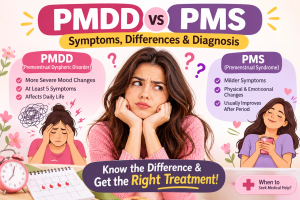
Premenstrual syndrome (PMS) may involve bloating, breast tenderness, headaches, irritability and changes in appetite or mood.
Researchers have explored whether air pollution and the inflammatory responses associated with exposure could influence menstrual discomfort. Some population-based studies have investigated associations between pollutant exposure and visits for menstrual disorders, including dysmenorrhoea.
However, current evidence is not strong enough to conclude that air pollution directly causes painful periods or worsens PMS.
If you experience severe cramps, unusually heavy bleeding or persistent premenstrual symptoms, these should be assessed on their own merits rather than attributed to poor air quality.
Menstrual health is one part of reproductive health. Researchers are also examining whether environmental exposure may be associated with other reproductive outcomes.
Studies have explored possible links between air pollution and ovarian function, fertility and pregnancy-related outcomes. Oxidative stress, inflammation and endocrine disruption are among the proposed biological pathways.
However, evidence differs across outcomes, and findings from one population cannot automatically be applied to every woman.
It is also important to distinguish between a possible population-level association and an individual's reproductive health. Exposure to polluted air does not mean that a woman will develop infertility, experience pregnancy complications or have menstrual problems.
Air pollution is a public health issue, and avoiding exposure completely is not realistic for most people. However, a few practical measures can reduce unnecessary contact with polluted air.
Situation | What you can do |
|---|---|
Before leaving home | Check your local Air Quality Index (AQI) |
During high-pollution days | Reduce prolonged or strenuous outdoor activity |
While commuting | Avoid heavily congested routes where practical |
When outdoors | Use a well-fitting N95 or equivalent respirator when pollution levels are high |
At home | Keep windows closed during periods of very poor outdoor air quality, while maintaining appropriate indoor ventilation when conditions improve |
During household cleaning | Use damp dusting instead of dry sweeping |
Around cooking | Ensure adequate kitchen ventilation and use a suitable exhaust system |
Near smoke or burning waste | Avoid direct exposure wherever possible |
A few additional points are worth remembering:
A regular cloth mask or loose surgical mask does not provide the same filtration as a well-fitting N95 respirator against fine particles.
Air purifiers with HEPA filters can help reduce indoor particulate matter when appropriately sized and maintained.
Avoid smoking and exposure to second-hand tobacco smoke.
Do not assume that indoor air is automatically clean; cooking fumes, tobacco smoke and poorly ventilated spaces can also contribute to pollution.
Reducing exposure is useful for general health, but no mask, supplement or dietary change has been proven to prevent pollution-related menstrual changes.
The Air Quality Index is a tool used to communicate the condition of outdoor air in a simple numerical format. India's Central Pollution Control Board (CPCB) uses six categories.
AQI range | Category | General interpretation |
|---|---|---|
0–50 | Good | Minimal health impact |
51–100 | Satisfactory | Minor discomfort may occur in sensitive individuals |
101–200 | Moderate | People with existing respiratory or cardiovascular conditions may experience discomfort |
201–300 | Poor | Prolonged exposure may cause breathing discomfort |
301–400 | Very Poor | Prolonged exposure may increase the risk of respiratory illness |
401–500 | Severe | Health effects may occur even in healthy individuals |
Check the AQI for your city rather than relying only on how the sky looks. Air pollution is not always visible, and clear-looking air does not necessarily mean that pollutant levels are low.
You can check local readings through the CPCB's National Air Quality Index dashboard.
An irregular period is not always related to environmental exposure. Several medical and lifestyle factors can affect menstrual cycles, including PCOS, thyroid disorders, significant weight changes, stress, nutritional deficiencies and certain medications.
Consider consulting a gynaecologist if you notice:
Menstrual change | Why it needs attention |
|---|---|
Repeatedly irregular cycles | May be associated with hormonal or reproductive conditions |
No period for three months or longer | Requires evaluation, including consideration of pregnancy where relevant |
Very heavy bleeding | May lead to iron-deficiency anaemia and can have several underlying causes |
Bleeding lasting more than seven days | May indicate abnormal uterine bleeding |
Severe or worsening cramps | May require assessment for conditions such as endometriosis or adenomyosis |
Persistent fatigue or dizziness | Could be associated with anaemia or another health problem |
Do not wait for air quality to improve before seeking medical advice about persistent menstrual changes.
1. Can air pollution affect menstrual cycle length?
Emerging observational research suggests that long-term exposure to certain air pollutants, particularly PM2.5, may be associated with changes in menstrual cycle length. More research is needed to establish the relationship and understand the underlying mechanisms.
2. Does PM2.5 affect women's hormonal health?
PM2.5 exposure has been investigated for its potential to influence endocrine signalling, oxidative stress and inflammation. However, the exact effects on reproductive hormones in women are not yet fully understood.
3. Can pollution delay periods?
There is not enough evidence to say that air pollution directly delays periods. Menstrual timing can be affected by pregnancy, stress, PCOS, thyroid disorders, changes in body weight and other factors.
4. Does wearing an N95 mask protect menstrual health?
An N95 respirator can reduce inhalation of airborne particles when it fits properly. It is a general air-pollution precaution, not a proven method of preventing menstrual irregularities.
5. Can indoor air pollution affect reproductive health?
Indoor exposure to tobacco smoke, cooking fumes and other pollutants is also a public health concern. Researchers are studying its potential reproductive effects, although the evidence varies depending on the pollutant and health outcome.
6. Should women avoid exercising outdoors when AQI is high?
Yes, it is sensible to reduce prolonged or strenuous outdoor exercise when air quality is poor. Choose indoor physical activity when possible and follow local health advisories.
Menstrual health is influenced by several interconnected factors, including hormones, nutrition, stress, sleep and the environment. Air pollution is now being studied as another possible contributor to changes in reproductive health.
The available research is promising but not definitive. It does not establish that polluted air is the cause of an individual's irregular periods, painful menstruation or fertility difficulties.
What it does highlight is the need to look beyond conventional lifestyle factors when discussing women's health. Cleaner air, better environmental policies and greater awareness of everyday exposure are important for everyone.
Because protecting women's health should also include paying attention to the air they breathe.
deSouza PN et al. (2025). The effect of air pollution exposure on menstrual cycle health using self-reported data from a mobile health app: a prospective, observational study. The Lancet Planetary Health, 9(5), e364–e373. PubMed
Choi J et al. (2026). Associations between Ambient Air Pollution Exposure and Menstrual Cycle Irregularity in Premenopausal Women. Yonsei Medical Journal, 67(2), 165–174. Full text
Liang Z et al. (2020). Association between air pollution and menstrual disorder outpatient visits: A time-series analysis. Ecotoxicology and Environmental Safety, 192, 110283. PubMed
Mahalingaiah S et al. (2018). Perimenarchal air pollution exposure and menstrual disorders. Human Reproduction. Full text
Can atmospheric pollutants influence menstrual cycle function? (2019). PubMed
Central Pollution Control Board. National Air Quality Index. CPCB AQI dashboard
About PeriodSakhi
PeriodSakhi is your trusted companion for understanding your menstrual health. With easy-to-use tools, it helps you track your periods, ovulation, fertility, moods, and symptoms, while providing insights into your overall reproductive and hormonal health. PeriodSakhi also serves as a supportive online community where women can share experiences, find reliable information, and access expert-backed guidance on menstrual health, PCOS, pregnancy, lifestyle, and more.
Disclaimer
The views, thoughts, and opinions expressed in this article/blog are solely those of the author and do not necessarily reflect the views of PeriodSakhi. Any omissions, errors, or inaccuracies are the responsibility of the author. PeriodSakhi assumes no liability or responsibility for any content presented. Always consult a qualified medical professional for specific advice related to menstrual health, fertility, pregnancy, or related conditions.