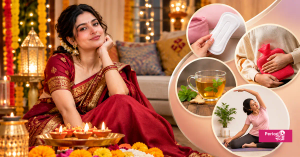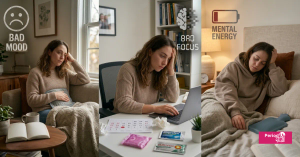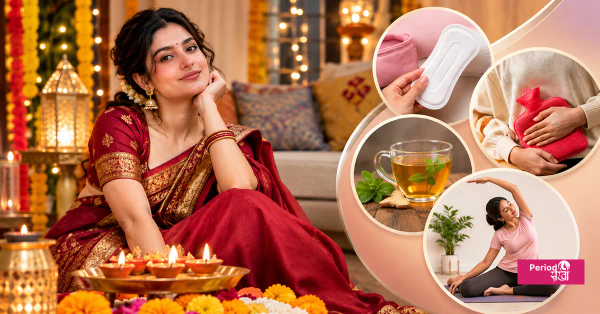

Picture this. The house is half cleaned, the lights are still tangled in a box somewhere, your relatives land tomorrow, and your period decides today is the day. Not ideal.
Most of us have been there at some point. Cramps and festival season don't coordinate, and nobody sends a warning. But a period doesn't have to ruin Diwali. A few small habits can make the days easier, and you can keep most of the fun.
You’ve planned the outfit, cleaned the house and bought the diyas. Then you check your calendar and see your period is due right in the middle of it. Or it shows up early, on the morning of Lakshmi Puja, when you’re already in a silk saree.
If that’s you, it’s far more common than it feels. Periods during Diwali are mostly a planning problem, not a reason to sit the festival out. Once you know what your body is doing on these days, you can work with it instead of against it.
In many families, the Puja often comes with a fast, and the same question follows: is it okay on your period? Fasting during periods is a personal decision or one you make based on your faith, and your period doesn’t make a fast unsafe on its own. What helps is knowing what the fast adds to what your body is already doing.
During your period you lose fluid and some iron. A long fast, especially without water, adds more fluid loss and lets your blood sugar drop as the day goes on. Both cause dizziness, headaches and weakness, which pile onto period tiredness.
If your tradition allows it, a fast with fruit, milk or nuts keeps your energy steadier. Break it with water and something light before the heavy festive meal. Speak to your doctor first if you have anaemia, very heavy periods, diabetes or PCOS.
Homes handle this differently. In some families nobody cares at all. In others there are rules about the puja room, the kitchen or going to the temple. Neither is automatically right or wrong, and how you feel about it matters too.
If you're happy to follow your family's customs, great. If they make you uncomfortable, you don't have to argue about it on festival day. Some people pick a middle route: they help with rangoli, string up the lights, light diyas near the entrance, and join in the meals and games. If it's bothering you, pick a quiet moment and talk to someone at home you trust. That goes better than a debate with the whole family watching. Everything below is about the physical side, because that's where small changes really help.
Period cramps have a proper medical name, dysmenorrhea. ACOG explains that the uterus squeezes to push out its lining, and hormone-like chemicals called prostaglandins drive that squeezing. More of them usually means stronger cramps. That's why some months feel mild and others knock you flat.
For most people the worst of it passes within a couple of days. You might also get a headache, a sore back, a bloated stomach or loose stools. Annoying, but common.
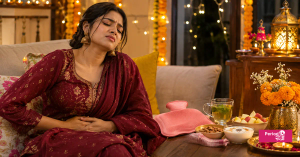
Heat is the easiest fix. A hot water bottle or heating pad on your lower belly relaxes the muscles, and the NHS and Mayo Clinic both recommend it. Keep one near you during the busy days. Even ten minutes while you sit between chores makes a difference.
Gentle movement helps too, which surprises people. You don't need a workout. A slow walk after dinner, or a few stretches on the floor, is plenty. A warm shower before you get ready for the evening can also loosen things up.
If you take painkillers, the usual advice is that they work better when you take them early rather than waiting until the pain is bad. Ibuprofen is common for period pain, but it isn't suitable for everybody, particularly if you have stomach problems or asthma or you're on other medicines. Ask a doctor or pharmacist what suits you and rest. Really. Nobody is handing out medals for pushing through.
Diwali food is hard to resist: laddoos, barfi, namkeen, fried snacks. You don't need to skip any of it just because you're bleeding.
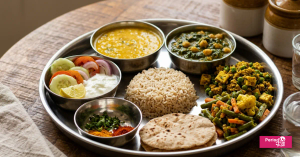
What helps is not letting yourself get too hungry. When you go hours without eating and then dive into a plate of mithai, your energy tends to spike and then crash. Have proper meals in between, with some protein like dal, paneer, eggs, curd or a handful of nuts.
Iron is worth thinking about, since you lose some during your period. Spinach, lentils, chickpeas, jaggery, dates and dried fruit are all good sources. A squeeze of lemon or a piece of citrus fruit alongside helps your body absorb it better.
Keep drinking water, too. When you're rushing around, it's easy to forget, and being dehydrated can make headaches and bloating worse. Coconut water, buttermilk or warm water with ginger all count. Very salty snacks can add to the bloated feeling, so just go easy on those.
If you're fasting for any reason and you start feeling dizzy or weak, eat something. Your body is already doing a lot.
Diwali is tiring even without a period. A few things that help:
Ask people to share the work. Cleaning, cooking and shopping don't all have to be yours.
Do the big errands before your period is due, if you can predict it, and leave lighter jobs for the heavy days.
Try to sleep. Late nights are part of the fun, but too little rest makes cramps and mood swings worse.
Take short breaks. Ten quiet minutes with music or a cup of chai can reset a bad mood.
If you feel more emotional than usual, that's normal as well. Hormones shift during your cycle and they affect mood. Go easy on yourself.
You can look festive and feel comfortable at the same time. Soft cotton or a light silk blend works well, especially in a crowded, warm room. Loose kurtas, flowy anarkalis, or a saree with a comfortable petticoat are kinder to a bloated stomach than anything tight around the waist.
Darker or printed fabrics help if you worry about leaks, and honestly that worry alone can spoil an evening. Carry a small pouch with a spare pad or tampon, wipes, clean underwear, and any pain relief your doctor has approved. When it's all in one place, you don't have to think about it.
Change your pad or tampon regularly, usually every few hours, and follow the instructions on the packet. If you plan to be out for a long time, a menstrual cup or period underwear can last longer, but only try what you've used before. A festival day is a bad time to experiment.
Many Indian cities see worse air quality around Diwali because of firecracker smoke. If your period already gives you headaches or nausea, the smoke can make them worse. You could watch from a balcony or window, wear a mask when you go outside, and keep the celebration lighter on crackers and heavier on diyas, flowers and lights.
Most period pain is normal. Still, the NHS and Cleveland Clinic both say you should get medical advice if:
The pain is severe or doesn't improve with the usual remedies
You soak through a pad or tampon every hour for several hours
Your periods suddenly become much heavier or more painful than they used to be
You feel faint, very weak or short of breath
You have a fever along with the bleeding
If something feels wrong, don't wait until the festival is over. A quick check-up beats weeks of feeling bad.
Self-care during Diwali doesn't have to mean a spa day. Light a diya in your room and drink your tea in peace. Put on a festive playlist while you lie down. Do your own mehndi or makeup because you enjoy it. Call the friend who always gets it. Say no to one thing this week.
None of this is selfish. You can't enjoy a festival if you're running on empty.
A period during Diwali is just one more thing to plan around. Use heat when the cramps hit. Eat regular meals with some iron and plenty of water. Wear something comfortable. Ask for help, and rest without feeling guilty. Follow the traditions in a way that feels right to you. And if the pain or bleeding feels like too much, get it checked.
Diwali is about light, joy and being with people you love. You deserve all of it, period or not. Happy Diwali, and take care of yourself.
American College of Obstetricians and Gynecologists. Dysmenorrhea: Painful Periods. https://www.acog.org/womens-health/faqs/dysmenorrhea-painful-periods
NHS. Period pain. https://www.nhs.uk/conditions/period-pain/
Mayo Clinic. Menstrual cramps. https://www.mayoclinic.org/diseases-conditions/menstrual-cramps/symptoms-causes/syc-20374938
Cleveland Clinic. Menstrual Cramps (Dysmenorrhea). https://my.clevelandclinic.org/health/diseases/4148-menstrual-cramps
About PeriodSakhi
PeriodSakhi is your trusted companion for understanding your menstrual health. With easy-to-use tools, it helps you track your periods, ovulation, fertility, moods, and symptoms, while providing insights into your overall reproductive and hormonal health. PeriodSakhi also serves as a supportive online community where women can share experiences, find reliable information, and access expert-backed guidance on menstrual health, PCOS, pregnancy, lifestyle, and more.
Disclaimer
The views, thoughts, and opinions expressed in this article/blog are solely those of the author and do not necessarily reflect the views of PeriodSakhi. Any omissions, errors, or inaccuracies are the responsibility of the author. PeriodSakhi assumes no liability or responsibility for any content presented. Always consult a qualified medical professional for specific advice related to menstrual health, fertility, pregnancy, or related conditions.