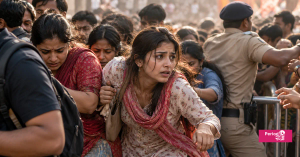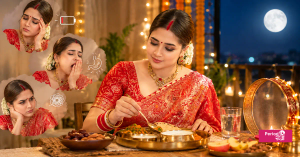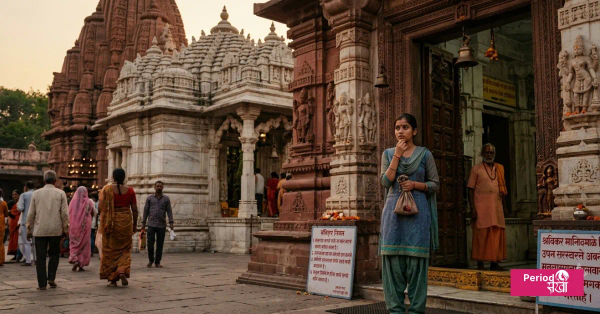

For ages, menstruation has been surrounded by traditions, restrictions and questions. One of the most common is simple but deeply rooted. Can a woman enter a temple during periods? I write it as I read about organisations deciding for Indian women based on what they think are superstitious beliefs which need to be uprooted. Since childhood, I was denied from visiting any religious shrine or temple during periods. I want to address this article to all the women across India, who follow menstrual rituals and have asked me what these practices mean. I also write for the men who have never known what to make of menstrual practices to support them or to dismiss it. I write because I feel responsible for reviving what has been lost.
Many Hindu religious texts, such as Manusmriti and some Puranas clearly mention restrictions for menstruating women. These texts label menstruation as “asucha” which means impure and advise women to avoid religious activities during their periods. In some parts of India, menstruation is associated with these notions of purity and pollution because bodily excretions, including menstruation, are believed to be polluting. As per these, all women, regardless of social caste, are considered to incur pollution during menstruation.
Last May, I had the first hand experience of feeling like a culprit while menstruating. It was my elder brother’s wedding and I wasn’t allowed to be a part of the auspicious rituals. This particular incident hit me hard and I began wondering if this problem still exists in various parts of our country. In many Indian families and communities, menstruating women are strictly asked to stay away from temples, religious ceremonies and sometimes even household prayer spaces but according to science, menstruation is a natural biological process. It is not an illness, contamination or evidence that a woman is physically or spiritually impure.
So, can women enter temples during periods? From a scientific and health perspective, there is no medical reason that prevents a menstruating woman from entering a temple, praying or participating in religious activities. Whether she chooses to enter a particular temple, however, may depend on the religious traditions or specific rules of that place of worship. According to my research, Yes. There is no scientific or medical reason why a woman cannot enter a temple during periods. Menstruation occurs when the lining of the uterus sheds because pregnancy has not occurred. The menstrual blood consists mainly of blood and tissue from the uterine lining. It is a normal part of the reproductive cycle. Being on your period does not make you physically dirty, contagious or dangerous to other people. So, from a health and scientific perspective, temple entry during periods is not harmful. However, religious practices are different from medical recommendations. Some temples and religious communities follow specific traditions that restrict entry during menstruation. These rules may be based on particular religious interpretations, customs or long-standing local practices.
The restriction on women during menstruation has existed in different cultures and religious traditions for centuries. However, the reasons are not identical everywhere. Historically, menstruation was poorly understood. People did not have the modern understanding of reproductive biology, hormones, the menstrual cycle or menstrual hygiene that we have today. In some communities, menstruation became associated with ritual purity. In others, menstruating women were given restrictions or periods of seclusion.
There were also practical considerations in some historical settings. Before modern sanitary products, running water, private bathrooms and effective menstrual hygiene products, managing menstruation could be difficult, some traditions may also have given menstruating women a period of rest from household work. Over time, practical customs can become interpreted as absolute religious or scientific rules. This is where the misconception develops: a cultural or religious restriction may eventually be presented as though it has a medical explanation. There is no general scientific evidence that menstruation makes a woman unsuitable for entering a temple.
One of the most persistent menstrual myths is that menstrual blood makes a woman "impure."
Scientifically, this is incorrect.
Menstruation is a physiological process controlled by the reproductive system. Hormonal changes prepare the uterus for a possible pregnancy. When pregnancy does not occur, the uterine lining is shed and leaves the body through the vagina.
Period blood is not poisonous, dirty or inherently harmful.
It is also important to distinguish between hygiene and purity.
A person may need to maintain menstrual hygiene, just as everyone needs to maintain personal hygiene. Changing sanitary products regularly, washing the genital area appropriately and disposing of menstrual products safely are important for comfort and health.
But hygiene does not mean that menstruation itself is unclean.
Calling a menstruating woman "impure" can reinforce shame and stigma around a normal biological function.
There is no established medical rule stating that women should avoid temples because they are menstruating.
Menstruation does not:
make a woman contagious
make her spiritually or physically impure from a medical perspective
make religious spaces unsafe
make other people sick
prevent her from praying
prevent her from performing normal physical activities
A woman can generally continue her normal daily activities during menstruation according to how she feels physically.
Some women experience cramps, fatigue, headaches, bloating or mood changes during their periods. In such situations, they may personally prefer to rest instead of visiting a temple.
That is a personal choice based on comfort, not a medical prohibition.
The initial idea was that women go through a lot during their periods so they need to get tonnes of rest, and in the earlier times no-one really had mandirs in their house, they had to walk to the community temple, and do the rituals their, now doing all that hard work without proper sanitation facilities and cramps is pretty much tiring. Also meditating and focusing in such a state is very stressful. Not because women are impure or the period blood is impure, it's just made for women's comfort, so they rest , take time out for themselves. A woman's period blood is celebrated in our country. Kamakhya Devi( mata sati's uterus) is worshipped. A menstruating woman can always pray to their god. Women should not indulge in super straining activities during their menstrual cycle anyways. Be it at home or work.
If you are asking from a health and scientific perspective, there is no medical reason you cannot go to a temple during your period.
If you are asking whether you can enter a specific temple, the answer may depend on that temple's own rules and religious customs.
This distinction matters because India has diverse religious traditions. A practice followed by one temple or community cannot automatically be treated as a universal rule.
If a temple has an established restriction, visitors may choose to respect that particular practice. At the same time, respecting a religious custom does not require believing that menstruating women are medically dirty or unhealthy.
Menstrual myths often survive because they are passed from one generation to another.
A child may hear from a parent or grandparent that she should not enter a temple during periods. Without an opportunity to understand the biological basis of menstruation, she may grow up believing that menstruation is inherently impure.
Lack of menstrual education can strengthen these beliefs.
When girls learn about menstruation only as a list of restrictions rather than as a biological process, they may associate periods with embarrassment and shame.
Better menstrual education can change this.
Teaching girls and boys what menstruation actually is can help replace fear with understanding.
Instead of focusing solely on whether a woman should enter a temple during periods, conversations around menstruation should also address menstrual hygiene.
Good menstrual hygiene includes:
changing menstrual products regularly
washing hands before and after changing products
keeping the genital area clean
using clean menstrual products
disposing of used products responsibly
having access to clean water and private toilets
seeking medical advice when menstrual symptoms are unusually severe
Menstrual hygiene is a genuine health issue. Menstruation itself is not.
This distinction is particularly important for adolescents who are experiencing their first periods. Fear-based messages can make menstruation unnecessarily stressful.
The theory of menstruating women losing their energy and absorbing everyone and everything else’s energy can be applied to all the menstrual restrictions we know of. Whether it is the withering of a Tulsi plant (Indian Basil, considered as a holy plant), the spoiling of curd, pickle or other sensitive processes like silkworm rearing, it can be explained when we consider that menstruating women have a tendency to absorb energies around them. This affects the menstruating woman as it interferes with her natural process of having to dissipate energy, and it also impacts the person or thing (plant or other biological process) by depleting it of its vital energy. This also explains the reason behind practicing untouchability and menstrual seclusion.
However, not all menstruating women can affect living processes. The reason I am assuming is because not all women have their cycles in sync with nature and therefore, their energies are not as pronounced. So while some women swear that the Tulsi plant they touched withered away, other women rubbish it saying it is superstition. Whereas, in the ancient times, it was said that all women menstruated with the moon’s cycle, and so the menstrual practices would have become a general rule for all women.
The temple of the Bhagwathi in Chengannur (Kerala) and the temple of Kamakhya Devi (Assam) where the Goddess too was believed to menstruate and followed similar rituals of menstrual seclusion, closing the temple for 3 days and then celebrating the end of her menstruation. In both these temples, the menstrual cloth is considered highly auspicious and is distributed among devotees. The idea of resting and not disturbing menstruating women, including a Goddess, does not arise from any superstitious belief. It is because of the thought that menstruation and the release of energy during this time should not be interrupted in any way. It is a natural cleansing process which helps women remain healthy, and should not be affected by external influences. If these menstrual rituals were meant to suppress women, surely we would not be doing the same with the Goddess.
From a scientific and medical perspective, yes. Menstruation does not make a woman physically impure, contagious or incapable of entering a temple. There may be temple-specific religious customs that restrict entry during menstruation. Those rules belong to the religious or cultural sphere rather than being medical requirements.
Enough of the screams of the society, it is high time we start considering menstruation as a part of normalcy rather than a taboo. Periods are one of the most inquisitive and beautiful processes of the human race, not an impurity. It is heartbreaking to see even today, especially those among you who would be unwillingly following menstrual practices, might now wonder if the above explanations are justifications to continue practising what you have not been comfortable with. You might want to ask me “So am I supposed to continue being treated like an untouchable during my period, now that you have given reasons for these practices?”
The answer is No.
The intention of this write-up is to let you know that there were valid reasons and ancient science behind menstrual practices. These practices were relevant and suitable for the time in which they were conceived. They may not be suitable to the current times. But that does not mean that the underlying reason and the energy flow during menstruation itself is not valid.
So, it’s time that those of us who find this information relevant, go deeper to understand these sciences ourselves and even experience some of them. Then, I suggest that we engage with our family/community in conversations regarding what is relevant for us in today’s times. If we feel that some of the practices no longer hold value, then we could challenge them, and adopt whatever works for us but also, this needs to be done with our and our family’s understanding of the underlying science behind these practices.
Dr. Akanksha is a dedicated dental professional and health educator who believes that healthcare goes beyond treatment-it is about creating awareness, building trust, and empowering individuals to make informed decisions about their well-being. Alongside her clinical expertise in dentistry, she is deeply passionate about public health education, with a special focus on menstrual health, hygiene, and women's wellness.
About PeriodSakhi
PeriodSakhi is your trusted companion for understanding your menstrual health. With easy-to-use tools, it helps you track your periods, ovulation, fertility, moods, and symptoms, while providing insights into your overall reproductive and hormonal health. PeriodSakhi also serves as a supportive online community where women can share experiences, find reliable information, and access expert-backed guidance on menstrual health, PCOS, pregnancy, lifestyle, and more.
Disclaimer
The views, thoughts, and opinions expressed in this article/blog are solely those of the author and do not necessarily reflect the views of PeriodSakhi. Any omissions, errors, or inaccuracies are the responsibility of the author. PeriodSakhi assumes no liability or responsibility for any content presented. Always consult a qualified medical professional for specific advice related to menstrual health, fertility, pregnancy, or related conditions.