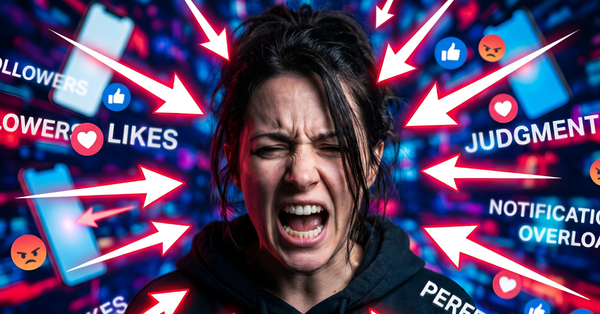

For many women, the days leading up to menstruation feel like an emotional roller coaster. A heartwarming movie suddenly brings tears, a minor disagreement feels overwhelming, and scrolling through social media can leave you feeling anxious, inadequate, or emotionally drained. While these reactions are often dismissed as "just hormones," neuroscience suggests something far more complex.
Premenstrual Syndrome (PMS) is not simply a collection of physical symptoms. It is a multidimensional neuroendocrine condition influenced by hormonal fluctuations, neurotransmitter activity, sleep, nutrition, stress, and increasingly, the digital content we consume every day.
From emotionally intense television dramas to distressing news headlines, doomscrolling, relationship reels, and unrealistic beauty standards on social media, the information our brains process during the premenstrual phase can significantly influence emotional well-being.
The relationship between hormones and media consumption is receiving increasing attention in behavioural neuroscience and psychology. Although hormones do not directly dictate emotions, they influence how the brain processes emotional information, making certain individuals more sensitive to environmental stimuli during specific phases of the menstrual cycle.
Premenstrual Syndrome refers to a constellation of physical, emotional, behavioural, and cognitive symptoms occurring during the late luteal phase of the menstrual cycle, typically one to two weeks before menstruation.
Common emotional symptoms include:
Irritability
Anxiety
Mood swings
Increased emotional sensitivity
Difficulty concentrating
Low motivation
Crying spells
Feelings of loneliness
Heightened stress perception
These symptoms generally improve within the first few days after menstruation begins as hormone levels stabilise.
Researchers believe PMS results not simply from abnormal hormone levels but from an increased sensitivity of the central nervous system to normal cyclical hormonal fluctuations, particularly involving estrogen and progesterone.
The brain is highly responsive to reproductive hormones.
During the luteal phase, declining estrogen and progesterone influence several neurotransmitter systems responsible for mood regulation.
These include:
Serotonin, involved in mood stability, appetite, and sleep.
Gamma-aminobutyric acid (GABA), the primary inhibitory neurotransmitter that promotes calmness and reduces anxiety.
Dopamine, associated with motivation, reward, and pleasure.
Cortisol, the body's principal stress hormone.
One metabolite of progesterone, allopregnanolone, interacts with GABA-A receptors to regulate emotional responses. In women susceptible to PMS or Premenstrual Dysphoric Disorder (PMDD), altered sensitivity to allopregnanolone may reduce the brain's ability to regulate stress effectively.
As a result, emotionally charged experiences may feel more intense than they would during other phases of the menstrual cycle.
Modern life exposes us to an unprecedented volume of emotional information.
Every day, our brains process:
News updates
Crime reports
Political debates
Relationship videos
Celebrity gossip
Personal comparison on social media
Violent entertainment
Emotional films
Family conflicts online
Normally, healthy emotional regulation allows us to process this information without becoming overwhelmed.
However, during PMS, reduced emotional resilience may increase sensitivity to negative stimuli.
Rather than simply observing emotional content, the brain may internalise it more deeply.
"Doomscrolling" refers to continuously consuming negative or distressing online content.
Studies have associated excessive exposure to negative news with:
Increased anxiety
Elevated cortisol secretion
Sleep disturbances
Reduced psychological resilience
Greater emotional exhaustion
During PMS, when stress tolerance is already diminished, doomscrolling may amplify existing symptoms.
Instead of helping us stay informed, prolonged exposure to distressing information can create a cycle of chronic emotional activation.
One of the strongest emotional triggers during PMS is social comparison.
Platforms filled with carefully curated lifestyles often encourage comparisons regarding:
Appearance
Relationships
Career success
Parenthood
Fitness
Financial achievements
Research consistently demonstrates that upward social comparison is associated with:
Lower self-esteem
Increased anxiety
Depressive symptoms
Poor body image
During PMS, when emotional vulnerability is naturally heightened, these comparisons may feel more personal and emotionally significant.
A perfectly edited photograph may suddenly become a source of self-doubt rather than simple entertainment.
Have you ever wondered why a film that barely affected you last month suddenly leaves you crying during PMS?
The answer lies partly in altered emotional processing.
The amygdala, the brain's emotional processing centre, becomes more responsive to emotionally salient information under certain hormonal conditions.
Meanwhile, changes in serotonin availability may reduce emotional buffering.
This combination can intensify responses to:
Romantic breakups
Family conflicts
Emotional reunions
Tragic endings
Stories involving children or animals
Although emotional expression is healthy, repeated exposure to emotionally overwhelming content may increase psychological fatigue during PMS.
Relationship advice dominates today's digital landscape.
Unfortunately, much of it promotes fear rather than healthy communication.
Examples include:
Toxic relationship stories
Infidelity confessions
Divorce discussions
Manipulative dating advice
Emotional betrayal narratives
For someone already experiencing heightened emotional sensitivity, repeatedly consuming this content may contribute to:
Relationship insecurity
Increased overthinking
Attachment anxiety
Emotional rumination
This phenomenon illustrates the psychological concept of emotional priming, where previously encountered emotional information influences later thoughts, perceptions, and behaviours.
The human brain evolved to prioritise survival.
Negative information naturally captures attention more effectively than positive information, a phenomenon known as the negativity bias.
When exposed to violent or distressing news repeatedly, the brain activates the sympathetic nervous system, resulting in increased cortisol and adrenaline release.
During PMS, this physiological stress response may be exaggerated, leading to:
Increased irritability
Difficulty sleeping
Muscle tension
Headaches
Heightened emotional distress
Late-night scrolling creates another challenge.
Blue light emitted by electronic devices suppresses melatonin secretion, delaying sleep onset.
Sleep deprivation affects:
Emotional regulation
Pain tolerance
Decision-making
Appetite regulation
Cognitive performance
Since many women already experience disturbed sleep before menstruation, excessive evening screen exposure may worsen fatigue, mood instability, and daytime irritability.
Fortunately, not all digital content is harmful.
Research in positive psychology suggests that uplifting material may improve emotional well-being by promoting positive affect and reducing stress responses.
Examples include:
Nature documentaries
Educational podcasts
Guided meditation
Inspirational books
Gentle music
Comedy
Creative hobbies
Mindfulness videos
Positive emotional experiences stimulate dopamine release and may help counterbalance stress during the luteal phase.
Supporting emotional health during PMS does not require completely avoiding technology.
Instead, intentional content selection can make a meaningful difference.
Healthy strategies include:
Limiting social media usage before bedtime.
Unfollowing accounts that consistently provoke anxiety or comparison.
Reducing exposure to distressing news when feeling emotionally overwhelmed.
Choosing educational or uplifting entertainment.
Scheduling regular offline activities such as walking, reading, or journaling.
Practising mindfulness before engaging with emotionally demanding content.
Small changes in digital habits can significantly reduce emotional overload.
Digital well-being works best alongside healthy lifestyle practices.
Evidence-based approaches include:
Aim for 7–9 hours of quality sleep each night.
Include:
Complex carbohydrates
Omega-3 fatty acids
Magnesium-rich foods
Calcium-rich foods
Lean protein
Stable blood glucose supports stable mood.
Moderate aerobic exercise stimulates endorphin release and improves emotional resilience.
Even mild dehydration may impair concentration and mood.
Yoga, meditation, breathing exercises, and progressive muscle relaxation may reduce sympathetic nervous system activation.
Occasionally, emotional symptoms become severe enough to interfere with work, education, relationships, or daily functioning.
Women experiencing:
Severe depression
Panic attacks
Intense anger
Feelings of hopelessness
Suicidal thoughts
may be experiencing Premenstrual Dysphoric Disorder (PMDD) rather than typical PMS.
PMDD affects approximately 3–8% of menstruating women and requires professional evaluation. Effective management may include cognitive behavioural therapy (CBT), lifestyle interventions, hormonal therapies, or selective serotonin reuptake inhibitors (SSRIs), depending on symptom severity.
Seeking medical care is a sign of strength, not weakness.
Our brains do not process information in isolation. Hormonal fluctuations during the premenstrual phase influence how we perceive, interpret, and emotionally respond to the world around us. While we cannot eliminate hormonal changes, we can thoughtfully curate the environment that shapes our emotional experiences.
Choosing uplifting, educational, or calming content over distressing media is not about ignoring reality, it is about recognising that emotional health deserves the same care and attention as physical health. During PMS, your mind may be more impressionable, your emotions more responsive, and your need for self-compassion greater than usual.
By becoming mindful of what you watch, read, and scroll through, you can reduce unnecessary emotional triggers and support your brain through one of its most hormonally sensitive phases. Your digital diet, much like your nutritional diet, has the power to influence your mood, resilience, and overall well-being.
"Almost everything will work again if you unplug it for a few minutes, including you." — Anne Lamott
About PeriodSakhi
PeriodSakhi is your trusted companion for understanding your menstrual health. With easy-to-use tools, it helps you track your periods, ovulation, fertility, moods, and symptoms, while providing insights into your overall reproductive and hormonal health. PeriodSakhi also serves as a supportive online community where women can share experiences, find reliable information, and access expert-backed guidance on menstrual health, PCOS, pregnancy, lifestyle, and more.
Disclaimer
The views, thoughts, and opinions expressed in this article/blog are solely those of the author and do not necessarily reflect the views of PeriodSakhi. Any omissions, errors, or inaccuracies are the responsibility of the author. PeriodSakhi assumes no liability or responsibility for any content presented. Always consult a qualified medical professional for specific advice related to menstrual health, fertility, pregnancy, or related conditions.