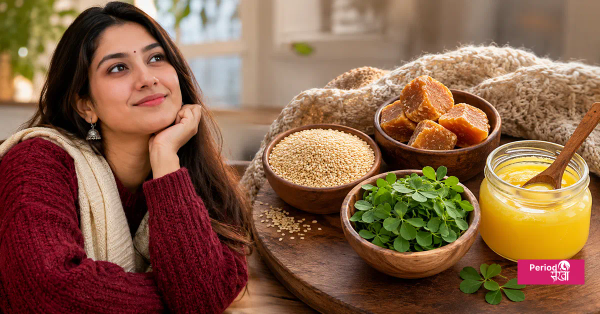

“Sometimes, the wisdom of a winter kitchen begins with a little sesame, a spoonful of jaggery and the care with which a meal is made.”
Winter has a way of bringing familiar foods back to our plates. Sesame laddoos appear in the kitchen, jaggery replaces refined sugar in certain recipes, methi leaves find their way into parathas, and a little ghee is added to warm meals. For many of us, these are not just seasonal preferences. They are memories of mothers and grandmothers reminding us to eat something nourishing, especially around our periods but how much of this advice is supported by nutrition science? Can til help with iron intake? Does jaggery ease period fatigue? Can methi relieve cramps? Is ghee essential during menstruation?
The answer is interesting: these foods can contribute useful nutrients to a balanced diet, but none is a proven treatment for menstrual cramps, heavy bleeding or hormonal imbalance. Let us look at what tradition got right, what science tells us, and how to enjoy these winter favourites sensibly.
Long before nutrition labels and calorie counters became part of everyday conversations, Indian kitchens followed seasonal eating practices. Winter meals often included sesame, jaggery, millets, leafy greens, nuts and preparations made with ghee.
In Ayurveda, seasonal routines are described through the concept of Ritucharya. Traditional winter diets, particularly during Hemanta and Shishira, included nourishing and energy-dense foods. Sesame and ghee were familiar ingredients, while jaggery was used in several regional sweets and preparations.
There was also a practical reason behind these traditions. Sesame and jaggery were convenient ingredients for winter snacks, leafy greens were available seasonally, and a little ghee made simple meals more satisfying. Today, nutrition science gives us a way to understand these foods more precisely. Their value lies in their nutrients, taste and place within a balanced diet not in any special ability to regulate menstruation or generate body heat in a medically measurable way.
If there is one ingredient that announces the arrival of winter in many Indian homes, it is til. From Maharashtra's til-gud laddoos to North India's gajak and rewari, sesame has a long-standing place in seasonal cooking.
But what makes it nutritionally interesting?
Sesame seeds contain healthy unsaturated fats, plant protein, fibre, calcium, iron, magnesium, zinc and copper. These nutrients support several everyday functions, including bone health, muscle function and normal red blood cell production.
Nutritional snapshot: approximately 1 tablespoon (9 g) of dried sesame seeds
Energy: 52 kcal
Protein: 1.6 g
Fat: 4.5 g
Carbohydrates: 2.1 g
Fibre: 1.1 g
Calcium: 87.8 mg
Iron: 1.3 mg
Magnesium: 31.6 mg
Values are approximate and depend on the variety and processing of sesame.
Menstruation involves blood loss, and iron is needed to produce haemoglobin, the protein that carries oxygen in red blood cells. Sesame contributes plant-based, non-haem iron. It can therefore be one part of an iron-conscious diet, particularly when combined with other sources such as lentils, beans, leafy greens and fortified foods.
Sesame also provides magnesium, which contributes to normal muscle and nerve function. However, eating sesame has not been established as a treatment for period cramps. Its nutritional contribution should not be confused with a proven therapeutic effect.
A useful kitchen tip: Pair sesame-containing meals with vitamin C-rich foods such as amla, guava, oranges, tomatoes or lemon. Vitamin C can improve the absorption of non-haem iron from plant foods.
Sesame is a recognised food allergen and can cause reactions ranging from itching and hives to severe allergic reactions. Anyone with a known sesame allergy should avoid it and check ingredient labels.
Sesame is also energy-dense. A small quantity can add flavour and nutrients, but large portions of laddoos, chikki and gajak can add substantial calories and sugar.
There is something comforting about a small piece of gud after a winter meal. In many households, jaggery is used in chikki, til laddoos, gur roti, porridges and traditional sweets.
Jaggery is made by concentrating sugarcane juice or other sugar-rich plant juices. Unlike highly refined sugar, it may retain small quantities of minerals depending on the source and method of processing.
It is often described as an iron-rich food. This claim needs some context.
Some varieties of jaggery contain iron, but the amount varies considerably. The quantity eaten in a typical serving is usually too small to correct iron deficiency or anaemia. Jaggery is also predominantly sugar, so it should not be treated as a medicinal supplement.
A small 5 g serving of jaggery provides approximately 19 kcal, mainly from carbohydrates. The exact nutritional profile depends on the type and preparation.
Its contribution to menstrual health is therefore mainly as a source of energy and as a small ingredient in a varied diet. It does not directly restore menstrual blood loss, regulate hormones or stop period fatigue.
If someone experiences persistent tiredness, dizziness, breathlessness or weakness during menstruation, it is important to investigate possible iron deficiency rather than relying on jaggery.
Not quite in the way many people imagine. Jaggery may retain some minerals, but it is still a concentrated sweetener. Replacing white sugar with an equal quantity of jaggery does not make a sweet dish low in sugar or calories.
People with diabetes or those monitoring blood glucose should account for jaggery just as they would other added sugars.
Methi is one of winter's most versatile ingredients. It appears in methi parathas, theplas, aloo methi, dals and vegetable preparations. Its slightly bitter flavour is familiar to many Indian kitchens, and its nutritional profile makes it worth including regularly.
One important distinction: fresh methi leaves and methi seeds are not nutritionally identical. The figures below refer to fresh leaves.
Nutritional snapshot: approximately 100 g of fresh methi leaves
Energy: 34 kcal
Protein: 3.7 g
Fibre: 4.9 g
Calcium: 274 mg
Iron: 5.69 mg
Magnesium: 64 mg
Vitamin C: 58.2 mg
Folate: 75 micrograms
Values are based on the Indian Food Composition Tables 2017 and may vary with growing conditions and preparation.
Methi leaves provide iron, folate and vitamin C, along with fibre and other micronutrients. Folate supports normal cell division and red blood cell formation, while iron is essential for haemoglobin production.
The fibre in methi can also contribute to digestive health. This is useful because some people experience changes in bowel habits, bloating or constipation around menstruation.
However, methi should not be presented as a cure for menstrual cramps, PCOS or hormonal imbalance. Research into fenugreek supplements and menstrual symptoms is still limited, and findings from concentrated extracts cannot automatically be applied to ordinary servings of cooked leaves.
Methi seeds are used in Indian cooking and traditional preparations. They contain fibre and plant compounds, but concentrated supplements or large medicinal doses are different from using a pinch of seeds in a recipe.
People taking medicines for diabetes should discuss regular medicinal-dose fenugreek supplements with their healthcare professional because fenugreek may affect blood glucose. It can also cause digestive discomfort or allergic reactions in some people. Those who are pregnant should avoid using concentrated fenugreek supplements unless advised by their clinician.
For everyday meals, fresh methi leaves are a simple and versatile choice.
A little ghee on hot khichdi, dal or a winter roti is a familiar sight in Indian homes. Our mothers and grandmothers often considered it an important part of a nourishing meal.
Ghee is clarified butter, made by removing most of the water and milk solids from butter. It is almost entirely fat and provides concentrated energy.
Nutritional snapshot: approximately 1 teaspoon (5 g) of ghee
Energy: approximately 45 kcal
Fat: approximately 5 g
Protein: negligible
Carbohydrates: negligible
The exact figures vary by product and serving size.
Dietary fat is important for normal body functions, including the absorption of fat-soluble vitamins. Ghee can contribute energy and make meals more palatable. It can be included in a balanced diet if it suits a person's nutritional needs.
However, there is no good evidence that ghee directly reduces menstrual cramps, balances reproductive hormones or prevents period-related inflammation.
Ghee is also a source of saturated fat. Consuming it in large amounts can make it easier to exceed recommended saturated-fat intake, particularly when the rest of the diet also contains butter, cream, fatty meats and fried foods.
People with high LDL cholesterol or cardiovascular risk factors may need to limit it and seek individual dietary advice.
Allergy note: Ghee contains very little lactose because most milk solids are removed, but it may still contain trace milk proteins. It should not automatically be considered safe for someone with a milk allergy.
The most useful way to understand these ingredients is to connect their nutrients with the body's needs, without promising that one food can correct a deficiency.
Nutrient or dietary component | Food contribution | Why it matters |
|---|---|---|
Iron | Methi, sesame and some jaggery | Supports haemoglobin production; important when menstrual blood loss is significant |
Calcium | Sesame and methi | Supports bones, muscle contraction and nerve signalling |
Magnesium | Sesame and methi | Supports normal muscle and nerve function |
Folate | Methi | Supports cell division and red blood cell formation |
Fibre | Methi and sesame | Supports bowel regularity and digestive health |
Dietary fat | Sesame and ghee | Provides energy; helps absorb fat-soluble vitamins |
Can these foods heal a deficiency? No single serving can be relied upon to treat a diagnosed deficiency. Iron deficiency, for example, may require blood tests and prescribed iron supplementation. A dietitian or doctor can help determine whether food changes are sufficient.
The University of Edinburgh's patient information on menstruation and nutrition highlights iron as one of the clearest nutritional links with menstrual blood loss. It also notes that evidence connecting particular dietary patterns with period pain remains limited. This is why food should support menstrual wellbeing, not replace medical assessment.
Traditional ingredients are also finding a place in contemporary cooking. Chef Sanjeev Kapoor's SK Khazana, for instance, features a til-gud laddoo recipe combining sesame, jaggery, coconut, peanuts, roasted chana dal and a little ghee. It shows how several ingredients can be brought together in a familiar winter preparation.
Nutritionist Rujuta Diwekar has also discussed seasonal Indian eating, highlighting the place of local foods and traditional winter meal patterns. The broader nutritional message is useful: familiar, seasonal foods can be part of a varied diet rather than being replaced by expensive or fashionable alternatives.
But there is an important distinction between culinary tradition and clinical nutrition. A chef can help us understand how to prepare these foods, and a nutritionist can help us fit them into a meal plan. Neither makes a traditional recipe a treatment for anaemia, PCOS or dysmenorrhoea. A balanced approach is to enjoy the food, understand its ingredients and avoid attaching medical claims to a recipe.
These recipes bring together traditional flavours and practical nutrition. The quantities are flexible, and the portions can be adjusted according to appetite and individual dietary needs.
Why try it? A savoury winter meal that combines fresh methi, sesame and whole-grain flour. It provides fibre, plant-based iron and calcium, along with energy from the grains.
Ingredients (makes 4 small theplas):
1 cup whole-wheat flour
½ cup finely chopped fresh methi leaves
1 tablespoon roasted sesame seeds
¼ teaspoon turmeric
½ teaspoon cumin powder
A pinch of ajwain
1 teaspoon oil for the dough
Water as required
A small amount of oil or ghee for cooking
Salt to taste
Method:
Wash and finely chop the methi leaves.
Combine the flour, methi, sesame, turmeric, cumin, ajwain and salt.
Add oil and enough water to make a soft dough.
Rest the dough for 10 minutes.
Divide it into four portions and roll into small theplas.
Cook on a hot tawa, using a little oil or ghee on each side.
Serve warm with plain curd or a fresh vegetable raita.
Allergen and nutrition notes: Contains wheat (gluten) and sesame. Curd adds milk as an allergen. The exact calories depend on the flour quantity and cooking fat used. For a higher-fibre meal, serve with vegetables or dal.
Why try it? A small, homemade alternative to heavily processed sweets. Sesame provides minerals and healthy fats, while jaggery supplies sweetness and energy.
Ingredients (makes approximately 10 small bites):
½ cup sesame seeds
¼ cup grated jaggery
1 tablespoon roasted peanuts, finely crushed (optional)
1 teaspoon ghee
A pinch of cardamom powder
1 tablespoon water, if needed
Method:
Dry-roast sesame seeds on a low flame until fragrant. Allow them to cool slightly.
Heat ghee in a pan and add the grated jaggery.
Add a little water if needed and stir until the jaggery melts into a thick syrup.
Mix in the sesame seeds, crushed peanuts and cardamom.
Turn off the heat, allow the mixture to cool enough to handle, and shape into small bites.
Store in an airtight container once completely cool.
Allergen and nutrition notes: Contains sesame. Peanuts are an additional allergen if included. Ghee may contain trace milk proteins. These bites are energy-dense, so keep them small. Jaggery remains an added sugar, even when used in a homemade recipe.
These ingredients can be part of meals across different life stages, but the quantities and nutritional priorities change.
Adolescents and girls experiencing menarche: The first few years after the onset of menstruation are an important time for growth and nutritional development. Iron-rich foods, calcium sources, protein and adequate overall energy are particularly important. Methi and sesame can contribute to a varied diet, but heavy or prolonged periods should never be managed with food alone.
Adults with regular menstrual cycles: A balanced diet containing leafy vegetables, pulses, whole grains, fruits, nuts and seeds can help meet everyday nutritional requirements. These four ingredients can be included according to taste, tolerance and health needs.
Women approaching perimenopause: Nutritional priorities may include maintaining bone health, adequate protein intake and cardiovascular health. Sesame and methi can contribute useful nutrients, while ghee and jaggery need portion awareness.
Older adults: Calcium, protein, fibre and overall dietary quality remain important. People managing diabetes, high cholesterol, kidney disease or food allergies may need personalised advice before increasing particular foods.
There is no universal age at which someone should start eating these ingredients specifically for menstrual health. They are foods, not age-specific menstrual medicines.
The phrase “excess of everything is bad” is particularly relevant when traditional foods are treated as health remedies.
Til: Avoid it completely if you have a sesame allergy. Otherwise, enjoy modest portions, especially if you are also eating other calorie-dense seeds and nuts.
Gud: Reduce or limit it if you have diabetes or need to monitor blood glucose. Remember that it is still a concentrated sweetener.
Methi: Reduce it if it causes bloating, diarrhoea or other digestive discomfort. Discuss concentrated supplements with a clinician if you take glucose-lowering medicines or are pregnant.
Ghee: Keep portions moderate, especially if you have elevated LDL cholesterol or have been advised to reduce saturated fat. Avoid it if you have a milk allergy unless your allergist has specifically confirmed it is safe.
Also pay attention to how food is prepared. A methi paratha cooked in excessive fat or a large til-gud laddoo containing substantial jaggery can become much more energy-dense than the ingredients alone suggest.
Food can support general health, but certain menstrual symptoms deserve medical attention. Consult a gynaecologist if you experience:
Very heavy bleeding, such as soaking through a pad or tampon every hour for several consecutive hours.
Periods lasting longer than seven days.
Severe cramps that interfere with school, work or everyday activities.
Persistent fatigue, dizziness, breathlessness or unusual weakness.
New changes in cycle pattern or bleeding between periods.
A clinician may recommend tests such as a complete blood count or ferritin assessment if iron deficiency is suspected. Do not start iron supplements or high-dose herbal preparations without appropriate advice.
Perhaps our mothers and grandmothers were not thinking about milligrams of iron, calcium or magnesium when they prepared til laddoos or added methi to a winter meal. They were following familiar seasonal practices, using ingredients that were accessible, nourishing and part of everyday cooking. Today, we can appreciate that wisdom while understanding its limits. Til contributes minerals and healthy fats. Methi offers fibre, folate and iron. Gud adds sweetness and energy, but remains a concentrated sugar. Ghee adds flavour and fat, but needs moderation.
No single winter food can cure period pain, restore severe iron deficiency or balance hormones. What matters is the overall pattern: adequate meals, varied food groups, hydration, sleep and timely medical care. If you are experiencing heavy periods, persistent fatigue, dietary restrictions or a diagnosed nutrient deficiency, speak to a qualified dietitian or healthcare professional for a plan suited to your needs. Always check ingredient labels for allergens, especially sesame, peanuts, wheat and milk. This winter, enjoy the foods that make your kitchen feel like home but let knowledge guide the portions, and let good nutrition be a daily habit rather than a monthly remedy.
PeriodSakhi believes that understanding your body begins with understanding what nourishes it.
Longvah T, Ananthan R, Bhaskarachary K, Venkaiah K. Indian Food Composition Tables 2017. National Institute of Nutrition, Indian Council of Medical Research, Hyderabad.
National Institutes of Health, Office of Dietary Supplements. Iron: Fact Sheet for Health Professionals. https://ods.od.nih.gov/factsheets/Iron-HealthProfessional/
University of Edinburgh, Centre for Reproductive Health. Menstruation and Nutrition. https://reproductive-health.ed.ac.uk/hope/about-menstruation/patient-information/menstruation-and-nutrition
US Food and Drug Administration. The FASTER Act: Sesame Is the Ninth Major Food Allergen. https://www.fda.gov/food/food-allergies/faster-act-sesame-ninth-major-food-allergen
Sanjeev Kapoor, SK Khazana. Til Gud Laddoo. https://www.sanjeevkapoor.com/Recipe/Til-Gud-Laddoo---SK-Khazana.html
NDTV Health. Rujuta Diwekar's Guide to the Healthiest Meal Plans for Winter. https://www.ndtv.com/health/living-healthy/rujuta-diwekars-guide-to-the-healthiest-meal-plans-for-winter-2661420
Examine.com. Research Breakdown on Fenugreek. https://examine.com/supplements/fenugreek/research/
Dr. Akanksha is a dedicated dental professional and health educator who believes that healthcare goes beyond treatment-it is about creating awareness, building trust, and empowering individuals to make informed decisions about their well-being. Alongside her clinical expertise in dentistry, she is deeply passionate about public health education, with a special focus on menstrual health, hygiene, and women's wellness.
About PeriodSakhi
PeriodSakhi is your trusted companion for understanding your menstrual health. With easy-to-use tools, it helps you track your periods, ovulation, fertility, moods, and symptoms, while providing insights into your overall reproductive and hormonal health. PeriodSakhi also serves as a supportive online community where women can share experiences, find reliable information, and access expert-backed guidance on menstrual health, PCOS, pregnancy, lifestyle, and more.
Disclaimer
The views, thoughts, and opinions expressed in this article/blog are solely those of the author and do not necessarily reflect the views of PeriodSakhi. Any omissions, errors, or inaccuracies are the responsibility of the author. PeriodSakhi assumes no liability or responsibility for any content presented. Always consult a qualified medical professional for specific advice related to menstrual health, fertility, pregnancy, or related conditions.