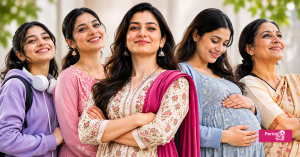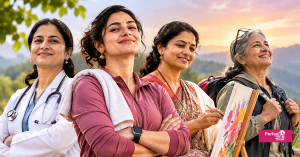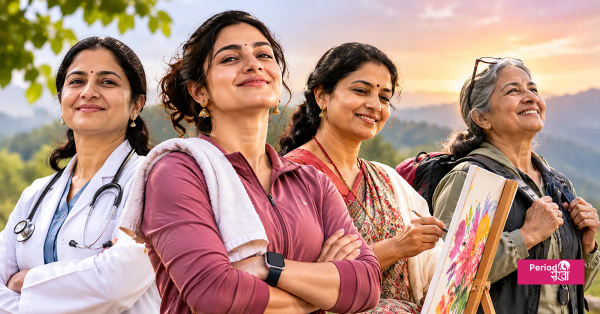

A woman's ambitions do not have an age limit, and neither should the opportunities available to her. Yet health challenges, disability, motherhood, hormonal changes and social expectations can create barriers at different points in life. Their stories also remind us that strength does not mean ignoring health needs; it can mean adapting, seeking support and finding a new way forward.
There is an unspoken timeline that society often creates for women. Study before a certain age. Build a career early. Get married at the expected time. Have children if you choose to. Maintain your health, appearance and responsibilities, and somehow manage to do everything without slowing down but real life rarely follows a neat schedule. Some women discover their ambitions in their twenties. Others begin a new career in their forties or fifties.
Some rebuild their lives after a serious illness, while others learn to navigate disability, motherhood or changing health needs without giving up their professional and personal aspirations. The idea that a woman's opportunities become smaller with age is not supported by the lives of women who have challenged these expectations. From a mountaineer who climbed Everest after losing a leg to an entrepreneur who founded a successful business at 49, their journeys show that success can begin at different stages of life. They also highlight an important point: health challenges are real, and women should have access to the care, support and opportunities that allow them to pursue their ambitions.
In 2012, actor Manisha Koirala received a diagnosis that changed the direction of her life: stage IV ovarian cancer. The diagnosis meant undergoing major treatment, including surgery and chemotherapy. It also brought uncertainty about her future, her health and her career. After completing treatment, she gradually returned to acting. She appeared in films and continued to speak publicly about her experience, using her platform to encourage conversations around cancer awareness.
Her journey is particularly relevant to women's health because ovarian cancer can be difficult to recognise in its early stages. Symptoms such as persistent abdominal bloating, pelvic discomfort, feeling full quickly and changes in urinary habits may have several causes. When they persist or feel unusual, they deserve medical attention. Manisha's experience reminds us that a serious diagnosis can change a woman's priorities and circumstances, but it does not erase her identity, ambitions or ability to build a meaningful life. Recovery is not always a return to the person someone was before illness. Sometimes it involves discovering a different way to live and work.
In 2011, Arunima Sinha lost her left leg after being pushed from a moving train during a robbery attempt. At the time, she was a national-level volleyball player. The accident could have ended her sporting ambitions, but she chose to pursue a new challenge: climbing Mount Everest.nAfter receiving treatment and being fitted with a prosthetic leg, she trained in mountaineering and prepared for the demanding expedition.
On 21 May 2013, she reached the summit of Mount Everest, becoming the first female amputee to climb the mountain. Her achievement was not simply a story of determination. It also involved medical treatment, rehabilitation, specialised equipment, training and support. Arunima's journey challenges the assumption that disability automatically limits ambition. It also raises an important question about society: are people with disabilities given the accessibility, resources and opportunities they need to pursue their goals? Her story is a reminder that physical differences should not determine a person's potential.
For a dancer, movement is central to artistic expression. For Sudha Chandran, an accident at a young age brought an unexpected challenge to the career she had been building. Following a road accident in 1981, complications led to the amputation of her right leg below the knee. She was fitted with a prosthetic limb, popularly known as the Jaipur Foot, and gradually worked towards returning to dance. Her comeback required rehabilitation, practice and considerable physical adjustment. She eventually returned to performing and went on to build a successful career as a dancer and actor.
Sudha's story is significant because it challenges narrow ideas about ability and artistic achievement. It also highlights the importance of rehabilitation technology. A prosthetic limb is not simply a replacement for a lost body part; it can be part of a much wider process involving physical therapy, adaptation, accessibility and personal choice. Her journey shows that a change in physical ability does not necessarily mean the end of a person's professional identity.
Most people associate professional athletics with youth. Man Kaur challenged that assumption in a remarkable way. The Patiala-based athlete began running at the age of 93, encouraged by her son, Gurdev Singh. She went on to compete in masters athletics events and won medals in international competitions.
At 101, she won the 100-metre sprint at the World Masters Games in Auckland in 2017.
Her story is particularly striking because she began pursuing competitive athletics at an age when many people are encouraged to slow down considerably.
Reports also documented that she lived with osteoporosis, a condition that weakens bones and increases the risk of fractures. Man Kaur's achievements should not be interpreted as a reason for older adults to ignore medical advice or push their bodies beyond safe limits. Rather, they show that age alone does not determine whether someone can discover a new interest or remain physically active. The right level of movement depends on individual health, mobility and medical guidance. For older women, appropriate strength and balance exercises can support independence and everyday functioning.
Not every barrier is medical. Sometimes, the biggest obstacle is the expectation that a woman should have established her career by a particular age. Falguni Nayar spent years working in investment banking before deciding to become an entrepreneur. In 2012, at the age of 49, she founded Nykaa, an online beauty and wellness retailer.
Leaving an established professional career to build a business in a new industry was a significant decision. Her experience in finance, understanding of business and willingness to take a calculated risk helped her build the company. Nykaa later became a publicly listed company, marking a major milestone for a woman-led Indian business. Falguni's journey does not involve a health-related barrier, but it belongs in this conversation about age and opportunity. It challenges the idea that a woman must make her most important professional decisions early in life. A career change at 40 or 50 is not necessarily a late start. It may be the beginning of a chapter shaped by years of experience.
For women athletes, pregnancy and motherhood can bring additional physical, emotional and professional challenges. Mary Kom, the Indian boxer and six-time world champion, has spoken about the difficulty of returning to competitive boxing after becoming a mother. Her comeback required rebuilding her fitness, managing training schedules and navigating the emotional demands of being away from her young children. She has also spoken about the social expectations placed on women after marriage and motherhood, particularly when they pursue careers in fields traditionally considered male-dominated.
Her journey demonstrates that motherhood does not automatically end a woman's professional ambitions. It also reminds us that a successful return often depends on practical support, including childcare, family involvement, appropriate recovery time and access to training facilities. Women should not have to choose between being mothers and pursuing meaningful careers simply because workplaces and institutions have not adapted to their needs.
These stories are different, but they share a common theme: a woman's life cannot be understood through a single milestone or limitation. Some challenged disability. Others rebuilt their lives after illness, entered a new profession later in life or returned to demanding careers after motherhood. Their journeys also highlight why conversations about women's health must go beyond celebrating individual achievements.
It is important not to turn these experiences into a message that women must always be strong or overcome every obstacle through determination alone.
Access to healthcare, financial resources, family support, workplace flexibility and social acceptance matter. Not every barrier can be solved by individual effort. Celebrating women's achievements should also mean creating conditions in which more women can pursue their ambitions without facing unnecessary obstacles.
Health needs change throughout life. A woman who is managing menstrual disorders in her twenties may face fertility-related decisions in her thirties, perimenopausal symptoms in her forties or bone health concerns later in life.
These changes are normal subjects of healthcare, not reasons to question a woman's professional ability.
Some areas deserve more attention:
Menstrual health: Severe cramps, heavy bleeding and conditions such as endometriosis or PCOS can affect daily life. Women should have access to timely diagnosis and appropriate treatment.
Pregnancy and postpartum recovery: Women need adequate medical care, recovery time and practical support when returning to work after childbirth.
Breast and reproductive cancers: Awareness of symptoms, appropriate screening and timely medical assessment can make a meaningful difference.
Menopause: Hot flushes, sleep disturbances, vaginal symptoms and other changes can affect quality of life. Women should be able to discuss these concerns without embarrassment or fear of being judged.
Bone and cardiovascular health: As women grow older, maintaining bone strength, muscle health and cardiovascular fitness becomes increasingly important.
The objective is not to pretend that health challenges do not exist. It is to ensure that women are not made to feel that seeking care, taking time to recover or adapting their routines makes them less capable.
Perhaps the most meaningful lesson from these women is that life does not have to follow a prescribed timeline. A woman may return to work after cancer treatment. Another may discover a new passion after retirement. Someone else may begin strength training in her sixties, pursue higher education in her forties or start a business after decades in a different profession. There is no single definition of achievement, and there is no universal age at which a woman is expected to stop dreaming.
At the same time, celebrating ambition should never mean romanticising pain or ignoring health concerns. Women deserve medical support, reasonable recovery time and the freedom to make choices that work for their bodies and circumstances. At PeriodSakhi, we believe women's health conversations should reflect the full span of a woman's life. Menarche, menstruation, pregnancy, menopause, illness and ageing are not isolated subjects. They are part of a changing journey that deserves accurate information and compassionate support.
Age is a number. Health deserves attention. And a woman's ambitions deserve room to grow at every stage of life.
1. Can women start a new career after 40 or 50?
Absolutely. There is no universal age limit for changing careers or starting a business. Experience, skills, financial circumstances and personal goals can all influence the decision.
2. Can women remain physically active as they grow older?
Yes. Suitable physical activity can support cardiovascular health, muscle strength, balance and bone health. The type and intensity of exercise should be adapted to individual health and mobility.
3. Does menopause mean women should slow down professionally?
No. Menopause is a natural biological transition, not an end to professional capability. Women experiencing disruptive symptoms can discuss management options with a healthcare professional.
4. Can women return to work after a serious illness?
Many women do return to work after serious illnesses, although the experience varies. Recovery, treatment effects, individual health, workplace flexibility and support systems all influence the process. A gradual return may be appropriate for some people.
5. Why is women's health awareness important at every age?
Health needs change throughout life. Understanding menstrual health, reproductive conditions, pregnancy, menopause and age-related health risks can help women seek timely care and make informed decisions.
Memorial Sloan Kettering Cancer Center. How a Film Star Got a Second Act after Advanced Ovarian Cancer: Manisha's Story. https://www.mskcc.org/experience/hear-from-patients/how-film-star-got-second-act-after-advanced-ovarian-cancer-manisha-s
Press Information Bureau, Government of India. Arunima Sinha: Mind Over Matter – Transcending Adversity to Make History. https://www.pib.gov.in/PressNoteDetails.aspx?ModuleId=3&NoteId=150404&lang=2®=48
Guinness World Records. First female amputee to climb Everest. https://www.guinnessworldrecords.com/world-records/550815-first-female-amputee-to-climb-everest
Indian Express. At 101, Man Kaur wins 100m gold at World Masters Games. https://indianexpress.com/article/sports/sport-others/at-101-she-wins-100m-gold-at-world-masters-games-patiala-marathon-4626902/
EY India. Falguni Nayar – Entrepreneur of the Year. https://www.ey.com/en_in/entrepreneur-of-the-year/winners-2021/falguni-nayar
Business Standard. I'm not willing to retire yet, am a victim of age limit: Mary Kom. https://www.business-standard.com/article/sports/i-m-not-willing-to-retire-yet-am-a-victim-of-age-limit-mary-kom-123032400786_1.html
National Institute on Aging. Osteoporosis. https://www.nia.nih.gov/health/osteoporosis
World Health Organization (WHO). Menopause. https://www.who.int/news-room/fact
About PeriodSakhi
PeriodSakhi is your trusted companion for understanding your menstrual health. With easy-to-use tools, it helps you track your periods, ovulation, fertility, moods, and symptoms, while providing insights into your overall reproductive and hormonal health. PeriodSakhi also serves as a supportive online community where women can share experiences, find reliable information, and access expert-backed guidance on menstrual health, PCOS, pregnancy, lifestyle, and more.
Disclaimer
The views, thoughts, and opinions expressed in this article/blog are solely those of the author and do not necessarily reflect the views of PeriodSakhi. Any omissions, errors, or inaccuracies are the responsibility of the author. PeriodSakhi assumes no liability or responsibility for any content presented. Always consult a qualified medical professional for specific advice related to menstrual health, fertility, pregnancy, or related conditions.