
A Woman's Life Is Not Defined by Her Age
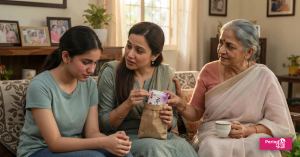
A young girl stands quietly outside her classroom, holding a small pouch because she has just experienced her first period. Years later, that same girl may be a woman balancing professional responsibilities, relationships, motherhood or personal ambitions. Much further along in life, she may find herself navigating hot flushes, changing sleep patterns and the transition towards menopause.
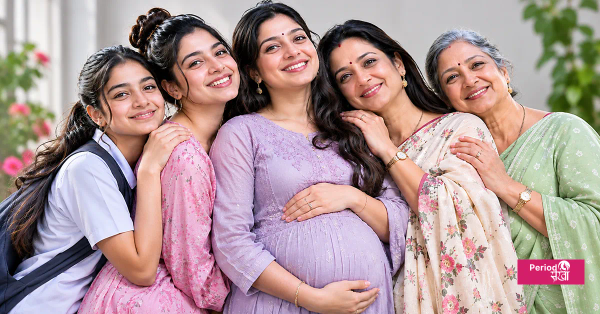
Her circumstances have changed. Her body has changed. But one thing remains constant: every stage of her life deserves attention, respect and care.
Women's health is often discussed in separate conversations. Puberty is associated with adolescence, menstruation with the reproductive years, pregnancy with motherhood and menopause with ageing. Yet these experiences are connected. They form part of a much longer journey in which the body evolves, hormones fluctuate and health needs change.
From the first menstrual cycle to the final menstrual period, women experience transitions that can influence their physical health, emotional well-being and everyday lives.
This is not simply a story about reproductive milestones. It is about recognising the strength, adaptability and individuality of women at every age.
Menarche refers to a girl's first menstrual period. It is an important milestone of puberty and usually occurs between the ages of 10 and 15, although individual experiences vary.
For some girls, the first period arrives after they have already learnt about menstruation at school or at home. For others, it comes unexpectedly, bringing questions, confusion and sometimes fear.
A girl may wonder whether bleeding is normal, whether she can attend school or whether she needs to change her daily activities. The way adults respond to these questions can shape how she understands her body for years to come.
What girls should know about their first period:
Menstruation is a normal biological process associated with the reproductive cycle.
Periods may be irregular during the first few years as the hormonal system matures.
Menstrual blood is not dirty or impure.
Mild cramps and changes in mood can occur, but severe pain should not be dismissed.
Menstrual products should be changed regularly, with attention to personal hygiene.
Menarche should be approached as a normal part of growing up rather than something to fear or hide.
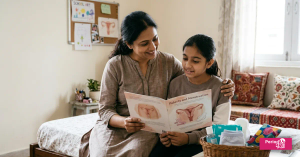
Parents, teachers and caregivers can make a meaningful difference by discussing periods before they begin. A girl who understands what is happening is more likely to feel prepared, confident and comfortable asking for help.
The years following menarche bring several physical, hormonal and emotional changes.
Breast development, changes in body shape, acne, body hair and menstrual cycles are all part of puberty. These changes do not happen at the same pace for everyone.
Adolescence can also be a time when girls become more conscious of how their bodies look and how others perceive them. Social expectations, comparisons and misinformation can make ordinary developmental changes feel uncomfortable.
Menstrual health education during these years should go beyond explaining how to use a sanitary pad.
Girls should understand:
How the menstrual cycle works.
Why periods may be irregular during early adolescence.
How to recognise unusually heavy bleeding or severe menstrual pain.
Why nutrition, sleep and physical activity matter.
When symptoms such as persistent acne, excessive hair growth or irregular periods may need medical evaluation.
Conditions such as polycystic ovary syndrome (PCOS) and endometriosis can affect adolescents too. Persistent symptoms should not be dismissed as simply part of growing up. Most importantly, girls should be encouraged to participate in sports, education, friendships and everyday activities without feeling restricted because they menstruate.
Adulthood brings a different set of experiences. Menstrual cycles may become more predictable, but reproductive health continues to evolve. Women may navigate higher education, careers, relationships, marriage, pregnancy, contraception or the decision not to have children. These choices are deeply personal and do not follow a universal timeline. The reproductive years are also a time when certain health conditions may become more noticeable.
A regular menstrual cycle is one indicator of reproductive health, but cycle length and bleeding patterns can vary.
Women should pay attention to changes such as:
Periods that become consistently irregular.
Bleeding that is unusually heavy or prolonged.
Severe cramps that interfere with daily activities.
Bleeding between periods.
Persistent pelvic pain.
These symptoms may have several possible causes, including fibroids, endometriosis, PCOS, thyroid disorders and other conditions. A medical evaluation can help identify the reason.
For some women, adulthood includes pregnancy and childbirth. These experiences can bring substantial physical and emotional changes, from morning sickness and fatigue to recovery after delivery. Others may explore fertility treatment, manage reproductive health conditions or choose not to become parents. Women's health conversations should make space for all these experiences without treating motherhood as the defining measure of womanhood.
Preventive care becomes particularly important during adulthood.
Depending on age, medical history and individual risk, this may include cervical cancer screening, breast health assessments, vaccinations, contraception counselling and routine health checks.
Understanding personal risk factors and discussing concerns with a healthcare professional can help women make informed decisions.
Menopause does not happen overnight. It is preceded by a transitional phase called perimenopause, during which ovarian hormone levels fluctuate and menstrual cycles may become less predictable.
For many women, perimenopause begins during their 40s, although the timing varies. A woman who has had relatively predictable periods for decades may suddenly notice that her cycles are shorter, longer, heavier or lighter. Sleep may become disturbed, mood may fluctuate and hot flushes may appear.
Common perimenopausal symptoms include:
Changes in menstrual cycle length and flow.
Hot flushes and night sweats.
Sleep disturbances.
Vaginal dryness.
Changes in sexual comfort or desire.
Mood changes and difficulty concentrating.
These symptoms can affect everyday life, but they are not experienced by every woman in the same way.
Perimenopause is also a time when women may benefit from reviewing their long-term health. Bone health, cardiovascular health, nutrition and physical activity deserve attention as hormonal patterns change. A conversation with a healthcare professional can help women understand their symptoms and explore suitable management options.
Menopause is defined as the point at which a woman has gone 12 consecutive months without a menstrual period, provided there is no other medical explanation.
It commonly occurs between the ages of 45 and 55, with the average age around 51 in many populations. However, the timing can vary.
For some women, menopause brings relief from menstrual cramps, bleeding and the practical demands of monthly periods. For others, symptoms such as hot flushes, vaginal dryness, sleep disruption and changes in mood may continue to affect quality of life.
It is important to recognise that menopause is not an illness. It is a natural biological transition, although symptoms may require medical support.
As oestrogen levels decline, certain health risks become more relevant.
Health area | Why it deserves attention |
|---|---|
Bone health | Reduced oestrogen can contribute to bone loss and increased osteoporosis risk |
Heart health | Cardiovascular risk factors become increasingly important to monitor |
Vaginal and urinary health | Vaginal dryness and urinary symptoms may develop or persist |
Muscle strength | Maintaining muscle mass supports mobility and everyday functioning |
Mental well-being | Sleep disruption and other changes may affect mood and quality of life |
Regular physical activity, adequate nutrition, appropriate health screening and medical guidance can support well-being during this stage.
Women experiencing troublesome symptoms should not feel that they must simply tolerate them because menopause is natural. Treatment options are available, and the right approach depends on individual health needs.
Women's achievements do not have an expiry date. Across professions, public life, business, science and the arts, women continue to build, lead and reinvent themselves at different stages of life.
Consider a few widely recognised examples:
Falguni Nayar founded Nykaa in 2012 at the age of 49, after a long career in investment banking. Her journey challenges the idea that entrepreneurship belongs only to the young.
Kiran Mazumdar-Shaw established Biocon in 1978 and built it into a major biotechnology company. Her work illustrates the role women can play in shaping science and industry.
Mary Kom continued to achieve remarkable success in boxing while balancing the demands of professional sport and motherhood. Her journey is a reminder that women's ambitions need not be confined to a single identity.
Arundhati Bhattacharya became the first woman to chair the State Bank of India, demonstrating the possibilities of leadership in traditionally male-dominated institutions.
Their journeys are different, but they share an important message: age is not a reliable measure of a woman's potential.
A woman may discover a new ambition at 25, build a business at 45, return to education at 55 or begin an entirely different chapter later in life.
Health transitions may change the way women live and work, but they do not define the limits of what they can achieve.
Despite greater awareness, discussions about menstruation, reproductive health and menopause remain uncomfortable in many homes and workplaces.
A teenage girl may hesitate to tell her teacher that she has period pain. An adult woman may avoid discussing heavy bleeding because she assumes it is normal. A woman experiencing menopause may keep hot flushes or sleep disturbances to herself because she fears being judged as old or less capable.
These silences can delay care.
Women's health education should not stop once a girl learns about her first period. It should evolve as her needs change.
Life stage | Important health conversations |
|---|---|
Before menarche | Puberty, body changes and menstrual preparation |
Adolescence | Period hygiene, cycle patterns, pain and PCOS awareness |
Reproductive years | Contraception, fertility, pregnancy, cervical screening and menstrual disorders |
Perimenopause | Irregular periods, sleep, mood changes and symptom management |
Postmenopause | Bone health, cardiovascular health, vaginal health and preventive care |
Families, schools, healthcare professionals and workplaces all have a role in making these conversations more open. A woman's health should never become a topic that is discussed only when something goes wrong.
There is no single wellness routine that works for every age. However, a few habits can support health across different stages of life.
1. Understand your body's patterns. Pay attention to menstrual changes, unusual symptoms, sleep and energy levels. Tracking cycles can help identify patterns that may be useful during medical consultations.
2. Eat a balanced diet. Include vegetables, fruits, whole grains, protein sources and healthy fats. Nutritional needs may change during adolescence, pregnancy and later life.
3. Stay physically active. Walking, strength training, yoga and other suitable activities can support cardiovascular health, bone strength and mental well-being.
4. Prioritise sleep and emotional health. Hormonal changes, stress and life responsibilities can affect sleep and mood. Seek support when symptoms begin interfering with everyday life.
5. Do not normalise persistent pain. Severe menstrual cramps, heavy bleeding, pelvic pain and troublesome menopausal symptoms deserve attention.
6. Keep up with preventive healthcare. Screening and health checks should be based on age, personal history, risk factors and medical advice.
7. Ask questions without embarrassment. Whether it concerns a first period, fertility, contraception or menopause, no health question should be considered too insignificant to discuss.
1. What is the difference between menarche and menopause?
Menarche is the first menstrual period, marking an important milestone in puberty. Menopause is the permanent end of menstrual periods after 12 consecutive months without menstruation, when there is no other medical explanation.
2. At what age does menarche usually occur?
The first period commonly occurs between 10 and 15 years of age, although the timing varies. If puberty appears unusually early or is significantly delayed, a healthcare professional can assess whether further evaluation is needed.
3. When does perimenopause usually begin?
Perimenopause often begins during a woman's 40s, although it can start earlier or later. Menstrual changes, hot flushes and sleep disturbances are among its possible symptoms.
4. Is menopause the same for every woman?
No. Some women experience very few symptoms, while others have hot flushes, night sweats, sleep problems, mood changes or vaginal dryness. The timing and experience of menopause differ between individuals.
5. Can women remain physically active after menopause?
Yes. Regular physical activity, including suitable weight-bearing and strength exercises, can support bone health, muscle strength, cardiovascular health and mobility. Exercise should be adapted to individual health and fitness levels.
6. Why is it important to discuss menopause openly?
Menopause can affect sleep, comfort, work and quality of life. Open conversations can reduce stigma, help women recognise symptoms and encourage timely medical support.
From the uncertainty of a first period to the changes that accompany menopause, a woman's life is shaped by experiences that are deeply personal and constantly evolving. Some milestones bring excitement, others bring questions, and a few may demand patience and medical support. None of them should make a woman feel that her body is something to hide or that her age determines her worth. A young girl deserves to understand her first period without fear. An adult woman deserves access to reproductive healthcare without judgement. A woman approaching menopause deserves accurate information and support rather than silence.
Women's strength is not limited to how much discomfort they can endure. It also lies in recognising their needs, asking for help, making informed choices and allowing themselves to grow through every chapter of life. At PeriodSakhi, we believe that menstrual and reproductive health conversations should continue throughout a woman's life, not end when her periods do. From menarche to menopause, every stage matters. And every woman deserves to feel informed, supported and confident in her own journey.
World Health Organization (WHO). Menstrual health. https://www.who.int/health-topics/menstrual-health
UNICEF. Guidance on menstrual health and hygiene. https://www.unicef.org/documents/guidance-menstrual-health-and-hygiene
American College of Obstetricians and Gynecologists (ACOG). Menstruation in Girls and Adolescents: Using the Menstrual Cycle as a Vital Sign. https://www.acog.org/clinical/clinical-guidance/committee-opinion/articles/2015/12/menstruation-in-girls-and-adolescents-using-the-menstrual-cycle-as-a-vital-sign
National Health Service (NHS). Menopause. https://www.nhs.uk/conditions/menopause/
National Institute on Aging. What Is Menopause? https://www.nia.nih.gov/health/menopause/what-menopause
World Health Organization (WHO). Menopause. https://www.who.int/news-room/fact-sheets/detail/menopause
National Health Service (NHS). Polycystic ovary syndrome (PCOS). https://www.nhs.uk/conditions/polycystic-ovary-syndrome-pcos/
Dr. Akanksha is a dedicated dental professional and health educator who believes that healthcare goes beyond treatment-it is about creating awareness, building trust, and empowering individuals to make informed decisions about their well-being. Alongside her clinical expertise in dentistry, she is deeply passionate about public health education, with a special focus on menstrual health, hygiene, and women's wellness.
About PeriodSakhi
PeriodSakhi is your trusted companion for understanding your menstrual health. With easy-to-use tools, it helps you track your periods, ovulation, fertility, moods, and symptoms, while providing insights into your overall reproductive and hormonal health. PeriodSakhi also serves as a supportive online community where women can share experiences, find reliable information, and access expert-backed guidance on menstrual health, PCOS, pregnancy, lifestyle, and more.
Disclaimer
The views, thoughts, and opinions expressed in this article/blog are solely those of the author and do not necessarily reflect the views of PeriodSakhi. Any omissions, errors, or inaccuracies are the responsibility of the author. PeriodSakhi assumes no liability or responsibility for any content presented. Always consult a qualified medical professional for specific advice related to menstrual health, fertility, pregnancy, or related conditions.