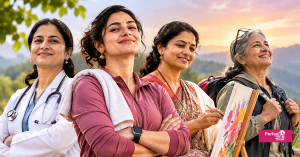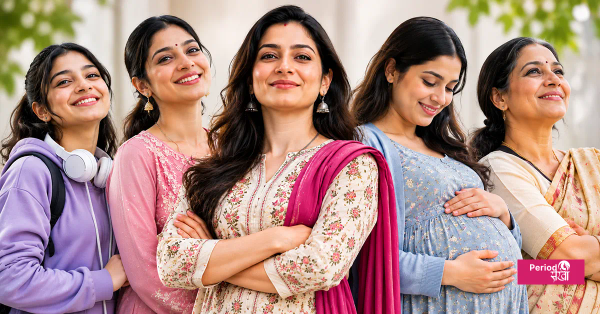

A woman’s health story does not begin and end with menstruation, pregnancy or motherhood. There are experiences that rarely find their way into everyday conversations: receiving a life-changing diagnosis in the middle of a career, learning to live with a condition that may never completely disappear, adjusting to a body that no longer feels familiar, or discovering that recovery is not always a straight line.
We often use the word strength when speaking about women who have faced difficult circumstances. But strength does not always look like a dramatic comeback. Sometimes it is attending another hospital appointment, asking a doctor a difficult question, accepting help from family, returning to work at one's own pace or allowing oneself to have a difficult day without feeling guilty.
Across the world, women have shared deeply personal experiences of illness, disability and recovery. Their stories are not reminders that every health struggle has a happy ending. They are reminders that a diagnosis does not erase a woman's identity, ambitions or individuality.
For actor Manisha Koirala, the diagnosis of ovarian cancer in 2012 brought an unexpected interruption to a successful acting career. She underwent treatment for advanced cancer, including surgery and chemotherapy, and later returned to the screen.
In interviews and her memoir Healed: How Cancer Gave Me a New Life, she has spoken about the emotional difficulty of confronting illness, fear and mortality. Her experience was not simply about returning to films. It also involved looking back at her life, understanding what mattered to her and finding the courage to speak about a period she might otherwise have preferred to leave behind.
Her story also brings attention to something important: cancer treatment is not limited to the physical effects of surgery or medication. The uncertainty surrounding a diagnosis, the emotional strain of treatment and the process of rebuilding everyday life deserve attention too.
Lisa Ray experienced a different but equally life-altering diagnosis. At 37, she was diagnosed with multiple myeloma, a cancer of plasma cells in the bone marrow. Her treatment included chemotherapy and a stem-cell transplant. She chose to speak publicly about the diagnosis rather than hide the physical changes that came with treatment.
Her experience also highlights a part of cancer care that can receive less attention: the long-term effects of treatment. In a 2026 account, Ray discussed how chemotherapy-induced early menopause affected her fertility, hormonal health and bone health. These are conversations that matter because a woman's care should not stop at treating the primary disease.
Both stories remind us that surviving an illness and learning to live after treatment are different experiences. The latter may involve new medical needs, follow-up appointments, emotional adjustments and decisions that were never part of the original plan.
When filmmaker and writer Tahira Kashyap Khurrana spoke publicly about her breast cancer diagnosis in 2018, she challenged the discomfort that often surrounds conversations about breast health.
Her experience involved treatment for ductal carcinoma in situ (DCIS), a non-invasive form of breast cancer, and a mastectomy. By sharing her experience, she helped make conversations about diagnosis, surgery, body image and recovery more accessible to women who may otherwise feel isolated.
However, her story also shows why it is important not to present recovery as a neat, completed chapter. In 2025, Tahira publicly shared that her breast cancer had returned after seven years. She spoke about facing another round of treatment and the importance of regular screening.
There is something particularly meaningful in this part of her journey. A woman can have faced a diagnosis before and still feel uncertain when it returns. Previous experience does not make a new diagnosis emotionally effortless. Nor does a positive outlook replace medical care.
Speaking about illness can help others recognise symptoms, seek advice and feel less alone. But no woman should feel pressured to make her private health experience public to prove that she is brave.
Not every health condition has a clear treatment endpoint. Some illnesses require long-term management, periods of rest and repeated adjustments to everyday life. Actor Samantha Ruth Prabhu shared her diagnosis of myositis, a group of rare conditions that can cause muscle weakness, pain and fatigue. Her public account of the illness included the less glamorous parts of living with a health condition: high-dose medication, repeated medical visits, physical weakness and days when even ordinary activities felt difficult.
In discussing that period, she acknowledged that it was exhausting and that not every day could be turned into a lesson in self-improvement. That honesty is worth remembering. Women are often encouraged to remain positive, productive and composed even when their bodies are asking them to slow down. But managing a chronic or autoimmune condition may involve uncertainty. Symptoms can fluctuate, treatment can take time, and progress may not always be visible to other people. A woman who takes a break from work, changes her routine or needs assistance is not falling behind. She is responding to her health needs. Strength, in such circumstances, may simply mean learning to live with a condition without allowing it to become the only thing that defines her.
For women living with disability, the challenge is not always the medical condition alone. It can also be the way society responds to their bodies.
Indian Paralympian Deepa Malik was diagnosed with tuberculosis of the spine when she was five. She has spoken about the long treatment period, the effect on her legs and the support her family provided during her recovery. She later became a prominent para-athlete and won a silver medal at the 2016 Rio Paralympics.
Her journey is remarkable, but it should not be reduced to the idea that disability can always be overcome through determination. Her achievements also reflect years of training, medical support, family involvement and access to opportunities.
Her story invites a wider conversation about accessibility. Women with disabilities need accessible healthcare facilities, respectful medical consultations, inclusive workplaces and the freedom to make decisions about their own lives. They should not have to become athletes or public figures to be treated with dignity.
The same principle applies to women who acquire disabilities later in life. A change in mobility, independence or physical ability can affect confidence, relationships and daily routines. Support should focus not only on treatment but also on helping women participate fully in society.
Sometimes, strength means insisting that something is wrong even when others do not immediately recognise it.
Tennis champion Serena Williams experienced serious complications after the birth of her daughter in 2017. With a previous history of blood clots, she recognised the warning signs when she developed difficulty breathing after her caesarean section. She asked for investigations because she suspected another pulmonary embolism. Subsequent testing confirmed blood clots in her lungs.
Her recovery involved multiple procedures and weeks of being unable to move around normally. She later spoke about the importance of being listened to during medical care.
Her experience is significant beyond the world of sport. Women sometimes find that their symptoms are dismissed, minimised or attributed to stress, exhaustion or the demands of daily life. Listening carefully to a patient's account is not a courtesy; it is an essential part of good healthcare.
Serena's story also contributed to wider discussions about maternal health and unequal treatment. It reminds us that being fit, wealthy or famous does not make a woman immune to medical complications. Every patient deserves to be heard and assessed appropriately.
Not every woman who faces a health challenge becomes a public figure. Many stories unfold quietly, without interviews, photographs or headlines.
There is the woman who continues working while managing an autoimmune condition because her family depends on her income. There is the young woman who experiences a diagnosis that changes her plans for the future. There is the woman who undergoes surgery and takes time to feel comfortable in her body again. There is also the woman who decides to leave a demanding job because her health can no longer accommodate its pace.
These experiences may not appear extraordinary from the outside. Yet they involve decisions, adjustments and emotional work that deserve recognition.
For some women, strength is found in asking for a second medical opinion. For others, it is accepting financial or emotional support. Some find comfort in sharing their experiences; others prefer privacy. There is no single correct way to respond to illness.
It is equally important not to turn every health struggle into a story of inspiration. Women should not have to demonstrate exceptional courage to deserve care, compassion or respect. They are allowed to feel frustrated, frightened, tired or uncertain.
Women's health conversations have traditionally focused on reproductive milestones. Menstruation, fertility, pregnancy and menopause are important, but they are only part of a much larger picture.
Cancer, cardiovascular disease, autoimmune conditions, bone health, neurological disorders, mental health and disability all influence women's lives. Some conditions affect women differently, while others may be overlooked because their symptoms are not recognised or taken seriously.
A more complete approach to women's health includes:
Listening without judgement: Symptoms that affect daily life deserve attention, even when they are difficult to explain.
Seeking timely medical advice: Persistent, new or worsening symptoms should not be dismissed as something women simply have to tolerate.
Making preventive care accessible: Screening and routine health checks should be guided by age, personal risk and medical advice.
Recognising emotional health: A diagnosis can affect confidence, relationships, work and a woman's sense of identity.
Supporting long-term recovery: Follow-up care, rehabilitation, mental health support and practical assistance are important beyond the initial treatment period.
Respecting individual choices: Not every woman wants to share her diagnosis, return to the same career or define her experience through recovery.
These conversations should also extend beyond urban centres and privileged communities. Access to specialists, diagnostic facilities, affordable treatment and reliable health information remains unequal. Awareness is valuable, but it must be accompanied by practical access to care.
Perhaps the most important lesson from these women is not that illness made them stronger. It is that illness did not take away their right to live full, meaningful and individual lives.
Some returned to their professions. Some became advocates. Some changed their priorities. Some continue to manage their conditions. Their journeys are different, and they should be allowed to remain different.
A woman does not need to turn pain into a public story, achieve something extraordinary after a diagnosis or maintain a positive attitude every day. She deserves care even on the days when she feels far from strong.
At PeriodSakhi, we believe women's health deserves conversations that extend across every stage of life and beyond reproductive health. From the first period to menopause, and from everyday concerns to complex health challenges, women deserve accurate information, timely care and the freedom to speak about their bodies without embarrassment.
Because a woman's story is never defined by a diagnosis alone. It is also shaped by her choices, relationships, aspirations and the life she continues to build.
1. Why is it important to discuss health conditions beyond menstruation and pregnancy?
Women's health includes much more than reproductive health. Conditions such as cancer, cardiovascular disease, autoimmune disorders, osteoporosis and mental health concerns can affect women at different stages of life. Wider conversations help improve awareness and encourage timely medical attention.
2. Can women continue working while managing a chronic illness?
Many women continue their professional and personal responsibilities while managing chronic conditions. However, the experience varies depending on the illness, symptoms and treatment. Flexible working arrangements, medical support and adequate rest can make a meaningful difference.
3. Why is emotional support important during serious illness?
A serious diagnosis can affect a woman's confidence, relationships, independence and sense of security. Emotional support from family, friends, counsellors and support groups can help women navigate these changes alongside medical treatment.
4. Does a positive attitude guarantee recovery?
No. Recovery depends on several factors, including the condition, its stage, treatment options and individual health circumstances. A positive outlook may help some people cope, but it cannot replace medical treatment or guarantee an outcome.
5. What can women do to take better care of their health?
Women can begin by paying attention to persistent changes in their bodies, attending recommended health checks, seeking medical advice when symptoms arise and discussing concerns openly with healthcare professionals. Preventive care should be based on individual needs and risk factors.
Memorial Sloan Kettering Cancer Center. How Film Star Got a Second Act After Advanced Ovarian Cancer: Manisha Koirala's Story. https://www.mskcc.org/experience/hear-from-patients/how-film-star-got-second-act-after-advanced-ovarian-cancer-manisha-s
The Indian Express. How Lisa Ray survived cancer, froze her eggs and became a mother. 2026. https://indianexpress.com/article/health-wellness/lisa-ray-on-surviving-cancer-freezing-eggs-and-dealing-with-menopause-at-37-today-i-run-with-my-daughters-10776627/
ThePrint / PTI. Round 2 for me: Tahira Kashyap reveals breast cancer recurrence after seven years. 2025. https://theprint.in/feature/round-2-for-me-tahira-kashyap-reveals-breast-cancer-recurrence-after-seven-years/2580864/
TED. Tahira Kashyap. My Journey to Self-Love After Breast Cancer. 2019. https://www.ted.com/talks/tahira_kashyap_my_journey_to_self_love_after_breast_cancer
The Indian Express. Samantha Ruth Prabhu describes her fight against myositis. 2022. https://indianexpress.com/article/entertainment/tamil/samantha-ruth-prabhu-describes-her-fight-against-myositis-8258061/
Ministry of Information and Broadcasting, Government of India. Mann Ki Baat: Deepa Malik. 2023. https://www.mib.gov.in/sites/default/files/2024-02/Mann_ki_baat_June_2023_English%20%282%29_0.pdf
Vogue. Serena Williams on Her Pregnancy, Motherhood and Making Her Tennis Comeback. 2018. https://www.vogue.com/article/serena-williams-vogue-cover-interview-february-2018
World Health Organization. Women's health. https://www.who.int/health-topics/women-s-health
Dr. Akanksha is a dedicated dental professional and health educator who believes that healthcare goes beyond treatment-it is about creating awareness, building trust, and empowering individuals to make informed decisions about their well-being. Alongside her clinical expertise in dentistry, she is deeply passionate about public health education, with a special focus on menstrual health, hygiene, and women's wellness.
About PeriodSakhi
PeriodSakhi is your trusted companion for understanding your menstrual health. With easy-to-use tools, it helps you track your periods, ovulation, fertility, moods, and symptoms, while providing insights into your overall reproductive and hormonal health. PeriodSakhi also serves as a supportive online community where women can share experiences, find reliable information, and access expert-backed guidance on menstrual health, PCOS, pregnancy, lifestyle, and more.
Disclaimer
The views, thoughts, and opinions expressed in this article/blog are solely those of the author and do not necessarily reflect the views of PeriodSakhi. Any omissions, errors, or inaccuracies are the responsibility of the author. PeriodSakhi assumes no liability or responsibility for any content presented. Always consult a qualified medical professional for specific advice related to menstrual health, fertility, pregnancy, or related conditions.