
“Your period has started? Then perhaps you should stay home today.”
For many girls and women, this may sound familiar. A few days before Durga Puja, they plan their outfits, decide which pandals to visit, arrange meet-ups with friends and look forward to the celebrations. But sometimes, when their period arrives, the excitement is followed by a different set of questions. Can I visit a pandal? Can I touch flowers? Can I eat bhog? Should I stay away from religious rituals? And most importantly, is there something wrong with me because I am menstruating?
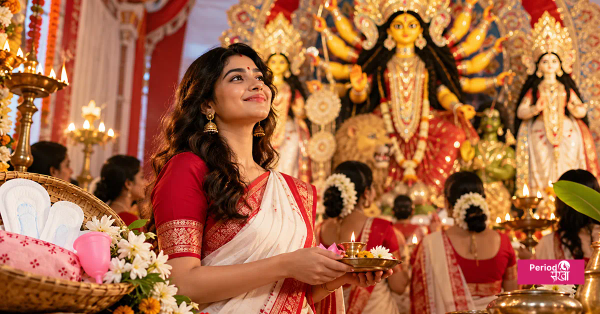
Durga Puja is a time of devotion, happiness, family gatherings and celebration. It is also a festival that honours Goddess Durga, a powerful symbol of strength and feminine energy. Yet, menstruation can still become a reason for some women to feel excluded from religious and social activities. It is worth taking a moment to understand where these beliefs come from, what science actually says and how we can make conversations about periods more comfortable. The idea is not to disrespect anyone's faith or family traditions. It is to understand menstruation without fear, shame or misinformation.
Before discussing the myths surrounding periods, let us understand what happens inside the body.
Every month, hormonal changes prepare the uterus for a possible pregnancy. The lining of the uterus becomes thicker. When pregnancy does not occur, this lining is shed through the vagina as menstrual bleeding.
Menstrual blood contains blood and tissue from the uterine lining. It is a normal part of the menstrual cycle and is not dirty blood or a sign that the body is removing something harmful.
The menstrual cycle is a natural biological process. It usually begins during adolescence and continues through the reproductive years until menopause, although pregnancy, certain health conditions and hormonal changes can affect the pattern of bleeding.
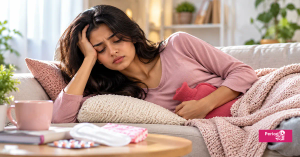
Some women experience mild discomfort during their periods, while others have cramps, back pain, tiredness, headaches or mood changes. These experiences can differ from one person to another.
None of this makes menstruation a disease. It is simply one of the ways the body functions.
According to the World Health Organization (WHO), menstrual health includes not only physical well-being but also access to accurate information, appropriate care, suitable menstrual products and the freedom to manage periods with dignity, without stigma.
In many families, restrictions during menstruation have been passed down through generations. Some women may be asked to avoid religious rituals, stay away from temples, refrain from cooking or avoid certain household activities.
These practices can have different cultural, religious and family histories. Some families follow them as part of their understanding of tradition, while others have gradually moved away from them.
The difficulty arises when these customs are explained to girls by telling them that menstruation makes them dirty, impure or unworthy of participating in everyday life.
A girl who hears this from an early age may begin to feel embarrassed about a completely natural bodily process. She may hide her period, hesitate to ask for sanitary products or worry that someone will discover she is menstruating.
Over time, these messages can affect how she views her own body.
Traditions and beliefs are personal and may hold deep meaning for families. However, it is helpful to distinguish between a religious custom and a medical fact. A practice followed as part of faith should not automatically be presented as a scientific rule.
No. From a medical perspective, menstruation does not make a woman impure, dirty or medically unfit to participate in ordinary activities.
Menstrual blood is not a toxin. It does not make a person harmful to others, and menstruation itself does not contaminate food, flowers or household objects.
There is also no scientific evidence that a woman becomes less clean simply because she is menstruating.
Like any other day, personal hygiene matters during a period. Changing menstrual products when needed, washing hands before and after handling them, and keeping the external genital area clean are sensible practices. These habits help maintain comfort and hygiene, but they do not mean that menstruating women are inherently unclean.
The same distinction applies to the idea of purity. Religious and spiritual traditions may understand purity in different ways, but medicine does not classify a menstruating woman as physically or medically impure.
A period is a bodily process, not a measure of a woman's character, worth or devotion.
This is one of the questions many women think about when their periods coincide with the festival.
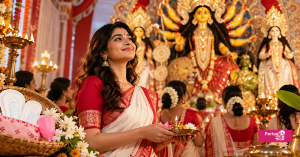
Durga Puja involves different kinds of participation. Some people visit pandals to admire the idols and decorations, meet friends, enjoy cultural programmes and experience the festive atmosphere. Others take part in prayers, offerings and specific religious rituals.
Rules about temple entry or participation in particular rituals vary across religious traditions, institutions and families. These are matters of religious practice and belief, rather than medical restrictions.
From a health perspective, menstruation does not make a woman physically incapable of visiting a pandal, walking around, meeting people or attending cultural events.
If you follow a particular family or religious custom, you may choose how you wish to approach it. What matters is that you understand the difference between a tradition you choose to observe and a medical claim that your body is somehow unclean during menstruation.
A woman should not be made to feel that she is a lesser devotee simply because her period has started.
Imagine preparing flowers for a Puja arrangement and suddenly remembering that you are menstruating. You may have heard that touching flowers during this time is not allowed.
But what does science say?
Menstruation does not make your hands harmful to flowers. There is no scientific evidence that touching flowers while menstruating causes them to wilt, become impure or lose their natural properties.
Flowers are affected by factors such as temperature, water availability, handling and their natural ageing process. Menstruation does not change these factors in a way that makes flowers unsafe to touch.
If a family follows a particular ritual about handling flowers or preparing offerings, that practice may be observed according to its religious meaning. However, it is important not to confuse a customary restriction with a biological effect.
Your period does not give your hands any special property that damages flowers.
Food is another area where menstrual myths sometimes create unnecessary worry.
Some girls grow up hearing that they should not prepare food or touch certain ingredients during their periods. Others may wonder whether eating bhog while menstruating is inappropriate.
From a medical and food-safety perspective, menstruation does not make food unsafe. A woman who is menstruating can prepare and handle food using the same ordinary hygiene practices expected of anyone else.
There is no scientific evidence that a woman contaminates food simply because she is on her period.
If you are attending Durga Puja, you can also think about your comfort and nutritional needs. Long hours outside, crowded pandals and irregular meal timings can leave you tired, particularly if you are already experiencing cramps or fatigue.
Eating regularly, drinking enough water and resting when needed can help you feel more comfortable during the celebrations.
The religious significance of bhog may differ among families and communities. But menstruation itself does not create a medical reason for food to become unsafe.
Fasting during religious festivals is a personal decision shaped by faith, family customs and individual health.
Some women may feel comfortable fasting during menstruation, while others may experience more tiredness, headaches, cramps or weakness and prefer not to fast.
There is no single experience that applies to every woman. Menstrual symptoms vary, and a person's nutritional needs also depend on her general health, activity level and bleeding pattern.
If you have heavy periods, iron deficiency, anaemia or a medical condition that requires regular meals or medication, it is particularly important to consider your health before fasting. Heavy menstrual bleeding can contribute to iron deficiency anaemia, which may cause tiredness, weakness and breathlessness.
If you feel dizzy, faint, unusually weak or unwell while fasting, do not ignore those symptoms. Seek medical advice when necessary.
You can speak with a trusted healthcare professional if you are unsure whether fasting is suitable for you. For questions about religious observance, you may also wish to speak with someone you trust within your faith community.
The important point is that looking after your health is not something to feel ashamed of.
Absolutely, if you feel well enough.
Durga Puja often means long walks between pandals, standing in queues, dancing, shopping, meeting friends and spending hours away from home. Menstruation does not automatically mean you need to cancel these plans.
Gentle physical activity, such as walking or stretching, may help some women manage period discomfort. However, it is equally important to listen to your body. If you are experiencing severe cramps, dizziness or heavy bleeding, take a break and seek medical advice if needed.
There is no need to push yourself simply because it is a festival. Equally, there is no medical reason to stay indoors solely because you are menstruating.
Wear clothes that make you comfortable, carry your preferred menstrual products and plan rest breaks if you need them.
If you enjoy pandal hopping, go pandal hopping. If you prefer a quiet evening with family, that is fine too. The choice should depend on your comfort and preferences, not fear about your period.
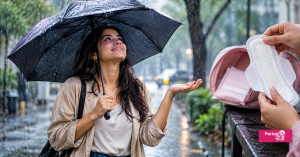
Let us talk about something that can genuinely make a woman anxious during festivals: period stains.
You may be wearing a new saree, a light-coloured kurta or your favourite festive outfit when you suddenly worry about leaking. Crowded pandals and long queues can make this concern even more uncomfortable.
A little preparation can help.
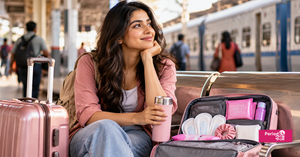
Carry a spare pad, tampon, menstrual cup or whichever product you normally use. A small pouch with spare underwear, tissues and a disposal bag can also be useful. If your flow is heavy, plan opportunities to change your product when needed.
Choose a menstrual product that suits your flow and change it according to its instructions and your needs. Wash your hands before and after changing products whenever possible.
If a stain happens, remember that it is not a personal failure. Menstrual leaks are common, and they can happen even when someone has planned carefully.
You do not need to feel embarrassed about a natural bodily process. If you are with friends or family members you trust, asking for help is perfectly reasonable.
Festive clothes are meant to be enjoyed, not to become another source of anxiety about menstruation.
With all the excitement around the festival, it can be easy to forget the basics of menstrual care.
If you are spending the day outside, carry enough menstrual products for the time you expect to be away from home. Change them when needed, depending on your flow and the product you use. Do not wait until you feel uncomfortable or your product is leaking.
Wash your hands before and after changing a menstrual product. Dispose of used disposable products in an appropriate bin rather than flushing them down the toilet. Reusable products should be cleaned according to their instructions.
Drink water regularly, eat when you are hungry and rest if you feel tired. If you experience cramps, a warm compress before leaving home or an appropriate pain-relief option recommended by your healthcare professional may help.
Pay attention to symptoms that are more than your usual period discomfort. If your bleeding is so heavy that you need to change a pad or tampon every one to two hours, your periods are becoming more painful or irregular, or pain is interfering with your daily activities, speak with a healthcare professional. Seek urgent care if you experience severe or unusual pain, fainting or other alarming symptoms.
Menstrual health is not only about products and hygiene. It also means recognising when your body needs care.
Goddess Durga is widely associated with strength, courage and the power to overcome challenges. During Durga Puja, communities come together to celebrate these qualities through rituals, art, music and cultural traditions.
This makes the festival an opportunity to reflect on how women and girls are treated in everyday life.
A young girl who gets her first period during Puja should be able to ask questions without fear. A woman experiencing cramps should feel comfortable taking a break. A daughter should be able to speak to her family about menstrual products without feeling embarrassed.
And a woman should not be made to feel that her body is a source of shame.
Changing menstrual stigma does not necessarily mean asking every family to abandon every tradition. It can begin with something much simpler: explaining customs without frightening children, answering questions honestly and avoiding language that makes menstruation sound dirty or wrong.
When a girl asks why she cannot participate in a particular ritual, an adult can explain the family's tradition calmly, while also making it clear that menstruation is a normal biological process.
The words we use matter. Telling a girl that her period makes her impure may stay with her for years. Explaining that menstruation is natural, while discussing family customs respectfully, gives her a healthier understanding of her body.
Not every conversation about menstruation will be easy. Some women may face restrictions at home, while others may feel uncomfortable questioning beliefs that their families have followed for generations.
If you find yourself in this situation, you do not have to turn every discussion into an argument.
You can begin by asking why a particular practice is followed. Listen to the explanation, share accurate information about menstruation and express how the restriction makes you feel.
For example, you might say:
“I understand that this is a tradition our family follows. I also want to understand the reason behind it. From a medical perspective, menstruation is a natural process and does not make me unclean. Can we talk about this without making me feel ashamed of my body?”
A conversation like this may not change someone's mind immediately. But it can create space for questions and understanding.
If you are a parent, elder sister, teacher or caregiver, remember that younger girls often learn how to feel about menstruation by watching the women around them.
You do not need to know every scientific detail to support them. Sometimes, simply telling a girl that her period is normal, answering her questions and helping her access menstrual products can make a meaningful difference.
Durga Puja is a time of joy, devotion, creativity and togetherness. Menstruation does not have to become a source of fear during these celebrations.
We can respect religious traditions while also sharing accurate information about the human body. We can acknowledge that customs differ between families without labelling menstruating women as medically impure. We can encourage girls to ask questions, help women manage period discomfort and make menstrual products easier to access.
Most importantly, we can stop making girls feel that their periods are something they must hide.
If your period arrives during Durga Puja, take care of yourself. Carry the products you need, eat and rest according to your body's needs, and seek medical help if your symptoms are unusual or severe.
Whether you choose to visit pandals, attend cultural events, participate in religious rituals according to your beliefs or spend a quiet day at home, let that choice come from your own comfort and understanding.
A menstrual cycle is not a measure of devotion. It is not a sign of poor hygiene. And it does not take away a woman's dignity.
Breaking menstrual myths does not mean disrespecting faith. It means making sure that faith, tradition and family conversations do not leave women feeling ashamed of a natural bodily process.
Menstruation is a normal part of life for millions of women and girls. It deserves accurate information, practical support and compassion, not unnecessary fear.
This Durga Puja, let us make room for better conversations. Let us teach girls about their bodies without shame, support women who need care and remember that menstrual health is part of overall health.
May this festival bring strength, happiness and togetherness to every home. And may every woman feel that she belongs in the celebrations, without having to feel ashamed of her body.
World Health Organization (WHO). Menstrual Health. Read the WHO guidance.
World Health Organization (WHO). Menstrual health, not just hygiene: The path toward a strong cross-sectoral response. Read the WHO article.
UNICEF. Menstrual Hygiene. Read the UNICEF resource.
UNICEF India. Busting myths and misconceptions around menstruation. Read the UNICEF India article.
NHS. Period pain. Read the NHS guidance.
NHS. Period problems. Read the NHS guidance.
Dr. Shreya Karan is a dedicated oral and maxillofacial surgeon who brings over ten years of experience to her practice, combining surgical expertise with genuine care for her patients. She is dedicated to empowering women with accurate, evidence-based health information, helping them make informed decisions about their well-being.
About PeriodSakhi
PeriodSakhi is your trusted companion for understanding your menstrual health. With easy-to-use tools, it helps you track your periods, ovulation, fertility, moods, and symptoms, while providing insights into your overall reproductive and hormonal health. PeriodSakhi also serves as a supportive online community where women can share experiences, find reliable information, and access expert-backed guidance on menstrual health, PCOS, pregnancy, lifestyle, and more.
Disclaimer
The views, thoughts, and opinions expressed in this article/blog are solely those of the author and do not necessarily reflect the views of PeriodSakhi. Any omissions, errors, or inaccuracies are the responsibility of the author. PeriodSakhi assumes no liability or responsibility for any content presented. Always consult a qualified medical professional for specific advice related to menstrual health, fertility, pregnancy, or related conditions.