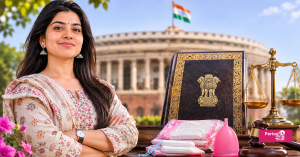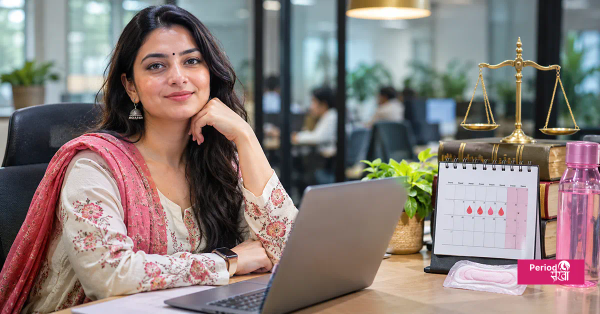

Menstrual health at work is more than a personal matter. Understand India's workplace policies, Karnataka's menstrual leave provision, employer responsibilities and why menstrual dignity matters. A woman may be managing a presentation, attending back-to-back meetings, travelling for work or meeting a deadline while experiencing menstrual cramps that make even sitting comfortably difficult. Yet, in many workplaces, menstruation remains something employees are expected to manage quietly.
We often describe women as multitaskers and call them superwomen. But does that mean they should be expected to work through severe menstrual pain without support? Menstrual health is not simply a private concern. It can influence attendance, concentration, comfort and workplace participation. As conversations around menstrual leave and workplace inclusion become more visible, it is important to understand what the law actually provides, what employers can do and how employees can approach the subject.
Menstrual experiences vary considerably. Some women continue their usual routines with little discomfort, while others experience painful cramps, lower back pain, headaches, nausea, fatigue or heavy bleeding.
Dysmenorrhoea, the medical term for painful menstruation, can interfere with everyday activities. Primary dysmenorrhoea is usually associated with menstrual contractions and prostaglandins, chemicals that contribute to uterine muscle contractions. Secondary dysmenorrhoea may be associated with conditions such as endometriosis, adenomyosis or uterine fibroids.
For someone experiencing severe symptoms, a full working day can become difficult. Travelling, standing for long periods, attending meetings or concentrating on detailed tasks may require considerable effort. The problem is not that every woman needs menstrual leave. It is that women who need support should not have to choose between their health and being taken seriously at work. The Deloitte Women @ Work 2024 report highlighted this challenge: 41% of Indian women who experienced menstruation-related health challenges reported working through high pain or discomfort. This points to a gap between experiencing symptoms and feeling able to take time off.
India does not currently have a uniform central law that guarantees paid menstrual leave to every woman working in the country. However, some states and employers have introduced provisions of their own. These need to be understood according to their actual scope rather than assuming that the same entitlement applies to every employee.
Karnataka introduced a menstrual leave provision in November 2025. The government order provides for one paid day of menstrual leave per month, amounting to up to 12 days in a year, for eligible women employees aged 18–52.
The provision covers specified establishments registered under relevant labour laws and includes eligible permanent, contractual and outsourced employees. The leave is intended to be used within the relevant month and cannot be carried forward. A medical certificate is not required under the order.
The policy is an important step towards recognising menstrual health as a workplace concern. However, employees should check whether their establishment and employment category fall within the order's scope. The policy has also faced legal scrutiny. In April 2026, the Karnataka High Court directed the state to implement the existing policy pending further proceedings concerning the proposed legislation. The legal position and any subsequent directions should be checked against the latest government and court notifications.
Some state governments have introduced menstrual leave or additional leave provisions for particular categories of employees. Bihar, for example, has had a provision for special leave for women government employees, while Odisha introduced an additional casual leave provision for eligible women government employees.
These arrangements are not equivalent to a nationwide entitlement. Their coverage depends on the relevant state order, employee category and applicable service rules.
For women working in the private sector, the applicable company policy and the laws governing their establishment become particularly important.
In March 2026, the Supreme Court declined to direct the introduction of a mandatory nationwide paid menstrual leave policy. The Court expressed concerns that compulsory leave could unintentionally reinforce stereotypes or affect women's employment opportunities.
This does not mean that employers are prohibited from offering menstrual leave. Nor does it prevent state governments from introducing their own provisions. It means that there is no uniform nationwide statutory entitlement to paid menstrual leave for all working women.
Some employers have recognised that menstrual health requires practical workplace support, even in the absence of a universal legal mandate.
Amazon, for example, has described menstrual leave provisions for associates in parts of its Indian fulfilment-centre operations. Its published information also refers to facilities such as medical support, rest areas and sanitary pad dispensing machines.
This is an example of an employer-specific arrangement, not a benefit that can automatically be assumed to apply to every Amazon employee or every workplace.
Beyond leave, supportive workplace practices can include:
Clean and accessible washrooms.
Availability of sanitary products.
Access to drinking water and suitable rest facilities.
Flexibility where symptoms make travel or prolonged work difficult.
A confidential and respectful process for requesting leave.
Managers who respond without embarrassment, judgement or unnecessary questions.
A workplace does not become inclusive simply because it has a menstrual leave policy on paper. Employees must also feel comfortable using the support available to them.
At PeriodSakhi, our understanding of menstrual health extends beyond symptoms, hygiene and cycle tracking. It also involves the social and professional environments in which women manage their health.
Our conversation with Keya Sharon, a lawyer and advocate who has recently begun practising law and is also a businesswoman, helped bring another perspective to this discussion.
Her inputs encouraged us to look more closely at the relationship between workplace policies, legal awareness and the everyday experiences of women. Knowing that a policy exists is only one part of the picture. Employees also need to understand which provisions apply to them, how they can access them and what their workplace expects.
The employer's role is equally important. A clear policy, respectful communication and awareness among managers can help prevent confusion and discomfort when an employee needs support.
This is particularly relevant in workplaces where menstrual health is rarely discussed openly. Employees may hesitate to disclose their symptoms, while managers may not know how to respond appropriately.
Podcasts, newspaper reports, workplace discussions and public conversations have helped bring menstrual leave into the mainstream. But media coverage should be the starting point for awareness, not the final source of legal advice. Employees should verify their entitlements through official government orders, applicable service rules and their organisation's HR policies.
The discussion around menstrual leave is not without different opinions. Some women welcome it as recognition of a genuine health need. Others worry that openly identifying menstrual leave could lead to unwanted questions, stigma or assumptions about their professional ability.
A study published in BMJ Open, involving 955 female students in South India, explored attitudes towards menstrual leave. Support was reported for leave to manage menstrual hygiene and dysmenorrhoea. At the same time, participants raised concerns about the possibility of reinforcing gender stereotypes and making menstruation seem like a limitation.
It is important to remember that this was a study involving students, not a survey of the entire working population. Nevertheless, it highlights why menstrual leave needs to be discussed thoughtfully.
Menstrual leave is a subject that deserves to be discussed with the women it affects. PeriodSakhi's poll responses should be presented here once the actual results are available, including the poll question and response figures. Without verified results, assigning percentages or claiming that respondents supported or opposed a particular policy would be misleading.
What matters is that these conversations make room for different experiences. Some women may need a day away from work; others may prefer flexible hours, remote working or better access to workplace facilities. A useful policy should recognise that menstrual experiences are not identical.
If you are experiencing symptoms that affect your ability to work, start by checking your organisation's leave policy and employee handbook. If your state has a specific menstrual leave provision, verify whether your workplace and employment category are covered.
You can also:
Speak to your HR team about the leave or flexibility available.
Check whether your organisation requires any formal application or documentation.
Understand the applicable state government order, if one exists.
Keep a record of relevant communication if you face difficulty accessing an entitlement.
Seek medical advice if menstrual pain is severe, worsening or regularly interfering with daily activities.
Severe menstrual pain should not automatically be accepted as something a woman must endure. It may need medical assessment, particularly when it affects routine activities or is accompanied by unusually heavy bleeding or other concerning symptoms.
Menstrual leave should not become another label attached to women's professional abilities. It should be one part of a broader approach to workplace health and dignity.
Not every woman experiences debilitating pain, and not every woman will want to take menstrual leave. The purpose of such a provision is to offer support when it is needed, not to create an expectation that women must disclose their menstrual status.
Employers can make a meaningful difference by creating clear policies, ensuring access to menstrual products and facilities, training managers to respond sensitively and protecting employees from discrimination or embarrassment.
Women are often expected to balance professional responsibilities with several other demands. Recognising menstrual health at work is not about asking for special treatment. It is about acknowledging that health needs can affect people differently and that a fair workplace should respond with dignity.
At PeriodSakhi, we believe that menstrual awareness must extend beyond the home and the classroom. It belongs in offices, factories, hospitals, boardrooms and every place where women work because being professional should never mean pretending that pain does not exist.
Government of Karnataka. Government order on paid menstrual leave for eligible women employees, November 2025.
Deloitte. Women @ Work 2024: A Global Outlook. Deloitte, 2024.
Mindsets and menses: decoding young women’s attitudes towards menstrual leave – an observational study from South India. BMJ Open.
Supreme Court of India. Proceedings concerning a nationwide menstrual leave policy, March 2026.
Amazon India. Published information on workplace health and menstrual support in its fulfilment-centre operations.
Editorial note: Workplace laws and policies can change. Employees should verify current provisions with official government notifications, court orders and their organisation's HR department.
Dr. Akanksha is a dedicated dental professional and health educator who believes that healthcare goes beyond treatment-it is about creating awareness, building trust, and empowering individuals to make informed decisions about their well-being. Alongside her clinical expertise in dentistry, she is deeply passionate about public health education, with a special focus on menstrual health, hygiene, and women's wellness.
About PeriodSakhi
PeriodSakhi is your trusted companion for understanding your menstrual health. With easy-to-use tools, it helps you track your periods, ovulation, fertility, moods, and symptoms, while providing insights into your overall reproductive and hormonal health. PeriodSakhi also serves as a supportive online community where women can share experiences, find reliable information, and access expert-backed guidance on menstrual health, PCOS, pregnancy, lifestyle, and more.
Disclaimer
The views, thoughts, and opinions expressed in this article/blog are solely those of the author and do not necessarily reflect the views of PeriodSakhi. Any omissions, errors, or inaccuracies are the responsibility of the author. PeriodSakhi assumes no liability or responsibility for any content presented. Always consult a qualified medical professional for specific advice related to menstrual health, fertility, pregnancy, or related conditions.