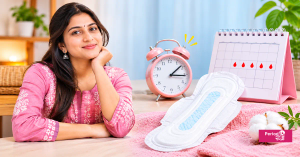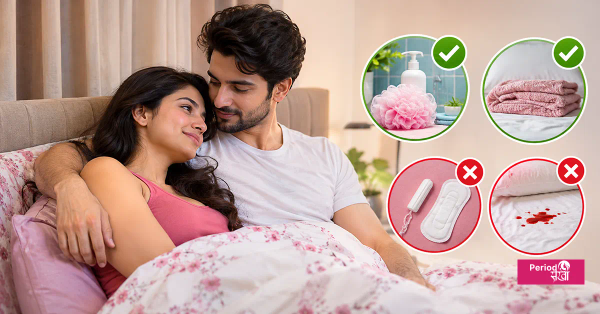

There are questions about menstruation that women are comfortable discussing with their friends but hesitate to raise with their doctors. Having sex during periods is often one of them. For some couples, menstruation means taking a short break from sexual intimacy. Others do not mind having intercourse during these days but are unsure about pregnancy, infections, hygiene or whether it could affect menstrual bleeding. There are also women who would like to understand the subject better but have never found a comfortable opportunity to ask.
So, is it actually safe to have sex during your period? In most cases, yes. Menstruation itself is not a medical reason to avoid sexual intercourse. However, there are a few things worth understanding before making that decision. Pregnancy is still possible, sexually transmitted infections (STIs) can spread, and discomfort should never be ignored. The important thing is to separate what medicine actually tells us from the beliefs that have been passed around for generations.
To understand period sex, it helps to understand what is happening inside the body. Every menstrual cycle, the uterus prepares its inner lining, called the endometrium, for a possible pregnancy. When pregnancy does not occur, hormonal levels change and this lining is shed. It leaves the body through the vagina as menstrual fluid, which contains blood, uterine tissue and vaginal secretions.
This is a normal physiological process. Having intercourse during menstruation does not interrupt the shedding of the uterine lining or cause menstrual blood to collect inside the uterus. That said, menstruation can affect how a woman experiences intimacy. Some women have cramps, lower abdominal discomfort, bloating or fatigue. Others notice changes in sexual desire. There is no single experience that applies to everyone. There is no need to force intimacy simply because it is medically permissible. If either partner is uncomfortable, waiting is perfectly reasonable.
One reason couples have questions about period sex is that bleeding does not remain the same throughout menstruation. The first two days may be quite different from the fourth or fifth. The following is a general pattern. It is not a medical rule, and individual menstrual cycles can vary.
Day 1: When bleeding begins
The first day of menstruation is counted as Day 1 of the menstrual cycle. Bleeding may begin with light spotting or become moderate within a few hours. Some women also experience cramps as the uterus contracts. Sexual intercourse is generally safe if both partners are comfortable. However, if cramps are painful or there is considerable discomfort, penetration may not be desirable.
Day 2: Often the heaviest day
For many women, menstrual bleeding is heaviest on the second day. Bright-red blood and occasional small clots may be noticed. Cramps can also be more pronounced. Some couples prefer to avoid penetrative intercourse on this day because of the amount of bleeding. Others are comfortable continuing with appropriate precautions. There is no medical requirement to avoid sex simply because the flow is heavy.
Day 3: Bleeding may begin to settle
The flow often becomes moderate, although this is not the case for everyone. Cramps may become less intense, and the colour of menstrual blood can change. If discomfort has settled, intercourse may feel more comfortable. Condoms are still necessary when pregnancy or STI protection is required.
Day 4: Lighter flow for many women
Bleeding may reduce to light or moderate flow. Some women notice darker-red or brown blood. This is generally related to blood taking longer to leave the uterus and vagina.
Period sex may be easier to manage at this stage, but lighter bleeding does not mean pregnancy is impossible.
Day 5: The period may be nearing its end
Some women stop bleeding around Day 5, while others continue to experience light spotting for a few more days. Intercourse is generally acceptable if there is no pain or other concerning symptom. However, sperm can survive in the reproductive tract for several days, so contraception should not be discontinued simply because menstruation is ending.
One thing to remember: Menstrual duration and flow differ from woman to woman. A five-day period is not compulsory, and neither is having a heavy flow on Day 2.
This is probably the most important question surrounding period sex. Many women believe that pregnancy cannot happen during menstruation. It is a common misconception, but it is not scientifically correct. The chances of pregnancy are generally lower during the early days of a typical menstrual cycle. However, pregnancy is possible, particularly when intercourse takes place towards the end of menstruation.
There are two important reasons.
Sperm do not disappear immediately after intercourse. Under favourable conditions, sperm can survive inside the female reproductive tract for up to five days.
Ovulation does not happen on the same day for every woman. Women with shorter menstrual cycles may ovulate earlier. If intercourse takes place towards the end of menstruation, sperm may still be present when an egg is released.
Women with irregular cycles may find it even more difficult to predict their fertile days. For this reason, period tracking applications and calendar calculations should not be treated as reliable contraception. If pregnancy is not desired, use a suitable contraceptive method throughout the menstrual cycle. If unprotected intercourse has already happened, consult a healthcare professional promptly about emergency contraception. Some options can be used up to five days after intercourse, depending on the method.
Yes. Menstruation does not remove the need for contraception or protection against sexually transmitted infections. A condom serves two important purposes: it reduces the likelihood of unintended pregnancy and helps prevent the transmission of infections, including HIV, gonorrhoea and chlamydia. It is also worth understanding that condoms do not provide complete protection against every STI. Infections such as herpes and syphilis can sometimes spread through contact with skin that is not covered by a condom. Even couples in long-term relationships should be able to discuss their sexual health and testing history openly. For oral sex, a dental dam or another suitable barrier can reduce exposure to genital fluids and blood. Protection should be a shared responsibility, not something left to one partner to request.
Hygiene is often the first concern couples raise when discussing intercourse during menstruation. In reality, a complicated cleaning routine is not necessary. A few sensible precautions are enough.
Before intercourse
For women, washing the external genital area with clean water is generally sufficient. The vagina does not need to be washed internally. Avoid scented intimate washes, vaginal deodorants and douching, as these can cause irritation and disturb the natural vaginal environment. If you use a tampon or a conventional menstrual cup, remove it before penetrative vaginal intercourse. Some menstrual discs are designed to be worn during intercourse, but they are not contraceptives. Follow the manufacturer's instructions. Both partners should wash their hands and maintain basic genital hygiene. If using a latex condom, choose a compatible water-based or silicone-based lubricant if additional lubrication is required.
During intercourse
There is no reason to make the experience uncomfortable just to continue sexual activity. A clean towel underneath can help manage menstrual blood. Choose a position that feels comfortable, particularly if there is lower abdominal tenderness. Communicate openly if the flow, pressure or penetration becomes uncomfortable. Stop if there is pain, burning or irritation.
After intercourse
A gentle wash of the external genital area with water is sufficient. Change your sanitary pad if required and wear clean, comfortable underwear. Women who are prone to urinary tract infections may find it helpful to urinate after intercourse. This does not prevent pregnancy or sexually transmitted infections, but it is a simple measure that may help reduce UTI risk. There is no need to wash inside the vagina or use an antiseptic solution to remove menstrual blood. For partners, disposing of the used condom properly and washing the genital area and hands is sufficient.
Menstruation itself does not cause an infection. However, intercourse during menstruation does not protect either partner from sexually transmitted infections. HIV can be transmitted through infected blood and sexual fluids. Other infections, including gonorrhoea, chlamydia, syphilis and herpes, can also spread through sexual contact. A few situations deserve particular attention. If either partner has genital sores, ulcers or an unexplained rash, sexual contact should be avoided until the symptoms have been medically assessed. If there is itching, burning, unusual discharge or a persistent unpleasant odour, do not assume it is simply because of menstruation. These symptoms may indicate an infection and should be evaluated. Women who experience recurrent vaginal infections should discuss the symptoms with a gynaecologist rather than repeatedly using over-the-counter intimate washes.
Some women describe feeling more relaxed after sexual activity or orgasm during menstruation. There may be a physiological explanation for this. Orgasm is associated with the release of endorphins, which are involved in the body's natural pain-modulating processes. Oxytocin is also released and contributes to muscular contractions. For some women, these responses may provide temporary relief or a sense of relaxation. For others, uterine contractions during orgasm may temporarily make cramps more noticeable. The response varies, and there is not enough evidence to recommend sexual intercourse as a treatment for menstrual pain. If cramps are severe enough to interfere with work, sleep or everyday activities, consult a gynaecologist. Conditions such as endometriosis and adenomyosis may need to be considered.
Some women notice blood passing during or immediately after intercourse and become worried that sex has made their period heavier. This is not necessarily the case. Movement and uterine contractions may help menstrual blood that is already present in the vagina leave the body. However, repeated bleeding after intercourse, bleeding that continues after menstruation has ended, or bleeding that is significantly heavier than usual should not automatically be attributed to periods. A gynaecologist can assess whether the bleeding is menstrual or related to another cause, such as cervical irritation, infection or a cervical polyp.
There are situations where it is better to pause sexual activity and seek medical advice.
Severe or sudden pelvic pain.
Persistent pain during vaginal penetration.
Unusual or foul-smelling vaginal discharge.
Genital itching, burning or sores.
Repeated bleeding after intercourse.
Menstrual bleeding that is unusually heavy or prolonged.
Fever accompanied by pelvic pain.
Pain during intercourse is known medically as dyspareunia. It can have several causes, including vaginal infections, endometriosis, pelvic inflammatory disease and pelvic floor dysfunction. It should not be dismissed as something women are expected to tolerate. Seek urgent medical attention if severe pelvic pain is accompanied by fainting, fever, marked weakness or very heavy bleeding with dizziness.
The medical discussion around period sex is not particularly complicated. The important considerations are consent, contraception, infection prevention and individual comfort. A gynaecologist can help with questions about menstrual irregularities, pregnancy risks, pelvic pain, infections and contraceptive choices. A qualified sexologist can help address concerns around intimacy, sexual discomfort, anxiety, libido and communication between partners. There is no need to feel embarrassed about asking either specialist.
A woman can begin the conversation with something as simple as:
"I would like to understand whether intercourse during menstruation is safe for me. Are there any precautions I should take regarding pregnancy, infections or hygiene?"
Other useful questions include:
Is my menstrual bleeding normal?
Is it safe for me to have intercourse if I experience cramps?
What contraceptive method would be appropriate?
Should my partner and I undergo STI testing?
Why do I experience pain or bleeding after intercourse?
These are ordinary reproductive and sexual-health questions. A healthcare professional should be able to discuss them without judgement. Importantly, the clinical principles discussed here reflect established medical guidance; they should not be mistaken for direct quotations from individual doctors or sexologists.
What people often believe | What medical evidence tells us |
|---|---|
Pregnancy cannot happen during periods. | Pregnancy is possible, particularly with early ovulation. |
Menstrual blood is dirty. | It is a normal bodily fluid containing blood and uterine tissue. |
Sex during menstruation damages the uterus. | There is no established evidence that normal consensual intercourse damages a healthy uterus. |
Condoms are unnecessary during periods. | Condoms remain important for pregnancy and STI prevention. |
Sex always reduces cramps. | Some women experience temporary relief; others may experience discomfort. |
The vagina needs to be washed internally after intercourse. | The vagina is self-cleaning. Internal washing is unnecessary. |
A menstrual cup can remain in place during penetrative sex. | Conventional menstrual cups should be removed before vaginal penetration. |
Can you have oral sex during menstruation?
Yes, provided both partners consent and are comfortable. However, STIs can spread through oral sex. A dental dam can reduce exposure to genital fluids and blood. The risk of HIV from oral sex is very low, but other STIs remain possible.
Can you have sex on the last day of your period without a condom?
If pregnancy is not desired, this is not advisable. Early ovulation and sperm survival mean that pregnancy remains possible.
Can period sex cause infertility?
There is no established evidence that intercourse during normal menstruation causes infertility.
Can you use a tampon during intercourse?
A tampon should be removed before penetrative vaginal intercourse. Having intercourse with a tampon in place can cause discomfort and push it further into the vagina.
Is it normal to feel more interested in sex during periods?
Yes. Sexual desire changes throughout the menstrual cycle. Some women experience increased libido during menstruation, while others experience a reduced interest in sex. Both are normal.
What if a condom breaks during period sex?
Do not assume that pregnancy is impossible. Seek prompt advice about emergency contraception and discuss STI testing if there has been a possible exposure.
There is no single correct way to experience menstruation, and there is no universal rule about when a couple should or should not be intimate. For some women, period sex is comfortable. For others, cramps, heavy bleeding or simply personal preference make it something they would rather avoid. Neither choice needs justification. What matters is understanding your body, communicating with your partner and making decisions without pressure or misinformation.
Menstruation is a normal part of reproductive health. It should be discussed with the same openness as contraception, pregnancy and sexual well-being. If you have persistent pain, unusual bleeding, suspected infection or concerns about pregnancy, visit a qualified gynaecologist for individual advice.
Editorial note: This article is intended for educational purposes only. It has been prepared using available scientific literature, established medical guidance and clinical perspectives on menstrual and sexual health. It is not a substitute for personal medical consultation. Readers are encouraged to visit a qualified gynaecologist or sexual-health specialist for advice relevant to their individual circumstances.
American College of Obstetricians and Gynecologists (ACOG). Fertility Awareness-Based Methods of Family Planning.
World Health Organization (WHO). Condoms.
Centers for Disease Control and Prevention (CDC). About STI Risk and Oral Sex.
Office on Women's Health. Douching.
American College of Obstetricians and Gynecologists (ACOG). Vulvovaginal Health.
About PeriodSakhi
PeriodSakhi is your trusted companion for understanding your menstrual health. With easy-to-use tools, it helps you track your periods, ovulation, fertility, moods, and symptoms, while providing insights into your overall reproductive and hormonal health. PeriodSakhi also serves as a supportive online community where women can share experiences, find reliable information, and access expert-backed guidance on menstrual health, PCOS, pregnancy, lifestyle, and more.
Disclaimer
The views, thoughts, and opinions expressed in this article/blog are solely those of the author and do not necessarily reflect the views of PeriodSakhi. Any omissions, errors, or inaccuracies are the responsibility of the author. PeriodSakhi assumes no liability or responsibility for any content presented. Always consult a qualified medical professional for specific advice related to menstrual health, fertility, pregnancy, or related conditions.