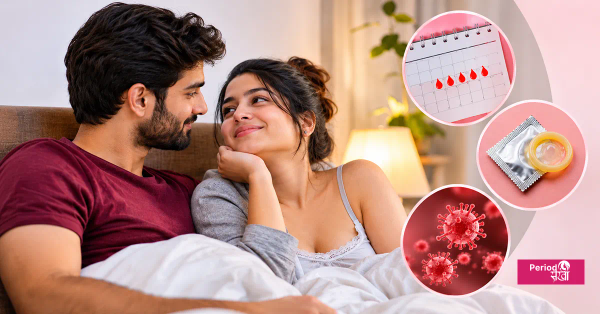

A conversation many couples have, but rarely complete
"Are you comfortable?"
"I am, but isn't it better to wait until my period is over?"
"Why? Is it medically unsafe?"
"I honestly don't know. I've always heard that having sex during periods can cause infections."
This is a conversation that could take place between many couples. Sometimes, one partner is comfortable with the idea while the other is hesitant. Sometimes, both are interested but have questions about pregnancy, hygiene or possible health risks. And often, neither knows where to find reliable information. Sex during menstruation is not inherently harmful. Yet, it is surrounded by assumptions that can influence how couples approach intimacy. Some believe it is completely safe because pregnancy cannot occur during periods. Others avoid it because they think menstrual blood is unhygienic or that intercourse can damage the reproductive organs.
Neither assumption tells the complete story. The medical perspective is more nuanced. Period sex is generally safe for most healthy individuals, but it does involve considerations around contraception, sexually transmitted infections (STIs), personal comfort and consent. Understanding these distinctions can help couples make decisions based on their health rather than embarrassment or misinformation.
Menstruation is a normal biological process, but many beliefs surrounding it have little scientific basis. Let's examine some of the more common ones.
Myth 1: Menstrual blood is dirty and harmful.
Menstrual fluid is not dirty blood. It consists of blood, shed endometrial tissue, cervical mucus and vaginal secretions. Its presence is a normal part of the menstrual cycle.
However, menstrual blood can carry blood-borne infections if a person has an infection such as HIV or hepatitis B. This is why appropriate barrier protection and knowledge of sexual health status remain important.
Myth 2: Pregnancy is impossible during menstruation.
This is one of the most consequential misconceptions.
Although the probability of pregnancy is generally lower during the early days of a typical menstrual cycle, it is not zero. Sperm can survive in the female reproductive tract for up to five days. Women with shorter cycles or early ovulation may therefore become pregnant following intercourse during menstruation. A period is not a contraceptive method.
Myth 3: Sex during periods damages the uterus.
There is no established scientific evidence that consensual vaginal intercourse during normal menstruation damages a healthy uterus. Menstrual bleeding is the result of the shedding of the uterine lining. Sexual intercourse does not stop this process or cause menstrual blood to accumulate inside the uterus. However, intercourse should not be continued when it causes significant pain.
Myth 4: Having sex during menstruation always causes infections.
Menstruation itself does not automatically cause an infection. However, unprotected sexual contact can transmit STIs regardless of the menstrual phase. Exposure to infected blood and genital fluids can be relevant to the transmission of certain infections, including HIV. Condoms reduce this risk, although they cannot prevent every infection transmitted through skin-to-skin contact.
Myth 5: Every woman experiences increased sexual desire during periods.
There is no universal pattern of sexual desire during menstruation. Hormonal fluctuations, fatigue, menstrual pain, emotional well-being and individual preferences can all influence libido. Some women experience an increased interest in intimacy, while others prefer rest and physical comfort. Neither response is abnormal.
Sexual health is not only about understanding anatomy. It also involves communication, personal boundaries and the ability to discuss concerns without making the other person uncomfortable. Consider these everyday situations.
"Does it bother you that I'm on my period?"
"Not particularly. But I don't know whether it is safe for you."
This is an opportunity to discuss the actual medical considerations rather than making assumptions.
If both partners are comfortable and there are no medical reasons to avoid intercourse, period sex is generally acceptable. The couple can discuss contraception, STI prevention and whether they feel comfortable with the possibility of menstrual blood.
A partner's hesitation should not be treated as rejection, nor should anyone be persuaded into sexual activity to avoid disappointing the other person.
This is a statement worth correcting.
A woman can become pregnant during menstruation. The possibility depends on factors such as cycle length, ovulation timing and sperm survival.
Furthermore, menstruation offers no protection against STIs.
A more informed response would be:
"Even though I'm menstruating, pregnancy is still possible. Let's use protection rather than rely on the timing of my cycle."
Contraception should be a shared responsibility.
"I don't mind being intimate, but I'm uncomfortable with the blood."
"That's understandable. We don't have to do anything that either of us finds uncomfortable."
There is nothing medically wrong with having this conversation. Personal preferences around blood, hygiene and intimacy can differ.
Couples can choose non-penetrative intimacy or simply wait until menstruation ends. Neither decision needs an explanation or apology.
"Something doesn't feel right. I'm experiencing pain."
"Let's stop. We can speak to a doctor if it continues."
This is an important response.
Pain should never be ignored to complete sexual activity. Although some women experience temporary sensitivity during menstruation, persistent or severe pain during intercourse may indicate an underlying issue.
Possible causes include endometriosis, pelvic inflammatory disease, vaginal infections or pelvic floor dysfunction.
A gynaecological assessment can help identify the cause.
"I thought my period was almost over, but there seems to be more bleeding after intercourse."
"Could it be related to the intercourse itself?"
Menstrual blood may become more noticeable during or immediately after intercourse because movement and contractions can help existing blood leave the vagina.
However, repeated bleeding after sex, bleeding outside the expected menstrual period or unusually heavy bleeding should be investigated.
It is important not to attribute every episode of vaginal bleeding to menstruation.
The fact that period sex is generally safe does not mean it is entirely without risk. There are specific situations in which couples should be more careful.
As discussed earlier, menstruation does not eliminate fertility.
Women with shorter menstrual cycles may ovulate earlier than expected. Those with irregular periods may also find it difficult to predict ovulation accurately.
If pregnancy is not desired, a reliable contraceptive method should be used irrespective of menstrual timing.
If unprotected intercourse has occurred, emergency contraception may be an option. Some methods can be used within five days, depending on the type. A healthcare professional or pharmacist can help identify the appropriate option.
Sexual contact during menstruation can transmit STIs.
HIV deserves particular attention because infected blood and sexual fluids can transmit the virus. Other infections, including gonorrhoea, chlamydia, syphilis and herpes, can also spread through sexual contact.
A condom substantially reduces the risk of many STIs, although protection varies depending on how the infection is transmitted.
Couples with a new partner, uncertain STI status or previous exposure should consider appropriate screening.
Some women experience increased genital sensitivity during menstruation. Friction or insufficient lubrication can contribute to irritation and discomfort.
Using a compatible lubricant and avoiding forceful penetration may help. However, recurring pain or burning should be medically evaluated rather than managed repeatedly with home remedies.
If either partner has an active genital infection, unexplained sores or ulcers, sexual contact should be avoided until appropriate medical advice has been obtained.
Women experiencing foul-smelling discharge, persistent itching, pelvic pain or fever should seek medical evaluation.
Menstruation should not be used as an explanation for symptoms that are unusual for the individual.
This is an important question that deserves a scientific explanation.
Menstrual blood itself does not create an infection. However, if a woman has HIV, the virus may be present in her blood and genital fluids. Exposure to infected blood during sexual activity can therefore be relevant to transmission.
Similarly, certain STIs can spread through direct contact with genital secretions, infected skin or mucous membranes.
The presence of menstruation does not make an uninfected person suddenly infectious. The relevant factor is whether an infection is present and whether exposure occurs.
For couples concerned about HIV, appropriate testing, condoms and, where indicated, pre-exposure prophylaxis (PrEP) are important preventive measures.
If a possible HIV exposure has occurred, post-exposure prophylaxis (PEP) must be started as soon as possible and no later than 72 hours after exposure. Seek urgent medical advice rather than waiting for symptoms.
There is no universal medical rule that intercourse must be avoided throughout menstruation. However, certain symptoms and health conditions warrant caution.
It is sensible to postpone intercourse and seek medical advice if there is:
Severe or unexplained pelvic pain.
Fever accompanied by pelvic discomfort.
Unusual vaginal discharge or a persistent unpleasant odour.
Genital sores, ulcers or unexplained irritation.
Significant pain during penetration.
Repeated bleeding after intercourse.
A diagnosed pelvic or genital infection for which treatment is ongoing.
Women with endometriosis, adenomyosis or other causes of painful menstruation may also find intercourse uncomfortable. Their decision should be based on symptoms and individual medical advice.
Severe sudden pelvic pain, fainting or very heavy bleeding accompanied by dizziness requires urgent medical attention.
Period sex is a reproductive and sexual-health subject. It should not become a source of judgement between partners.
The conversation does not need to be complicated. It can begin with simple questions:
Are we both comfortable with intimacy during menstruation?
Do we understand the pregnancy risks?
Are we using appropriate protection?
Are there any symptoms that make intercourse uncomfortable?
Would we prefer penetrative or non-penetrative intimacy?
A partner should be able to express discomfort without being criticised. Equally, a partner who is comfortable with period sex should not be made to feel unhygienic or inappropriate.
Consent is necessary every time, irrespective of the duration of a relationship or previous sexual experiences.
For women who feel uncomfortable discussing these concerns, a gynaecologist or qualified sexologist can provide guidance on reproductive health, sexual comfort and contraception.
Sometimes, the biggest difficulty is not understanding the answer but knowing how to ask the question.
A gynaecologist can help with concerns about menstrual irregularities, pelvic pain, pregnancy, contraception and infections. A qualified sexologist can help with sexual discomfort, anxiety, libido and relationship communication.
You can approach a consultation with questions such as:
Is it medically safe for me to have intercourse during menstruation?
Does my menstrual cycle affect my pregnancy risk?
What contraceptive method would be appropriate?
Should I undergo STI screening?
What could be causing pain or bleeding after intercourse?
There is no inappropriate question when it concerns your health.
Period sex is neither medically compulsory nor inherently harmful. Its safety depends on the circumstances, the health of both partners and the precautions they take.
The important distinctions are:
Menstruation does not prevent pregnancy.
Menstrual blood is a normal bodily fluid, not dirty blood.
STI transmission remains possible during menstruation.
Condoms continue to have an important role.
Pain during intercourse should not be ignored.
Personal comfort and consent are more important than expectations.
There is no reason to turn menstruation into a subject that couples cannot discuss. Equally, there is no reason to assume that every couple should be comfortable with intercourse during these days.
What one woman experiences as a comfortable part of her sexual life may be uncomfortable for another. Both experiences deserve respect.
The better approach is to understand the science, communicate openly and recognise when a medical concern needs attention.
Sexual well-being is not simply about the absence of disease. It also involves comfort, mutual respect, informed choices and the freedom to say yes or no.
If you have concerns about menstrual health, pain during intercourse, pregnancy or possible infections, consult a qualified gynaecologist rather than relying on assumptions.
This article is intended for educational purposes only. It has been prepared using available scientific literature, established medical guidance and clinical perspectives on menstrual and sexual health. The conversations included are illustrative situations created to explain common concerns; they are not actual patient interviews or direct quotations from medical specialists.
This article does not replace individual medical consultation. Readers are encouraged to visit a qualified gynaecologist or sexual-health specialist for personalised guidance.
CDC – Condom Use.
CDC – HIV Prevention.
ACOG – Fertility Awareness-Based Methods of Family Planning.
Office on Women's Health – Douching.
CDC – HIV PEP.
Dr. Akanksha is a dedicated dental professional and health educator who believes that healthcare goes beyond treatment-it is about creating awareness, building trust, and empowering individuals to make informed decisions about their well-being. Alongside her clinical expertise in dentistry, she is deeply passionate about public health education, with a special focus on menstrual health, hygiene, and women's wellness.
About PeriodSakhi
PeriodSakhi is your trusted companion for understanding your menstrual health. With easy-to-use tools, it helps you track your periods, ovulation, fertility, moods, and symptoms, while providing insights into your overall reproductive and hormonal health. PeriodSakhi also serves as a supportive online community where women can share experiences, find reliable information, and access expert-backed guidance on menstrual health, PCOS, pregnancy, lifestyle, and more.
Disclaimer
The views, thoughts, and opinions expressed in this article/blog are solely those of the author and do not necessarily reflect the views of PeriodSakhi. Any omissions, errors, or inaccuracies are the responsibility of the author. PeriodSakhi assumes no liability or responsibility for any content presented. Always consult a qualified medical professional for specific advice related to menstrual health, fertility, pregnancy, or related conditions.