
“Health is not valued till sickness comes.” — Thomas Fuller
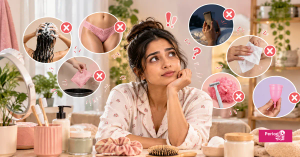
“Doctor, I do everything right. After taking shower, I wear fresh pair of underpants every day, I even use an intimate wash of a recommended brand , I wear a panty liner, and I even use wipes when I am outside but I still get irritation sometimes.
There is still a lot of confusion around the vagina and the vulva. The vagina is the internal canal. The vulva is the external genital area. The vagina naturally maintains its own environment. Normal discharge is part of this process. It can change in amount and texture during the menstrual cycle and does not automatically mean that something is wrong. The World Health Organisation now takes a much broader view of menstrual health. It includes access to information, hygiene facilities and healthcare, but also dignity, comfort and freedom from stigma. That is an important shift. We are slowly moving from “How do I keep myself perfectly clean?” to “How do I keep my intimate area healthy?” Those are not always the same thing.
There is a noticeable change in how intimate care is being discussed.
People are asking more questions about ingredients, fabrics, fit and skin sensitivity. There is also growing interest in breathable underwear, reusable menstrual products, less fragranced personal care and more practical routines but there is one thing worth remembering. A trend is not automatically medical advice. Just because something is labelled “natural”, “feminine”, “organic” or “pH balanced” does not mean every woman needs it. Good hygiene should be based on comfort, evidence and individual needs and not fear.
Picture a woman standing in front of a supermarket shelf.
There are five different washes.
One promises freshness.
Another promises odour control.
Another says it protects intimate pH.
She thinks, “Surely I need one of these.”
Not necessarily.
The vagina is self-cleaning, and the external vulval area usually needs only gentle care. ACOG advises avoiding douching and scented feminine products because they can irritate the vulva. If you choose to use a cleanser externally, a mild, fragrance-free product is generally a more sensible choice than a heavily perfumed one and if plain water works well for you, there is no need to add another product simply because an advertisement says you should.
This is one of the biggest ideas worth rethinking.
A healthy intimate area can have a natural smell.
It does not need to smell like flowers.
It does not need a deodorant.
It does not need a scented wipe after every toilet visit.
A new, strong or unpleasant odour is different. If it comes with unusual discharge, itching, burning or pain, it is better to find the cause than to cover it with perfume.
Bacterial vaginosis, for example, is a common condition linked to an imbalance in vaginal bacteria and can cause changes in discharge and odour.
We spend a lot of time choosing clothes for the outside.
We think about colour, shape, fit, fabric and fashion.
But underwear sits directly against our skin for many hours.
That makes comfort and fabric choice important.
The World Health Organisation notes that, in the context of vulvo-vaginal candidiasis, cotton underwear, loose clothing, changing out of sweaty gym wear and avoiding synthetic fabrics or harsh personal-care products can help reduce irritation and support prevention.
This does not mean that every synthetic fabric is automatically harmful.
It means that if a particular fabric makes you sweat, itch or feel uncomfortable, it is worth reconsidering.
The conversation around underwear is also changing within the fashion industry. Josie Aynsley, head designer at Bonds, has discussed how fibre choice affects comfort, stretch and how well underwear maintains its shape. She recommends blends with a majority of natural or cellulose fibres such as cotton, hemp, bamboo, modal or lyocell, while noting that a small amount of elastane can improve stretch and fit.
That is an important point. The best underwear is not necessarily 100% of one particular fabric. A well-designed blend can provide softness, breathability, stretch and durability. So, instead of asking only, “Is this cotton?”, ask: Does it fit well? Does it allow movement? Does it trap sweat? Does it irritate my skin?
An underwear designer's perspective: comfort comes first
There is another side to this conversation that we do not hear often enough, the designer's side. In an interview with independent lingerie designer Megan of Queen of Suburbia, she explains that fit is not simply about whether a garment technically matches someone's measurements. Her approach is much more practical: if lingerie digs in, itches or becomes uncomfortable during the day, the fit is not right for that person. That sounds obvious, but it is something many women ignore.
We buy a beautiful bra. The lace is gorgeous. The colour is perfect and then we spend the entire day adjusting the straps. Or the waistband digs into our skin. Or the fabric scratches. Or we cannot wait to take it off when we reach home. Pretty is a bonus. Comfortable is essential.
Megan's approach is especially interesting because she puts comfort ahead of appearance.
Her basic thinking is simple: if you cannot comfortably wear a piece for the day, you should reconsider it.
That is a useful rule for everyday underwear too.
Ask yourself:
Can I sit comfortably in this?
Can I move comfortably?
Does anything pinch?
Does the fabric make me itch?
Am I constantly adjusting it?
If the answer is yes, it may be time to change the garment and not your body.
Many women have one pair of underwear they keep wearing because it is their favourite.
Then there are the old ones. The stretched ones. The ones with loose elastic.
The ones that have become thin after years of washing. We often replace clothes when they look old, but underwear can remain in the drawer much longer. There is no medically fixed “expiry date” for underwear. But when fabric becomes worn, elastic loses its shape, seams become rough or the garment can no longer be washed properly, replacing it makes practical sense.
You may have seen this advice everywhere: “Never sleep in underwear."
There is no universal rule that every woman has to follow. If sleeping without underwear feels comfortable, there is nothing wrong with it. If you prefer wearing underwear, that is fine too. Choose something clean, comfortable and breathable. Health advice should not turn into another list of rules that women feel guilty about breaking.
Panty liners can be helpful.
They may be useful around the beginning or end of a period, while travelling, or when discharge is heavier than usual but wearing one every single day simply because you are worried about normal discharge is not necessary for everyone. The liner itself can become a source of friction or irritation for some people, especially when it is fragranced or worn for long periods. If you notice that your skin feels better when you stop using one, that is useful information.
Again, the goal is not maximum cleanliness. It is comfortable skin.
Thrifting has become a major part of modern fashion.
It can be affordable.
It can reduce waste.
It can help people find unique pieces.
And there is absolutely nothing wrong with buying many types of second-hand clothing.
But intimate clothing is different.
Bras and especially underwear should generally not be treated like ordinary thrift finds.
Why? These garments sit directly against sensitive skin and may have been worn by another person. You also cannot always know how the garment was previously used, stored or washed.
The London College of Fashion has specifically discussed second-hand lingerie as a hygiene concern in the context of sustainable underwear. The American Cleaning Institute also recommends thorough laundering of thrifted clothing and notes that additional cleaning steps may be needed to remove lingering bacteria or other contaminants. That is different from saying every second-hand garment is dangerous. It simply means intimate garments have a different level of personal contact, so buying new is the simpler choice for everyday underwear.
This is where we need some nuance. A second-hand bra is not the same as second-hand underwear. A bra generally has less direct contact with the vulval area, although it still touches the skin closely. If someone chooses to buy a pre-owned bra, careful washing according to the care label is important. The American Cleaning Institute recommends laundering thrifted garments appropriately and using the warmest safe setting for the fabric when deeper cleaning is needed but for panties and other garments that directly contact intimate areas, buying new is the more straightforward hygiene choice. Sustainability matters. So, does personal hygiene. We do not always have to choose between the two. We can thrift outer clothing and other reusable fashion pieces while being more selective about what goes directly against intimate skin.
There is another trend worth questioning: choosing underwear entirely based on appearance.
Lace can be beautiful. Silk can feel luxurious. Mesh can look attractive. Everyday underwear also has a job. It needs to move with your body. A lingerie designer interview published by the V&A shows how underwear design involves much more than appearance, including construction, materials and changing lifestyles. Another lingerie designer, Zhiling Chen, has spoken about how some lingerie can feel constricting and uncomfortable and described moving towards comfort, wearability and natural fibres in her designs. That is where fashion and health can meet. The future of lingerie does not have to be about choosing between beautiful and comfortable rather It can be both.
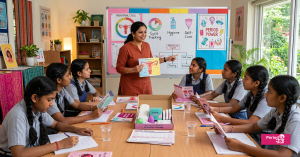
The larger global conversation around menstrual health is also becoming broader. WHO no longer frames menstrual health as simply a matter of managing blood. It's current definition includes accurate information, access to suitable materials, water and sanitation, healthcare, dignity and the ability to participate in everyday life without stigma. UNICEF and WHO reported in 2024 that only around 39% of schools globally provided menstrual health education, showing that basic information is still missing for many young people. In 2026, WHO has been developing new global guidance on menstrual health, with experts being sought across areas including menstrual products, education, menstrual disorders and WASH. The direction is clear. The conversation is moving from “How do we hide periods?” towards “How do we support menstrual and intimate health?”
Sometimes women become so focused on hygiene that they start worrying about every small change.
A little discharge becomes frightening.
A natural smell becomes embarrassing.
Pubic hair becomes a problem.
A slightly damp pair of underwear becomes a reason to panic. This is not what healthy hygiene should feel like. Healthy hygiene should give you confidence, not constant anxiety. You should know what is normal for your body, understand the products you use and know when something needs medical attention.
About PeriodSakhi
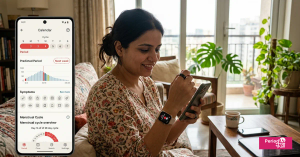
PeriodSakhi is your trusted companion for understanding your menstrual health. With easy-to-use tools, it helps you track your periods, ovulation, fertility, moods, and symptoms, while providing insights into your overall reproductive and hormonal health. PeriodSakhi also serves as a supportive online community where women can share experiences, find reliable information, and access expert-backed guidance on menstrual health, PCOS, pregnancy, lifestyle, and more.
Disclaimer
The views, thoughts, and opinions expressed in this article/blog are solely those of the author and do not necessarily reflect the views of PeriodSakhi. Any omissions, errors, or inaccuracies are the responsibility of the author. PeriodSakhi assumes no liability or responsibility for any content presented. Always consult a qualified medical professional for specific advice related to menstrual health, fertility, pregnancy, or related conditions.