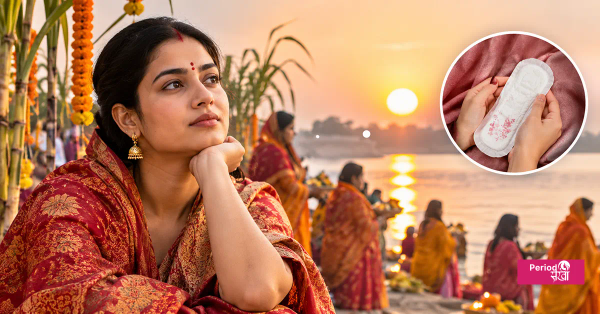

Chhath Puja is one of those festivals that brings entire communities together. Before sunrise, families make their way towards rivers, ponds and other water bodies. The air fills with folk songs, the fragrance of thekua and the sight of devotees standing in water, offering prayers to the setting and rising Sun. For many families, particularly across Bihar, Jharkhand, eastern Uttar Pradesh and parts of Nepal, Chhath is much more than a religious observance. It is a tradition shaped by devotion, discipline, gratitude and a deep connection with nature. At the centre of this celebration is Chhathi Maiya, revered as a protective maternal figure associated with the well-being of children, family and devotees.
Her worship is often understood through qualities such as strength, patience, care and perseverance. Yet, when conversations turn to menstruation during Chhath, a different set of questions emerges. Can someone participate if they are on their period? Should they avoid preparing prasad? Is menstruation considered impure during the festival? And are these restrictions based on medical reasons or inherited social beliefs? These questions deserve thoughtful answers. Respecting a religious tradition and understanding menstrual health do not have to be opposing ideas.
Chhath Puja is primarily dedicated to the Sun God, Surya, and Chhathi Maiya, also known as Shashthi Devi. It is especially significant in Bihar, Jharkhand, eastern Uttar Pradesh and parts of Nepal, although families across India and abroad celebrate it too. The festival expresses gratitude to the Sun for sustaining life and nature. Unlike many other Hindu festivals, Chhath places particular importance on worshipping both the setting and the rising Sun. It is a reminder that gratitude is not limited to new beginnings; it also acknowledges what has sustained us along the way.
The observance generally spans four days:
Day | Ritual | What happens |
|---|---|---|
Day 1: Nahay Khay | Purification and preparation | Devotees bathe, clean their homes and prepare a simple meal |
Day 2: Kharna | Fasting and prayer | Devotees observe a fast during the day, traditionally breaking it after evening prayers |
Day 3: Sandhya Arghya | Offering to the setting Sun | Families gather near a river, pond or other water body to offer arghya |
Day 4: Usha Arghya | Offering to the rising Sun | Devotees offer prayers at sunrise and conclude the observance |
The rituals involve considerable preparation. From cleaning the house and arranging fruits to preparing thekua and other prasad, family members often work together for several days. For devotees observing the vrat, the discipline can be physically demanding, particularly during the extended fast.
Chhath is also deeply connected with community participation. People come together to clean ghats, arrange offerings, sing traditional songs and help one another with preparations. The festival's meaning is therefore not limited to the prayers performed at the water's edge. It is also reflected in the collective effort that makes the celebration possible.
For devotees, Chhathi Maiya is not simply a name associated with a festival. She is worshipped as a maternal figure who represents protection, blessings for children, family well-being and the nurturing power of motherhood. Her worship is closely associated with Shashthi Devi, a goddess traditionally linked with the protection of children and the well-being of families. Regional stories and beliefs about her identity may differ, but her place in Chhath remains deeply meaningful to devotees. There is something particularly powerful about the way Chhath is observed. Devotees, many of them women, undertake demanding preparations, maintain discipline and stand in water during the evening and morning offerings. Their devotion often involves considerable physical and emotional commitment.
Chhathi Maiya is therefore often associated with qualities such as:
Strength: The ability to remain committed through physically demanding rituals.
Patience: The discipline required to prepare and observe the festival.
Nurturing: The maternal protection and well-being associated with her worship.
Resilience: The determination to continue a meaningful tradition across generations.
Gratitude: Respect for nature and the forces that sustain life.
These qualities also offer an opportunity to reflect on how society understands women's bodies.
Women are often celebrated for their ability to care, nurture and endure. Yet, the same society may make them feel uncomfortable about a normal biological process such as menstruation.
If we celebrate women's strength and the maternal qualities represented by Chhathi Maiya, it is worth asking why menstruation continues to be treated as something shameful or impure.
In several households, menstruating women may be asked not to participate in certain Chhath rituals. Some may be discouraged from entering the puja area, touching the prasad, entering the kitchen where offerings are prepared or joining the vrat-related activities. The specific restrictions differ between families and communities. Some follow them strictly, while others interpret religious practices differently. These customs are often connected with traditional ideas of ritual purity and impurity. Menstruation has historically been surrounded by beliefs that classify the menstruating body as unsuitable for particular religious or domestic activities.
But it is important to separate two different questions:
What does a family or community traditionally believe should happen during a religious observance?
What does medical science say about menstruation and a woman's ability to participate in everyday activities?
These questions do not necessarily have the same answer. From a medical perspective, menstruation is a normal biological process. It involves the shedding of the uterine lining when pregnancy has not occurred. Menstrual blood is made up of blood and tissue from the uterine lining; it is not a sign that the body is dirty or contaminated.
The World Health Organization identifies freedom from menstrual stigma and the ability to participate in different aspects of life during menstruation as important parts of menstrual health. There is no medical evidence that menstrual blood makes food, prasad, utensils or another person impure. Menstruation itself does not make someone unhygienic or incapable of praying. That distinction matters. A religious custom may hold personal or family significance, but it should not be presented as a medical necessity.
A woman getting her period during Chhath can find herself in an uncomfortable situation. She may have been looking forward to helping with the preparations, making prasad or joining her family at the ghat. Instead, she may be told to stay away because she is menstruating.
It can be difficult to question a practice followed by mothers, grandmothers and generations before them. However, understanding the difference between a cultural belief and a medical fact can make these conversations easier.
Common belief | What medical science says |
|---|---|
Menstrual blood is impure. | Menstruation is a normal biological process involving the shedding of the uterine lining. |
A menstruating woman makes prasad impure. | There is no medical evidence that menstruation contaminates food or religious offerings. |
Women should not bathe during periods. | Bathing during menstruation is safe and helps maintain personal hygiene. |
Women should avoid physical activity during periods. | Exercise and everyday physical activity are generally safe during menstruation, depending on how a person feels. |
Menstruation makes a woman unfit to enter a place of worship. | Menstruation does not medically prevent someone from praying or participating in religious activities. |
Every woman experiences periods in the same way. | Menstrual experiences vary. Some have mild symptoms, while others experience significant pain or heavy bleeding. |
The United Nations Population Fund (UNFPA) explains that menstruation does not inherently prevent people from exercising, bathing, swimming, working or taking part in other activities. Cultural restrictions are not evidence of physical incapacity.
Observing the fast
This needs a little more consideration. Chhath fasting can involve prolonged abstinence from food and water, particularly during the nirjala vrat. Menstruation itself does not automatically make fasting medically unsafe. However, a prolonged waterless fast can increase the risk of dehydration and may be difficult for someone experiencing heavy bleeding, severe cramps, dizziness or weakness. People with medical conditions, those taking regular medication, pregnant individuals or anyone who has been advised against fasting should seek medical guidance before undertaking a demanding fast. If you feel faint, confused, unusually weak or severely unwell, do not ignore these symptoms in order to complete a ritual. Health and safety should come first. A simple reminder: Devotion does not need to be measured by how much physical discomfort someone can tolerate.
Chhath often involves long hours outdoors, travel to the ghats, standing in water and spending time with family. If your period coincides with the festival, planning ahead can make the experience more comfortable.
Here are some practical steps:
Situation | What you can do |
|---|---|
Spending several hours at the ghat | Carry extra sanitary pads, tampons or period underwear, depending on your preference |
Wearing traditional clothing | Choose comfortable clothing that allows easy movement |
Travelling during menstruation | Keep menstrual products, tissues and a spare pair of underwear in a small pouch |
Experiencing cramps | Use a warm compress before leaving home and take appropriate pain relief if it is safe for you |
Managing menstrual flow | Change products according to their instructions and your flow |
Spending time near water | Use a menstrual product suitable for the activity and change it as recommended |
Feeling tired or uncomfortable | Take breaks, eat and drink adequately if you are not observing a fast |
A few hygiene basics are important:
Wash your hands before and after changing menstrual products.
Change pads regularly, generally every few hours or sooner if saturated.
Do not leave a tampon in for longer than the manufacturer's recommended maximum time.
Clean menstrual cups according to the manufacturer's instructions.
Avoid scented intimate washes and vaginal douching.
Dispose of used products responsibly.
The CDC recommends regular changes of menstrual products, good hand hygiene and avoiding scented products around the genital area.
Menstrual taboos are not limited to Chhath. Across different regions of India, menstruating women may be asked to avoid temples, kitchens, religious ceremonies and certain household activities. These practices are often passed down through families. A grandmother may have followed a particular restriction, taught it to her daughter and expected her granddaughter to do the same. Sometimes, the practice continues because people are afraid of questioning something considered sacred.
In other cases, menstruation is simply not discussed openly, leaving myths to take the place of accurate information. The problem is not that families celebrate traditions or follow religious customs. The problem begins when a biological process becomes a reason to isolate someone, make them feel ashamed or deny them the freedom to make informed decisions. The WHO recognises menstrual stigma as an issue that can affect health, education, well-being and social participation. It also emphasises the importance of accurate menstrual information and freedom from discrimination.
Change does not always have to begin with an argument. Sometimes, it starts with a simple conversation.
Explain that menstruation is a normal biological process, not an illness.
Avoid using words such as dirty, contaminated or impure to describe menstrual blood.
Allow women to decide how they wish to participate, based on their comfort and beliefs.
Make menstrual products and clean washrooms easily accessible during celebrations.
Share reliable health information with younger family members.
Avoid making girls feel guilty if their periods coincide with an important religious occasion.
Traditions can remain meaningful while conversations around them become more informed and compassionate.
Chhath is a celebration of devotion, discipline, nature and gratitude. It is also a festival in which women's contribution is highly visible, from preparing offerings to observing demanding fasts and keeping family traditions alive. This makes it an important opportunity to reflect on the way women are treated during menstruation. If Chhathi Maiya is revered as a maternal figure associated with protection, nurturing and strength, perhaps we can also extend that understanding to the women around us. A girl should not feel embarrassed because her period begins on the day of Kharna. A woman should not feel that her presence makes a family celebration less sacred and someone experiencing menstrual pain should not feel pressured to ignore her body to prove her devotion. Faith is deeply personal. So is the experience of menstruation. Both deserve to be approached with respect. The conversation does not need to be about rejecting Chhath or dismissing family traditions. It can simply be about ensuring that a festival celebrated with so much devotion does not become a source of shame for someone experiencing a natural biological process.
1. Can I perform Chhath Puja if I get my period?
From a medical perspective, menstruation does not prevent you from praying or participating in religious activities. However, customs and interpretations differ between families. You can consider your own comfort, health and religious beliefs when deciding how to participate.
2. Is it medically wrong to touch Chhath prasad during periods?
No. Menstruation does not make food or prasad contaminated. Normal food hygiene, including clean hands and utensils, is what matters.
3. Can I visit the ghat during menstruation?
Yes, there is no general medical reason to avoid visiting a ghat because you are menstruating. Use a suitable menstrual product, maintain hygiene and take care around water, particularly if you feel weak or dizzy.
4. Can I observe the Chhath fast during periods?
Menstruation alone does not automatically make fasting unsafe. However, the prolonged waterless fast associated with Chhath can cause dehydration and may be unsuitable for some individuals. Consider your symptoms, medical history and personal health. Seek medical advice if you are unsure.
5. Does menstrual blood make a woman impure?
No. Menstrual blood is part of a normal biological process. The idea that menstruation makes a woman physically dirty or medically impure is not supported by science.
6. Why are menstruating women restricted from religious rituals in some families?
These restrictions generally arise from traditional beliefs about ritual purity and impurity. Practices differ between communities and households. They should not be confused with medical recommendations.
7. Should women avoid bathing during Chhath if they are menstruating?
No. Bathing during menstruation is safe and supports personal hygiene. There is no medical reason to avoid bathing because of a period.
Chhath Puja reminds us to be grateful for the Sun, nature, family and the people who keep traditions alive. It celebrates discipline, perseverance and the strength of devotion. Menstruation is not a failure of purity, a medical problem in itself or something that needs to be hidden. It is a normal part of reproductive health. A woman's period should never become a reason to make her feel unwelcome, embarrassed or less worthy of participating in family life. At PeriodSakhi, we believe that menstrual awareness can coexist with cultural traditions. Understanding the science behind periods does not take away from faith; it helps replace fear and misinformation with knowledge. This Chhath, while offering prayers to Chhathi Maiya and the Sun, let us also make room for a simple thought: women deserve respect in every phase of their lives, including the days they menstruate.
About PeriodSakhi
PeriodSakhi is your trusted companion for understanding your menstrual health. With easy-to-use tools, it helps you track your periods, ovulation, fertility, moods, and symptoms, while providing insights into your overall reproductive and hormonal health. PeriodSakhi also serves as a supportive online community where women can share experiences, find reliable information, and access expert-backed guidance on menstrual health, PCOS, pregnancy, lifestyle, and more.
Disclaimer
The views, thoughts, and opinions expressed in this article/blog are solely those of the author and do not necessarily reflect the views of PeriodSakhi. Any omissions, errors, or inaccuracies are the responsibility of the author. PeriodSakhi assumes no liability or responsibility for any content presented. Always consult a qualified medical professional for specific advice related to menstrual health, fertility, pregnancy, or related conditions.