
Have you ever noticed that your periods feel different during summer compared with winter? Perhaps you feel more exhausted during hot weather, experience greater discomfort in humid conditions or find it harder to manage period cramps when temperatures drop. It is natural to wonder whether the weather has something to do with these changes. Our bodies constantly respond to their surroundings. Temperature, sunlight, humidity, sleep patterns and daily routines can influence how we feel physically and emotionally. The menstrual cycle is also influenced by several internal and external factors, including hormones, stress, nutrition and overall health. There is an important distinction to make: weather can influence how you experience certain menstrual symptoms, but there is currently no conclusive evidence that seasonal changes directly cause irregular periods or alter menstrual cycle length.
The menstrual cycle is regulated by a complex interaction between the brain, ovaries and reproductive hormones. Oestrogen, progesterone, follicle-stimulating hormone (FSH) and luteinising hormone (LH) work together to regulate ovulation and prepare the uterus for a possible pregnancy.
Several factors can influence this process, including:
Emotional and physical stress
Sudden changes in body weight
Inadequate sleep
Intense physical activity
Certain medical conditions, including PCOS and thyroid disorders
Significant changes in nutrition and lifestyle
Weather is not considered a direct regulator of the menstrual cycle. However, seasonal changes may influence some of the factors that affect general well-being. For instance, extremely hot weather can make it difficult to sleep comfortably. Shorter daylight hours during winter may influence sleep patterns and mood. Changes in physical activity and eating habits can also affect how someone feels throughout their cycle. These indirect effects are worth understanding, particularly if you notice recurring seasonal changes in your symptoms.
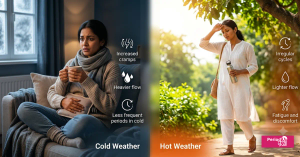
Summer can be particularly uncomfortable when it coincides with menstruation. High temperatures, excessive sweating and dehydration may make everyday activities feel more tiring.
Although heat does not necessarily increase menstrual bleeding or shorten the cycle, it can make certain symptoms harder to manage.
Dehydration and fatigue
The body loses water through sweating, especially during prolonged exposure to heat. If fluid intake does not adequately replace these losses, dehydration may develop.
You may experience:
Headaches
Dizziness
Tiredness
Increased thirst
Difficulty concentrating
Some of these symptoms can overlap with the fatigue and headaches experienced around menstruation, making the overall discomfort more noticeable.
Hormonal fluctuations during the menstrual cycle can influence digestion and fluid retention. Some women experience bloating, constipation or changes in bowel movements before or during their periods. Hot weather may add to the discomfort if you become dehydrated or change your usual eating habits. However, there is no established evidence that summer temperatures directly cause menstrual bloating.
Sweating and moisture around the genital area can increase discomfort, particularly when sanitary products are worn for extended periods.
During hot weather:
Change sanitary pads regularly.
Avoid wearing damp or sweaty underwear for long periods.
Choose breathable cotton underwear.
Wash the external genital area gently with water.
Avoid perfumed intimate washes and vaginal douching.
Good menstrual hygiene is important throughout the year, but it can require a little more attention during hot and humid conditions.
Winter brings shorter days, colder temperatures and changes in daily routines. Some people become less physically active, spend more time indoors or experience changes in their sleep patterns. These changes may influence how comfortable they feel during menstruation.
Many women report feeling that their cramps become more uncomfortable during winter. However, there is not enough scientific evidence to establish that cold temperatures directly increase uterine contractions or cause more severe menstrual cramps.
Period pain primarily occurs because of prostaglandins, hormone-like substances that encourage the uterus to contract and shed its lining. Higher prostaglandin activity can contribute to stronger contractions and more painful periods. Cold weather may make some people feel physically tense or less inclined to move around. This could affect their perception of discomfort, although the relationship between outdoor temperature and menstrual pain is not yet clearly established. A warm compress, gentle movement and adequate rest may help relieve cramps.
Shorter days and colder mornings can make exercise less appealing. However, regular physical activity may help some women manage menstrual discomfort and improve mood. You do not need an intense workout during your period. Walking, gentle stretching or yoga can be sufficient if you feel comfortable.
Reduced daylight exposure during winter may influence sleep patterns and mood in some individuals. If you already experience premenstrual mood changes, these seasonal factors may contribute to how you feel. Persistent low mood, anxiety or significant fatigue should not automatically be attributed to the weather. If these symptoms interfere with daily activities, consider discussing them with a healthcare professional.
Hot and humid weather can make menstruation particularly uncomfortable. Unlike dry heat, high humidity makes it harder for sweat to evaporate from the skin, affecting the body's natural cooling process. This can leave you feeling sticky, sweaty and uncomfortable throughout the day. Humidity does not directly change the menstrual cycle. However, it may influence personal comfort and menstrual hygiene.
Some common difficulties include:
Common difficulty | Why it may happen | What can help |
|---|---|---|
Excessive sweating | High humidity reduces the evaporation of sweat | Wear breathable clothing |
Skin irritation | Moisture and friction can irritate sensitive skin | Change damp underwear and keep the area dry |
Discomfort while using pads | Heat and moisture may increase friction | Change pads regularly and choose a comfortable product |
Feeling exhausted | Hot, humid conditions can make temperature regulation difficult | Drink enough water and take breaks |
Poor sleep | Humidity may make it difficult to stay comfortable at night | Keep your sleeping environment cool and ventilated |
If you experience persistent itching, unusual discharge, a strong odour or irritation, do not assume that humidity is the only reason. These symptoms may require medical assessment.
Sunlight plays an important role in regulating the body's circadian rhythm, which is the internal biological clock that helps control sleep and wakefulness. Changes in daylight exposure can influence sleep patterns and mood. These factors may indirectly affect reproductive health. The menstrual cycle is regulated by communication between the hypothalamus, pituitary gland and ovaries. The hypothalamus also responds to signals related to sleep, stress and energy availability. This is why major disruptions to sleep, nutrition or physical well-being may sometimes be associated with changes in menstruation. Some studies have explored possible seasonal variations in reproductive hormone activity. However, the available evidence is limited, and it would be inaccurate to suggest that reduced sunlight directly causes irregular periods. Maintaining a consistent sleep schedule, getting natural daylight during the day and following a balanced routine can support overall health.
Premenstrual syndrome (PMS) refers to a combination of physical, emotional and behavioural symptoms that occur before menstruation. These symptoms usually improve after the period begins.
Common symptoms include:
Breast tenderness
Bloating
Headaches
Food cravings
Irritability
Mood fluctuations
Fatigue
Difficulty sleeping
The intensity of PMS can vary from one cycle to another. Seasonal changes in sleep, activity, food habits and stress may influence how you experience these symptoms.
Consider two situations.
During summer, you may sleep poorly because of excessive heat, drink less water than your body needs and feel tired throughout the day. During winter, you may spend more time indoors, exercise less and experience changes in your mood.
Neither situation proves that the weather has changed your hormones. However, both may influence your overall physical and emotional comfort.
If PMS becomes severe enough to affect work, relationships or daily activities, speak to a gynaecologist. Severe premenstrual symptoms should not be dismissed as a normal seasonal experience.
Different seasons bring different environmental challenges. The following table highlights some common experiences and practical ways to manage them.
Season | Possible challenges | Practical steps |
|---|---|---|
Summer | Sweating, dehydration, fatigue and skin irritation | Maintain hydration, wear breathable clothing and change sanitary products regularly |
Winter | Changes in activity, sleep and mood; perceived increase in discomfort | Stay active, maintain a regular sleep schedule and use a warm compress for cramps |
Monsoon | Damp clothing, humidity, skin irritation and hygiene challenges | Keep sanitary products dry, change damp clothing and maintain personal hygiene |
These are possible experiences rather than predictable effects of each season. Not everyone experiences the same symptoms, and menstrual patterns should be assessed individually.
You cannot control the weather, but you can make small adjustments to your daily routine to support menstrual comfort.
Drink water regularly, particularly during hot weather or when you are physically active. Your fluid requirements may vary depending on temperature, activity and individual health.
Include fruits, vegetables, whole grains, pulses, nuts and adequate protein in your meals. Iron-rich foods are particularly important for women who experience menstrual blood loss.
If you have heavy periods or persistent fatigue, discuss whether you need an assessment for iron deficiency or anaemia.
Try to maintain a consistent bedtime and wake-up time. Keep your sleeping environment comfortable, whether it is summer, winter or monsoon.
Continue gentle physical activity
Walking, cycling, stretching and yoga can support general health. Adjust the intensity according to your energy levels and menstrual symptoms.
Pay attention to menstrual hygiene
Use sanitary products that suit your body and change them at appropriate intervals. Avoid scented products that may irritate the genital area.
Track your menstrual cycle
Recording your period dates and symptoms can help you identify patterns over time.
You may want to note:
The first and last day of your period
Changes in menstrual flow
The intensity of cramps
Mood changes
Bloating and headaches
Sleep quality
Any unusual symptoms
If you notice a recurring pattern, sharing this information with your gynaecologist can make consultations more useful.
A change in weather is not always the explanation for a change in your menstrual cycle. Persistent or unusual symptoms deserve attention.
Consult a healthcare professional if you experience:
Periods that repeatedly occur less than 21 days or more than 35 days apart.
Bleeding that lasts longer than seven days.
Very heavy bleeding, such as soaking through a pad or tampon every hour for several consecutive hours.
Severe cramps that interfere with daily activities.
Bleeding between periods or after sexual intercourse.
Missed periods when pregnancy is possible.
Persistent fatigue, dizziness or breathlessness.
A sudden and unexplained change in your usual menstrual pattern.
Conditions such as PCOS, thyroid disorders, uterine fibroids and endometriosis can affect menstrual health. It is important not to overlook these possibilities by attributing every change to seasonal conditions.
1. Can weather changes make periods irregular?
There is currently no conclusive evidence that ordinary seasonal weather changes directly cause irregular periods. However, factors such as stress, sleep disruption, significant weight changes and illness can influence menstrual regularity.
2. Does hot weather increase menstrual bleeding?
There is no strong scientific evidence that high temperatures directly increase menstrual blood flow. If you notice unusually heavy bleeding, consult a gynaecologist rather than assuming it is due to the heat.
3. Why do I feel more tired during my period in summer?
High temperatures, sweating, dehydration and disturbed sleep may contribute to fatigue. Menstruation itself can also cause tiredness, particularly when blood loss is heavy.
4. Does cold weather make period cramps worse?
Some women report increased discomfort during winter, but research has not established a direct link between cold temperatures and more severe menstrual cramps. Prostaglandins remain an important factor in menstrual pain.
5. Can humidity cause vaginal infections during periods?
Humidity does not automatically cause vaginal infections. However, prolonged moisture, friction and irritation can make the genital area uncomfortable. Persistent itching, unusual discharge or an unpleasant odour should be assessed by a healthcare professional.
6. Should I change my diet according to the season during menstruation?
You do not need a completely different diet for every season. Focus on balanced meals, adequate protein, iron-rich foods and sufficient fluids. Adjust your food and fluid intake according to your activity, appetite and environmental conditions.
7. Can seasonal changes affect PMS?
Seasonal changes may influence sleep, mood, physical activity and daily routines, which can affect how PMS symptoms feel. However, there is insufficient evidence to establish that a particular season directly causes more severe PMS.
Your menstrual cycle does not exist separately from the rest of your body. Sleep, nutrition, stress, physical activity and environmental conditions all contribute to your overall well-being. Summer may bring dehydration and discomfort, winter may change your activity and sleep patterns, while monsoon humidity can make menstrual hygiene more challenging.
Yet, none of these seasonal experiences should automatically be considered the cause of irregular periods or severe menstrual symptoms. Instead of assuming that every change is weather-related, pay attention to your body's patterns. Track your cycle, maintain healthy routines and seek medical advice when something feels unusual. At PeriodSakhi, we believe menstrual health awareness should go beyond simply knowing when your next period is due. Understanding your body's signals, recognising changes and making informed choices can help you take better care of your health throughout the year.
Seasonal variations in menstrual cycle length and basal body temperature: A large-scale retrospective study. PubMed, 2020.
Seasonal and environmental factors associated with menstrual symptoms. PubMed, 2024.
Seasonal variation in ovarian activity. PubMed, 2011.
Extreme heat and menstruation: What do we know about its impact on the menstrual cycle?. Barcelona Clinic.
Dr. Akanksha is a dedicated dental professional and health educator who believes that healthcare goes beyond treatment-it is about creating awareness, building trust, and empowering individuals to make informed decisions about their well-being. Alongside her clinical expertise in dentistry, she is deeply passionate about public health education, with a special focus on menstrual health, hygiene, and women's wellness.
About PeriodSakhi
PeriodSakhi is your trusted companion for understanding your menstrual health. With easy-to-use tools, it helps you track your periods, ovulation, fertility, moods, and symptoms, while providing insights into your overall reproductive and hormonal health. PeriodSakhi also serves as a supportive online community where women can share experiences, find reliable information, and access expert-backed guidance on menstrual health, PCOS, pregnancy, lifestyle, and more.
Disclaimer
The views, thoughts, and opinions expressed in this article/blog are solely those of the author and do not necessarily reflect the views of PeriodSakhi. Any omissions, errors, or inaccuracies are the responsibility of the author. PeriodSakhi assumes no liability or responsibility for any content presented. Always consult a qualified medical professional for specific advice related to menstrual health, fertility, pregnancy, or related conditions.