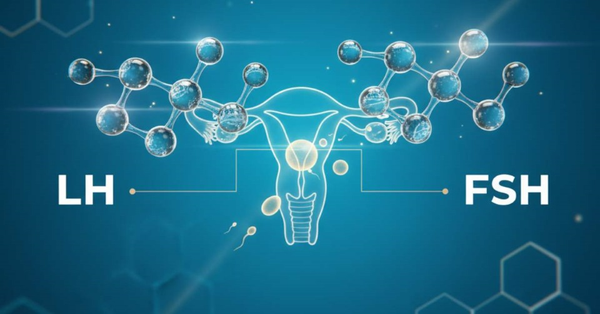

Fertility depends on a delicate hormonal rhythm that repeats every menstrual cycle. Two of the most important hormones in this rhythm are Follicle-Stimulating Hormone (FSH) and Luteinising Hormone (LH). These hormones are produced by the pituitary gland in the brain and act directly on the ovaries to regulate follicle development, ovulation and menstrual cycle balance. When LH and FSH work in harmony, ovulation occurs smoothly. When their levels become imbalanced, fertility can be affected. Understanding these hormones helps women identify cycle patterns, recognise symptoms of hormonal disruption and seek appropriate treatment when trying to conceive.
FSH and LH are gonadotropins, meaning they stimulate the reproductive organs. Both are controlled by Gonadotropin-Releasing Hormone (GnRH), which is released by the hypothalamus. FSH is responsible for the early development of ovarian follicles, while LH triggers ovulation and supports the formation of the corpus luteum. Together, they ensure that each cycle progresses correctly from the follicular phase to ovulation and then to the luteal phase.
These hormones work through a feedback system involving estrogen and progesterone. As follicles grow and estrogen rises, FSH gradually declines, preparing the body for the LH surge. When estrogen reaches a peak, it signals the pituitary gland to release a rapid increase in LH that ultimately causes the egg to be released.
FSH plays a crucial role in the early part of the cycle. At the beginning of each menstrual cycle, several follicles in the ovaries begin to mature. FSH stimulates this growth. Each follicle contains an immature egg, and FSH helps the dominant follicle develop to the point where it can be released during ovulation.
A healthy FSH level supports strong follicular development, balanced estrogen production and predictable cycles. If FSH is too low, follicle growth may be slow or insufficient. If it is too high, it may indicate reduced ovarian reserve, where the ovaries require more stimulation to develop a mature egg. This is why FSH testing is often used to assess a woman’s ovarian health when evaluating fertility.
LH becomes especially important around mid-cycle. After the dominant follicle has grown under the influence of FSH, rising estrogen levels trigger the LH surge. This surge is one of the most important events in natural conception. It signals the follicle to release the mature egg into the fallopian tube, where fertilisation can occur.
After ovulation, LH supports the transformation of the empty follicle into the corpus luteum. The corpus luteum produces progesterone, the hormone that prepares the uterine lining for implantation. Without adequate LH, ovulation may not occur or luteal phase support may be inadequate, leading to difficulties in conceiving or maintaining early pregnancy.
FSH and LH are partners in fertility. FSH prepares the egg, while LH releases it. The balance between the two is essential. Typically, in the early follicular phase, FSH is slightly higher to stimulate follicular growth. As estrogen rises, FSH falls and LH begins to rise. A mid-cycle LH surge then leads to ovulation.
The ratio between LH and FSH is often used to assess hormonal health. In healthy cycles, the LH:FSH ratio is close to 1:1 in the early follicular phase. However, certain conditions disrupt this ratio, influencing cycle regularity and fertility.
Hormonal imbalance can affect ovulation, cycle length and overall fertility. An imbalance may show up as irregular cycles, anovulation, spotting or difficulty tracking ovulation symptoms.
An elevated LH level with normal or low FSH is seen in many women with Polycystic Ovary Syndrome. This imbalance disrupts follicle maturation and prevents the LH surge from triggering ovulation effectively. As a result, cycles become irregular and ovulation may not occur.
Very high FSH levels can indicate reduced ovarian reserve or premature ovarian insufficiency. In such cases, follicles do not respond well to stimulation and ovulation may be inconsistent. Low FSH and LH, on the other hand, may point to hypothalamic dysfunction, often due to stress, excessive weight loss or intense exercise. This condition disrupts the brain’s signalling to the ovaries, leading to absent or irregular periods.
Identifying the type of imbalance is the first step in appropriate treatment.
Both LH and FSH are core components of fertility evaluation. Blood tests are usually done on day 2 or day 3 of the menstrual cycle to measure baseline FSH, LH and estradiol levels. These values help assess ovarian function and pituitary response.
An LH surge can be detected using ovulation predictor kits. These kits measure the rise in LH in urine and help identify the fertile window. A strong, timely LH surge suggests healthy ovulatory function. If the surge is absent or irregular, it may indicate anovulation or hormonal imbalance.
In assisted reproductive treatments like IVF, LH and FSH levels guide medication dosage and timing. Doctors administer controlled doses of FSH to stimulate follicle growth and use LH or hCG injections to trigger ovulation at the right moment.
PCOS is one of the most common conditions that affect the LH-FSH balance. Many women with PCOS have a higher LH level in comparison to FSH, often leading to an LH:FSH ratio of 2:1 or 3:1. This imbalance prevents the formation of a dominant follicle, leading to delayed ovulation or no ovulation at all.
This altered ratio also contributes to increased androgen production, which causes acne, excess hair growth and irregular cycles. Treating PCOS often focuses on restoring hormonal balance through lifestyle changes, insulin-sensitising medications and ovulation-inducing treatment. Normalising LH and FSH levels significantly improves ovulation frequency and fertility outcomes.
FSH is also a key indicator of ovarian reserve. As women age, the number of follicles decreases, and the ovaries require higher levels of FSH to recruit a healthy follicle. Elevated FSH on day 2 or day 3 may indicate reduced ovarian reserve. This does not mean pregnancy is impossible, but it may suggest that more time or medical support may be needed.
Women with low ovarian reserve often undergo more frequent monitoring, AMH testing and targeted fertility treatments to increase the chances of conception.
Lifestyle factors have a significant effect on these hormones. Excessive stress can suppress LH and FSH, leading to irregular cycles. Very high-intensity workouts or significant weight loss can reduce these hormones to the point where periods stop. On the other hand, obesity and insulin resistance can raise LH levels, especially in PCOS.
A balanced diet, moderate exercise, stress reduction techniques, adequate sleep and healthy weight management help maintain a stable LH-FSH rhythm. Avoiding smoking, limiting caffeine and managing thyroid health also support hormonal balance.
If cycles are irregular, ovulation is difficult to track or conception is taking longer than expected, it is advisable to get LH, FSH, AMH and thyroid tests done. Identifying the cause of hormonal imbalance helps tailor treatment. Women with PCOS, suspected ovarian insufficiency, thyroid disorders or hypothalamic dysfunction benefit from early evaluation and support.
LH and FSH are central to a woman’s fertility journey. They work together to mature the egg, trigger ovulation and support the luteal phase. When balanced, they create the ideal hormonal environment for conception. When imbalanced, they can affect ovulation, cycle regularity and reproductive health. Understanding how these hormones behave empowers women to recognise changes in their cycle, seek timely medical guidance and make lifestyle choices that support healthy fertility.
About PeriodSakhi
PeriodSakhi is your trusted companion for understanding your menstrual health. With easy-to-use tools, it helps you track your periods, ovulation, fertility, moods, and symptoms, while providing insights into your overall reproductive and hormonal health. PeriodSakhi also serves as a supportive online community where women can share experiences, find reliable information, and access expert-backed guidance on menstrual health, PCOS, pregnancy, lifestyle, and more.
Disclaimer
The views, thoughts, and opinions expressed in this article/blog are solely those of the author and do not necessarily reflect the views of PeriodSakhi. Any omissions, errors, or inaccuracies are the responsibility of the author. PeriodSakhi assumes no liability or responsibility for any content presented. Always consult a qualified medical professional for specific advice related to menstrual health, fertility, pregnancy, or related conditions.

Learn how proper hydration during the luteal phase can reduce bloating, improve mood, support digestion, and ease PMS symptoms naturally.
Wondering if fasting during periods is safe? Learn how fasting affects hormones, menstrual cramps, iron levels, energy, and overall reproductive health. This medically reviewed guide explains when fasting may be safe, when it should be avoided, and practical nutrition tips for women during menstruation.