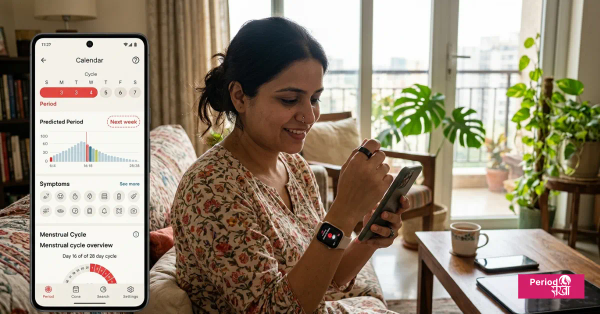

For years, conversations about periods have revolved around one question: “Is this normal?”
Is a 28-day cycle normal?
Is a five-day period normal?
Are cramps normal?
Is it normal to have mood changes before a period?
What if one month is different from the next?
The problem is that menstruation does not follow one perfect template.
A menstrual cycle is influenced by age, hormones, stress, nutrition, sleep, physical activity, medications, contraception, pregnancy, underlying health conditions and life stages. Even in the same person, cycles can change over time.
“What is normal for me, and has that pattern changed?”
There is a tendency to treat the 28-day cycle as the gold standard.
It is not.
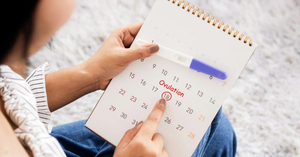
The menstrual cycle is counted from the first day of one period to the first day of the next. WHO describes the average menstrual cycle as lasting about 21 to 35 days, although individual experiences vary. (World Health Organization)
The number of bleeding days, amount of bleeding and symptoms can also vary.
One woman may have a four-day period with mild cramps. Another may bleed for six days and experience some breast tenderness or bloating. Both may be healthy.
Even the same woman may notice that her period arrives a few days earlier or later in different months.
This natural variation is one reason NICE recommends taking the natural variability of menstrual cycles and blood loss into account when assessing menstrual problems rather than relying only on rigid ranges. (Nice)
So instead of asking whether your period looks exactly like someone else’s, it may be more useful to understand your own pattern.
Think of your menstrual baseline as your usual menstrual “signature.”
It includes several things:
roughly how often your period comes
how many days you usually bleed
whether your flow is usually light, moderate or heavy
whether you usually have cramps
how severe those cramps are
whether you experience headaches, bloating or breast tenderness
whether your mood changes before or during your period
whether symptoms interfere with work, school, exercise or sleep
For example, suppose your periods have generally arrived every 29 to 32 days for the last year, lasted around five days and caused mild cramps on the first day.
Then suddenly your cycles start coming every 45 to 50 days, your bleeding becomes much heavier and you develop severe pelvic pain.
The important information is not simply that your cycle is “outside the normal range.”
Your pattern has changed.
That change is worth paying attention to.
Period tracking is often marketed as a way to predict the next period.
But its health value can go beyond prediction.
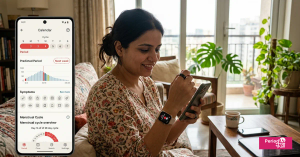
Keeping a simple record can help you recognise patterns that are difficult to remember months later.
You do not need to record every detail.
A basic menstrual diary or app can include:
First day of bleeding: When did the period begin?
Cycle length: How many days passed between the first day of this period and the first day of the next?
Bleeding: Was the flow lighter, similar to usual or heavier than usual?
Pain: Was there no pain, mild pain or pain that interfered with normal activities?
Other symptoms: Headache, bloating, breast tenderness, bowel changes, fatigue or mood changes.
Impact: Did you miss work, school, exercise or social activities because of your symptoms?
This last question is particularly important.
Menstrual health is not simply about counting days.
One of the biggest problems in menstrual health is the phrase:
“Periods are supposed to hurt.”
Some menstrual discomfort is common. But severe pain that repeatedly interferes with daily life should not simply be dismissed as something every woman has to tolerate.
WHO notes that menstrual symptoms can include pain, bloating, headache and mood changes. For some people, however, menstrual pain can be severe or occur at other times in the cycle. (World Health Organization)
Conditions such as endometriosis, adenomyosis and fibroids can be associated with significant menstrual symptoms. WHO also identifies several conditions that can present with problematic bleeding, pain or cycle changes. (World Health Organization)
This is why the question should not simply be:
“Do other women have this?”
A better question is:
“Is this affecting my health or my ability to live normally?”
Some people naturally bleed more than others.
But persistently heavy menstrual bleeding can affect quality of life and may contribute to iron deficiency and anaemia.
NICE recommends that healthcare professionals ask about the nature of bleeding, related symptoms and the impact of heavy menstrual bleeding on everyday life. (Nice)
For example, bleeding that repeatedly soaks through clothing or bedding, requires frequent changes of menstrual products or makes someone avoid leaving home deserves attention, particularly if it represents a change from their usual pattern.
The important point is that menstrual health should be assessed according to both symptoms and their effect on life.
A change in cycle length does not automatically mean that something is wrong.
Stress, major changes in body weight, intense exercise, illness, travel, sleep disruption and hormonal contraception can all influence menstrual patterns.
Adolescence and the years approaching menopause are also periods when cycles can naturally become less predictable.
However, persistent or significant changes should not simply be ignored.
WHO notes that unpredictable, infrequent or otherwise problematic menstruation can sometimes be associated with conditions such as PCOS, thyroid-related problems, pregnancy, primary ovarian insufficiency and other reproductive or systemic conditions. (World Health Organization)
The goal of tracking is therefore not to diagnose yourself.
It is to notice when something has changed so that you can describe it accurately to a healthcare professional.
A menstrual pattern at 15 does not necessarily look the same at 25.
And the period you have at 25 may not look the same at 40.
During the first few years after menarche, cycles can be less predictable while the reproductive system matures.
During reproductive years, cycles may be relatively predictable but can still change because of pregnancy, breastfeeding, contraception, medications, weight changes, stress or medical conditions.
Later in life, the transition towards menopause can bring changes in cycle timing, bleeding and symptoms.
This is why menstrual health needs a life-course approach.
WHO describes menstrual health as something that matters before the first period, throughout the reproductive years and through the transition when menstruation ends. (World Health Organization)
The menstrual cycle is not an isolated event and it is influenced by hormonal and metabolic processes throughout the body. A major change in menstruation can sometimes be one of the first noticeable signs that something else has changed. For example, persistent irregular periods may occur with PCOS. Very heavy bleeding can be associated with uterine conditions or bleeding disorders. Missing periods can occur with pregnancy, significant energy deficiency, excessive exercise, stress or certain endocrine conditions. This does not mean that every unusual period indicates disease. It means that the menstrual cycle can provide useful information about health when considered alongside other symptoms and circumstances.
Periods are often discussed as a purely physical issue but also, the menstrual cycle can affect emotional wellbeing too. Some people experience irritability, anxiety, sadness, mood changes or changes in concentration before or during menstruation. For some, these symptoms can significantly affect relationships, work, school or daily activities. WHO recognises these psychological and social dimensions as part of menstrual health. (World Health Organization)
This is another reason why a menstrual diary can be useful, if someone notices that severe mood symptoms occur repeatedly during a particular phase of the cycle and then improve, that pattern can provide useful information for a healthcare professional. The purpose is not to label every emotional change as hormonal. It is to notice patterns rather than dismiss them.
For a long time, menstruation was discussed mainly in terms of hygiene.
Use a clean pad.
Change it regularly.
Dispose of it properly.
Wash your hands.
All of these remain important.
But menstrual health is broader.
WHO defines menstrual health in terms of physical, mental and social wellbeing related to the menstrual cycle. It includes access to accurate information, appropriate menstrual products and sanitation, healthcare when needed, freedom from stigma and the ability to participate in everyday life. (World Health Organization)
This shift in language matters.
A woman can have access to sanitary products and still have poor menstrual health if she has severe untreated pain.
A girl can know how to use a pad and still have poor menstrual health if she believes her period is shameful.
A working woman can manage her bleeding but still struggle if severe symptoms repeatedly prevent her from attending work.
Menstrual health therefore asks a much bigger question:
How is menstruation affecting the person’s body, mind and everyday life?
You do not need to wait until your period becomes unbearable before talking to a healthcare professional.
It is reasonable to seek medical advice if you notice a persistent or significant change from your usual pattern, especially if you have:
very heavy or prolonged bleeding
periods that repeatedly interfere with daily activities
severe menstrual pain
pelvic pain outside menstruation
bleeding between periods or after sex
periods becoming unusually frequent or infrequent
repeatedly missed periods when pregnancy is not the explanation
symptoms of possible anaemia such as unusual tiredness, weakness or breathlessness
significant mood symptoms associated with the menstrual cycle
symptoms that are new, worsening or concerning to you
The exact evaluation depends on age, symptoms, medical history, medications, pregnancy possibility and other factors.
There is no single test that every person with a menstrual concern needs.
That is why a good menstrual history matters.
Many people reach a clinic and simply say:
“My periods are irregular.”
That is a useful starting point, but it leaves out a lot of information.
A more useful description might be:
“My periods used to come every 29 to 31 days, but for the last four months they have been 40 to 50 days apart. The bleeding is also heavier than before and I have started having significant pelvic pain.”
That gives a healthcare professional much more information.
Similarly, instead of saying:
“I have painful periods.”
you could explain:
“I have pain on the first two days, but recently the pain has become severe enough that I miss work and need pain medication.”
NICE specifically recommends taking the impact of menstrual symptoms on quality of life into account when assessing heavy menstrual bleeding. (Nice)
Your experience is therefore part of the clinical history.
Period tracking has become popular, but so has the idea that there is an ideal menstrual cycle.
One person posts that her cycle is always 28 days.
Another says she never experiences cramps.
Someone else says her period lasts exactly four days.
These experiences are not a medical standard.
Social media can make normal variation look abnormal and abnormal symptoms look normal.
Instead of asking:
“Why isn’t my period like hers?”
ask:
“What is usual for me?”
That small change in thinking can make menstrual health much more personal and much more useful.
Understanding your baseline does not mean expecting your body to remain identical every month.
Bodies change.
Cycles change.
Life changes.
The goal is not perfect menstrual predictability.
The goal is awareness.
If your period arrives a few days earlier one month, that may simply be variation.
If your usual pattern changes for several months, that is information.
If your pain suddenly becomes severe, that is information.
If your bleeding becomes much heavier, that is information.
If your periods disappear unexpectedly, that is information.
The menstrual cycle can become one small window through which you observe your health.
Perhaps the next generation of menstrual health should move beyond the question:
“Is my period normal?”
and towards five simpler questions:
What is usual for me?
Has it changed?
How long has it changed?
Is it affecting my everyday life?
Do I need help?
These questions are more useful than comparing one woman’s period with another’s.
They also make room for something that menstrual conversations have often missed: individual experience.
There is no prize for having a 28-day cycle.
There is no requirement to have exactly five days of bleeding.
And there is no reason to believe that every woman should experience menstruation in exactly the same way. Menstrual health is not about achieving a perfect cycle.
It is about understanding your body well enough to recognise your own patterns, notice meaningful changes and seek help when something does not feel right.
The next step in menstrual health is therefore not simply better period prediction.
It is better self-awareness.
Period is not a report card on your health but sometimes, it can be a useful signal and learning to listen to that signal may be one of the simplest ways to take your menstrual health seriously.
There is no single menstrual pattern that every woman needs to have.
A 28-day cycle is not the only healthy cycle.
Your personal menstrual baseline includes cycle timing, bleeding, pain, other symptoms and their impact on daily life.
Tracking can help identify meaningful changes and provide useful information during a medical consultation.
Severe pain, very heavy bleeding, persistent irregularity, bleeding between periods or major changes from your usual pattern should not simply be dismissed.
Menstrual health includes physical, mental and social wellbeing, not just menstrual hygiene.
Understanding your own baseline is more useful than constantly comparing your period with someone else’s.
About PeriodSakhi
PeriodSakhi is your trusted companion for understanding your menstrual health. With easy-to-use tools, it helps you track your periods, ovulation, fertility, moods, and symptoms, while providing insights into your overall reproductive and hormonal health. PeriodSakhi also serves as a supportive online community where women can share experiences, find reliable information, and access expert-backed guidance on menstrual health, PCOS, pregnancy, lifestyle, and more.
Disclaimer
The views, thoughts, and opinions expressed in this article/blog are solely those of the author and do not necessarily reflect the views of PeriodSakhi. Any omissions, errors, or inaccuracies are the responsibility of the author. PeriodSakhi assumes no liability or responsibility for any content presented. Always consult a qualified medical professional for specific advice related to menstrual health, fertility, pregnancy, or related conditions.