
“Menstrual hygiene is not about keeping periods invisible. It is about keeping yourself comfortable, informed and healthy.”
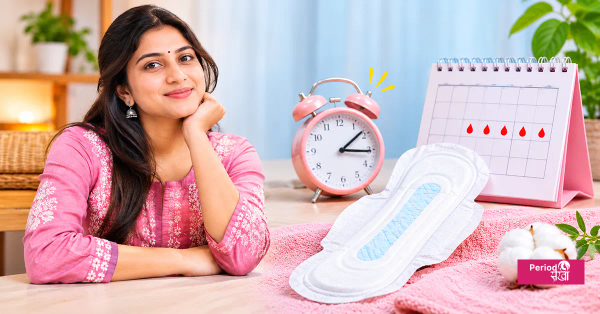
For many girls, one of the first questions after getting their period is surprisingly simple: How often should I change my sanitary pad?
Some are told to change it every time they visit the washroom. Others believe they can keep using the same pad until it looks completely full. And many young girls feel unsure about what to do at school, during travel or when they are sleeping. The truth is that menstrual hygiene does not need to be complicated. But it does require a little attention.
A sanitary pad absorbs menstrual blood after it leaves the body. As it remains in contact with the skin, moisture, friction and menstrual discharge can gradually make it uncomfortable. Changing it regularly helps maintain comfort, reduce unpleasant odour and prevent prolonged dampness against the vulvar skin. So, is every four hours enough? What happens if you wear a pad for too long? Should you change it during the night?
As a practical guide, change your sanitary pad approximately every 4–6 hours, or sooner if it becomes wet, saturated, uncomfortable or starts leaking. The exact timing depends on your menstrual flow, the absorbency of the pad, the weather, your activity level and your personal comfort.
The American College of Obstetricians and Gynecologists (ACOG) advises changing a pad at least every 4–8 hours, or whenever it feels full or wet and uncomfortable. The US Centers for Disease Control and Prevention (CDC) recommends changing pads every few hours, even when the flow is light, and more frequently during heavy bleeding. This means that you should not wait until a pad is completely soaked before replacing it.
Situation | When to change |
|---|---|
Light flow | Every few hours; do not wait until the pad feels damp or uncomfortable |
Moderate flow | Approximately every 4–6 hours |
Heavy flow | More frequently, depending on how quickly the pad fills |
After exercise or sweating | Change if the pad or underwear feels damp or uncomfortable |
Before sleeping | Put on a fresh pad |
After waking up | Change the pad and clean the external genital area gently |
These are practical guidelines rather than rigid medical deadlines. Follow the instructions on your product and pay attention to your body's needs.
A sanitary pad is designed to absorb menstrual blood, but it is not meant to remain against your skin indefinitely. When a pad is worn for an extended period, several things can happen.
Menstrual blood, vaginal discharge and sweat can collect in the absorbent material. Prolonged contact with dampness may cause irritation, particularly around the vulva and inner thighs.
Some women experience itching, redness, a burning sensation or a rash. Friction from the pad, tight underwear and certain materials can make the irritation worse.
Menstrual blood can develop a noticeable smell when it comes into contact with air and remains on a pad. Sweat and normal vaginal secretions can contribute too.
A mild menstrual odour is not automatically a sign of infection or poor hygiene. However, changing pads regularly and maintaining gentle external hygiene can help reduce unpleasant smells.
A wet or bulky pad may rub against the skin while walking, exercising or sitting for long periods. This can cause chafing and discomfort.
A correctly sized pad that suits your flow, combined with breathable underwear, can help reduce friction.
The combination of moisture, friction and contact with menstrual products can irritate sensitive skin. Wearing a pad for too long may contribute to rashes and other local skin problems.
However, it is important to understand that wearing a pad for a long time does not automatically cause a vaginal infection. Vaginal infections have several possible causes, and persistent itching, unusual discharge or burning should not simply be blamed on menstrual hygiene.
Yes. You can wear a sanitary pad overnight, provided you choose an appropriate product and change it regularly.
A practical routine is simple:
Put on a fresh pad just before going to bed.
Choose an overnight or longer pad if your flow is heavy.
Wear comfortable underwear that keeps the pad securely in place.
Change the pad as soon as you wake up.
If you wake during the night and the pad is saturated or uncomfortable, replace it then.
There is no need to wake yourself up repeatedly just to change a pad if it remains comfortable and is not saturated. However, heavy menstrual bleeding may require more frequent changes.
If you regularly soak through a pad in an hour or two, especially over several consecutive hours, speak with a healthcare professional. This may be a sign of heavy menstrual bleeding that needs assessment.
Imagine leaving home in the morning, attending classes or work, travelling back and reaching home without changing your pad.
Even if it does not look completely full, the pad may have been exposed to menstrual blood, sweat and moisture for several hours.
This can increase the likelihood of discomfort, unpleasant odour, chafing and skin irritation.
A common misconception is that the body becomes infected immediately if a pad is worn beyond a particular number of hours. That is not how infections work. There is no universal moment when a pad suddenly becomes dangerous.
The better approach is to avoid prolonged use, maintain skin comfort and follow the recommended changing practices.
Yes. Choosing a suitable pad is just as important as changing it regularly.
Sanitary pads are available in different lengths, thicknesses and absorbency levels. Some are designed for light flow, while others are made for heavier bleeding or overnight use.
Here are a few things to consider:
Choose according to your flow: A thin pad may be sufficient on lighter days, while heavier days may require a longer or more absorbent product.
Pay attention to the material: If you experience irritation, consider switching to an unscented product with a softer surface.
Avoid unnecessary fragrances: Scented pads and deodorising products may irritate sensitive skin. Fragrance-free options are generally a sensible choice, especially if you are prone to vulvar irritation.
Check the fit: A pad that moves around or folds may cause friction and leakage. Choose a size that fits your underwear comfortably.
Do not reuse disposable pads: A disposable sanitary pad is designed for one-time use. Once removed, it should be wrapped and discarded.
Reusable cloth pads are an alternative to disposable sanitary pads. They can be made from cotton or other absorbent materials and are designed to be washed and reused.
However, they require careful cleaning and drying.
If you use reusable pads:
Change them regularly according to your flow and the manufacturer's instructions.
Wash them thoroughly with water and detergent after use.
Rinse properly to remove soap and menstrual residue.
Dry them completely before storing.
Keep clean pads in a dry, clean place.
Do not reuse a damp or inadequately washed pad.
Sun-drying can help dry reusable pads thoroughly. If you are travelling or attending school, carry a separate waterproof pouch for used reusable products until they can be washed.
The most important principle is that a reusable pad must be clean and completely dry before it is worn again.
For many girls, the biggest challenge is not knowing how often to change a pad. It is finding the time, privacy and facilities to do so.
A busy school timetable, long meetings, public washrooms and travel can make menstrual care difficult.
A small period kit can make these situations easier.
Keep the following items in a pouch:
Two or three spare sanitary pads.
A clean pair of underwear.
Toilet paper or tissues.
A disposal bag or paper wrapper.
Hand sanitiser for situations where soap and water are unavailable.
If you are at school, do not feel embarrassed about asking a teacher, school nurse or trusted adult for help. Menstrual care is a normal health need, not something to hide.
Parents and teachers can also help by ensuring that girls have access to clean toilets, water, disposal facilities and menstrual products.
Proper disposal is an important part of menstrual hygiene.
After removing a disposable pad:
Roll or fold it so that the used surface is covered.
Wrap it in the original wrapper, toilet paper or newspaper.
Place it in a designated waste bin.
Wash your hands with soap and water.
Never flush sanitary pads down the toilet. They can block drainage systems and contribute to sanitation problems.
Avoid throwing used pads into open spaces, water bodies or uncovered drains. Follow local municipal waste-disposal instructions wherever available.
Sometimes, menstrual discomfort is not caused by menstruation itself but by everyday habits that can be changed.
Mistake 1: Waiting until the pad is completely full.
A pad should be changed before it becomes uncomfortable or saturated. You do not need to wait for leakage.
Mistake 2: Using a single pad throughout the working day.
Even if the flow is light, prolonged contact with moisture may cause irritation. Plan a few minutes for changing during the day.
Mistake 3: Choosing a highly scented pad to control odour.
Fragrances may irritate sensitive skin. Regular changing and gentle hygiene are better approaches.
Mistake 4: Washing the vagina repeatedly.
The vagina is self-cleaning. Wash the external genital area, known as the vulva, gently with water. Avoid douching, vaginal deodorants and scented intimate washes.
Mistake 5: Reusing disposable pads.
Disposable pads should never be washed and reused. Reusable cloth pads are a separate product category and must be cleaned and dried correctly.
Occasional irritation may result from friction, moisture, sensitivity to a pad's material or contact with fragrances. However, persistent symptoms should not be ignored.
Consider changing to a fragrance-free product and avoiding any new intimate hygiene products that may be causing irritation.
Consult a gynaecologist if you experience:
Persistent itching or burning.
Swelling, redness or painful skin irritation.
Unusual vaginal discharge.
A strong or unusual odour accompanied by other symptoms.
Pain during urination.
Recurrent rashes during every menstrual cycle.
These symptoms may have causes other than pad use, including dermatitis, yeast infection or other vaginal and vulvar conditions. A healthcare professional can help identify the cause rather than relying on self-treatment.
If you find yourself changing a fully soaked pad every one to two hours, this deserves attention, particularly if it happens repeatedly.
Other signs that warrant medical evaluation include:
Bleeding that lasts longer than seven to eight days.
Passing large blood clots.
Feeling unusually tired, dizzy or breathless.
Bleeding that interferes with school, work or daily activities.
Menstrual bleeding that suddenly becomes much heavier than usual.
Heavy periods can sometimes be associated with iron deficiency or anaemia. A doctor may recommend blood tests and further assessment depending on your symptoms.
Do not assume that frequent pad changes are simply part of having a normal period.
Changing a sanitary pad may seem like a small daily habit, but it plays an important role in menstrual comfort and skin care.
For most women, changing a pad every few hours, generally around every four to six hours, is a useful routine. Change it sooner when the flow is heavy, the pad feels wet or uncomfortable, or leakage begins.
Remember that menstrual hygiene is not about using the most expensive product or following a rigid schedule. It is about understanding your flow, choosing a product that suits your body, keeping the external genital area clean and disposing of used products responsibly.
For young girls experiencing their first periods, these simple habits can build confidence and help make menstruation less stressful. For women of every age, they remain an important part of everyday self-care.
At PeriodSakhi, we believe that every girl and woman deserves accurate information, access to menstrual products and the confidence to care for her body without embarrassment. A small hygiene habit can make a meaningful difference to everyday comfort.
Centers for Disease Control and Prevention (CDC). Healthy Habits: Menstrual Hygiene. 2024. https://www.cdc.gov/hygiene/about/menstrual-hygiene.html
American College of Obstetricians and Gynecologists (ACOG). Your First Period. Guidance on changing sanitary pads and menstrual health. https://www.acog.org/womens-health/faqs/your-first-period
National Health Mission, Government of India. Knowing All About Menstruation: Frequently Asked Questions. Guidance on sanitary napkin use, changing and disposal. https://nhm.gov.in/images/pdf/programmes/RKSK/Knowing_all_about_Menstruation-FAQ.pdf
NHS Inform. Choosing Period Products. Guidance on disposable and reusable menstrual products. https://www.nhsinform.scot/healthy-living/womens-health/girls-and-young-women-puberty-to-around-25/periods-and-menstrual-health/choosing-period-products/
UNICEF. How to Talk to Your Daughter About Periods. Menstrual product use and hygiene guidance. https://www.unicef.org/asia-pacific/stories/how-to-talk-to-daughter-periods
American College of Obstetricians and Gynecologists (ACOG). Vulvovaginal Health. Guidance on external genital hygiene and avoiding irritants. https://www.acog.org/womens-health/faqs/vulvovaginal-health
Office on Women's Health, US Department of Health and Human Services. Your Menstrual Cycle. Guidance on menstrual flow and signs of heavy bleeding. https://womenshealth.gov/menstrual-cycle/your-menstrual-cycle
About PeriodSakhi
PeriodSakhi is your trusted companion for understanding your menstrual health. With easy-to-use tools, it helps you track your periods, ovulation, fertility, moods, and symptoms, while providing insights into your overall reproductive and hormonal health. PeriodSakhi also serves as a supportive online community where women can share experiences, find reliable information, and access expert-backed guidance on menstrual health, PCOS, pregnancy, lifestyle, and more.
Disclaimer
The views, thoughts, and opinions expressed in this article/blog are solely those of the author and do not necessarily reflect the views of PeriodSakhi. Any omissions, errors, or inaccuracies are the responsibility of the author. PeriodSakhi assumes no liability or responsibility for any content presented. Always consult a qualified medical professional for specific advice related to menstrual health, fertility, pregnancy, or related conditions.