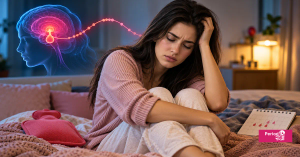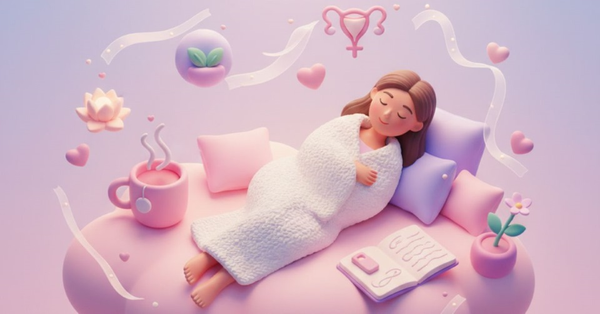

There are days in the month when pushing feels wrong. When your body asks you to slow down, not because it is failing but because it is recalibrating. The menstrual phase is not a breakdown between cycles. It is a pause written into your biology. These are your softest days. And softness, when chosen consciously, is a form of strength.
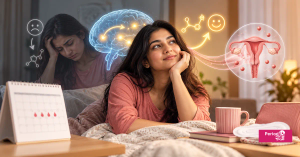
During menstruation, both estrogen and progesterone are at their lowest levels. This hormonal state shifts your body from an outward, action-oriented mode to an inward, restorative one.
Medically, this phase is marked by:
Uterine contractions to shed the endometrial lining
Increased prostaglandin activity
Lower basal body temperature
Reduced energy availability
Your body is prioritising release and repair, not performance. Expecting peak productivity during this time is like asking a wound to heal faster by poking it.
Low estrogen affects the autonomic nervous system, often tilting it toward a heightened stress response. This is why you may feel:
Overstimulated
Emotionally raw
Less tolerant of noise, crowds, or conflict
Radical self-love during menstruation is not indulgent—it is nervous system care. Quiet, warmth, predictable routines, and safe emotional spaces help your body return to balance.
Softness allows regulation.
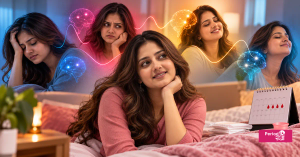
Menstrual days often strip away emotional filters. Thoughts feel louder. Feelings arrive without cushioning. This is not emotional instability; it is emotional honesty.
Lower progesterone reduces emotional dampening, which means:
You may feel truths more clearly
Old grief or unmet needs may surface
Boundaries become more obvious
Instead of correcting these feelings, menstrual self-love asks you to listen. Softness creates room for emotional processing that busier phases suppress.
Rest during menstruation is not passive. It is an active biological intervention.
Even small acts matter:
Eating warm, nourishing meals
Saying no without justification
Sitting instead of standing
Allowing slower mornings
These choices signal safety to the body. Safety allows healing.
You are not “falling behind” during your period. You are maintaining your system.
Society often celebrates femininity when it is palatable—cheerful, accommodating, glowing. Menstrual days challenge this narrative. They reveal a femininity that is quiet, firm, boundaried, and deeply self-aware.
Radical self-love means allowing yourself to be:
Less available
Less agreeable
Less performative
And still worthy of care.
When you honour your softest phase, the rest of your cycle benefits. Women who respect menstrual rest often report:
Better energy in the follicular phase
Improved emotional regulation
Reduced cycle-related burnout
Biology rewards alignment.
Your menstrual phase is not a flaw in the system. It is the system reminding you to come back to yourself.
Softness is not something to fix. Rest is not something to earn. Self-love does not have to be loud to be real.
These days are not for becoming more. They are for being held by yourself.
Dr. Shreya Karan is a dedicated oral and maxillofacial surgeon who brings over ten years of experience to her practice, combining surgical expertise with genuine care for her patients. She is dedicated to empowering women with accurate, evidence-based health information, helping them make informed decisions about their well-being.
About PeriodSakhi
PeriodSakhi is your trusted companion for understanding your menstrual health. With easy-to-use tools, it helps you track your periods, ovulation, fertility, moods, and symptoms, while providing insights into your overall reproductive and hormonal health. PeriodSakhi also serves as a supportive online community where women can share experiences, find reliable information, and access expert-backed guidance on menstrual health, PCOS, pregnancy, lifestyle, and more.
Disclaimer
The views, thoughts, and opinions expressed in this article/blog are solely those of the author and do not necessarily reflect the views of PeriodSakhi. Any omissions, errors, or inaccuracies are the responsibility of the author. PeriodSakhi assumes no liability or responsibility for any content presented. Always consult a qualified medical professional for specific advice related to menstrual health, fertility, pregnancy, or related conditions.