
“A woman should never have to choose between her health and her livelihood.”
India’s workforce is rapidly evolving. More women are joining offices, factories, healthcare facilities, corporate setups, and gig roles. Yet one fundamental biological experience of menstruation remains largely unacknowledged in workplace policies. For many Indian women, periods are not just a monthly occurrence. They bring cramps, fatigue, nausea, migraines, emotional distress, heavy bleeding, and medical conditions like PCOS and endometriosis that worsen symptoms.
Despite this reality, women are socially conditioned to “push through the pain,” fearing judgement, stigma, or assumptions of weakness. Menstrual leave has emerged globally as a supportive policy that respects women’s biology and creates healthier work environments. For India, where period pain is often dismissed as normal, this conversation is especially critical.
Studies show that 20% of women experience pain severe enough to interfere with daily work. Dysmenorrhea (painful periods) is one of the leading reasons young women miss school or work, yet offices rarely acknowledge its impact.
Beyond normal cramps, women may experience:
Back pain
Leg pain
Diarrhoea or nausea
Dizziness
Fatigue
Emotional sensitivity
Reduced concentration
Conditions like PCOS, adenomyosis, fibroids, and endometriosis worsen these symptoms dramatically. According to the World Health Organization, endometriosis alone affects 1 in 10 women globally, many of whom experience pain comparable to chronic illness.
When women work through this pain, they are physically present but not functioning at full capacity, a phenomenon known as presenteeism.
Ignoring menstrual discomfort has several negative consequences:
A 2019 BMJ study found that women lose 9 days of productivity per year because they work while in pain.
Women who push through severe symptoms often experience longer recovery periods.
When women feel unsupported, they experience higher stress and disengagement.
Working through pain worsens chronic reproductive conditions, especially PCOS and endometriosis.
Women hesitate to disclose genuine medical symptoms due to fear of being judged.
A menstrual leave policy can directly reduce these burdens.
India has a unique combination of cultural, social, and medical factors that make menstrual leave not just beneficial but necessary.
PCOS affects 1 in 5 Indian women (ICMR data).
Endometriosis affects 10% of women, often undiagnosed.
Anaemia affects 57% of Indian women—making periods more tiring.
Not every woman has access to:
Pain medication
Heating pads
Sanitary products
Clean toilets at work
This makes working during periods physically uncomfortable and sometimes unsafe.
Menstrual pain is often dismissed with comments like:
“It happens to everyone.”
“It’s not a big deal.”
“Take a normal sick leave.”
These responses reinforce stigma.
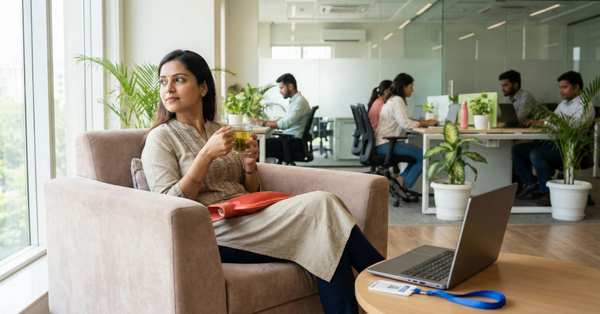
Factory workers, nurses, teachers, domestic workers, and gig workers have limited control over rest breaks. Menstrual leave can provide a dignified choice.
Many countries have acknowledged menstrual health in labour laws.
Country | Policy Summary |
Japan | Menstrual leave since 1947. |
South Korea | Paid menstrual leave monthly. |
Taiwan | 3 menstrual-leave days per year. |
Indonesia | 2 days per month. |
Spain (2023) | First European nation with paid menstrual leave. |
India can adopt similar frameworks while adapting to local cultural and workforce needs.
A well-designed policy supports both employees and organizations.
One or two days of rest during peak symptoms improves performance during the remaining days.
Rest reduces menstrual inflammation, prevents flare-ups, and lowers the risk of chronic pain cycles.
Companies offering menstrual leave report higher retention among women.
It positions organisations as progressive and inclusive.
Menstrual leave acknowledges that equity not sameness is the foundation of fair workplaces.
Countries with menstrual leave laws have not reported reduced female employment. Fair hiring policies prevent discrimination.
Policies can be optional, confidential, and integrated into sick leave frameworks to reduce misuse.
Other health-related leaves exist (e.g., paternity leave, injury leave). Menstrual leave acknowledges biological differences rather than creating advantages.
Allows women to take leave only when needed.
A simple request under “menstrual health leave” protects privacy.
For jobs that allow it, WFH can replace full leave.
Breaks stigma and encourages open dialogue.
Policies should cover women with PCOS, endometriosis, adenomyosis, or severe dysmenorrhea.
Policies must apply to corporate, healthcare, gig, and labour-intensive jobs.
Normalising menstrual leave is more than a policy change—it is a cultural correction.
It acknowledges:
Women’s bodies are not a burden.
Period pain is real and valid.
Rest is a right, not a weakness.
Women deserve dignity and choice.
A country aspiring to gender equality cannot ignore reproductive health.
Menstrual leave is not about giving women an advantage. It is about giving them fairness, health, and respect. India’s workforce is strengthening, and women form its backbone from tech companies to hospitals to classrooms. For them to thrive, workplaces must acknowledge menstrual health as an integral part of wellbeing.
Supporting women during menstruation does not weaken productivity, it enhances it. And more importantly, it reflects a workplace culture built on compassion and equality.
World Health Organization – Endometriosis Fact Sheet.
Indian Council of Medical Research (ICMR) – PCOS Prevalence Data.
BMJ (2019). “Menstrual Symptoms and Work Productivity.”
The Lancet – Global Burden of Reproductive Health Disorders.
International Journal of Gynecology & Obstetrics – Dysmenorrhea Impact Studies.
Ministry of Health and Family Welfare, India – Anaemia Levels (NFHS-5).
Dr. Akanksha is a dedicated dental professional and health educator who believes that healthcare goes beyond treatment-it is about creating awareness, building trust, and empowering individuals to make informed decisions about their well-being. Alongside her clinical expertise in dentistry, she is deeply passionate about public health education, with a special focus on menstrual health, hygiene, and women's wellness.
About PeriodSakhi
PeriodSakhi is your trusted companion for understanding your menstrual health. With easy-to-use tools, it helps you track your periods, ovulation, fertility, moods, and symptoms, while providing insights into your overall reproductive and hormonal health. PeriodSakhi also serves as a supportive online community where women can share experiences, find reliable information, and access expert-backed guidance on menstrual health, PCOS, pregnancy, lifestyle, and more.
Disclaimer
The views, thoughts, and opinions expressed in this article/blog are solely those of the author and do not necessarily reflect the views of PeriodSakhi. Any omissions, errors, or inaccuracies are the responsibility of the author. PeriodSakhi assumes no liability or responsibility for any content presented. Always consult a qualified medical professional for specific advice related to menstrual health, fertility, pregnancy, or related conditions.