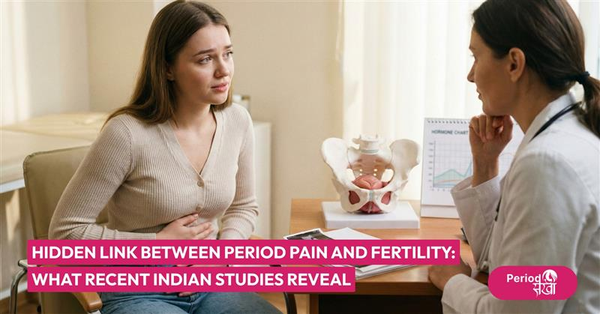

A generation of Indian women has grown up believing that painful periods are a sign of good fertility. "The more pain, the better your chances of conceiving," mothers often tell daughters. But recent research from fertility centers across India reveals a surprising truth: severe period pain could actually point toward fertility challenges.
If you plan to start a family and have debilitating menstrual cramps, knowing the relationship between period pain and fertility in India might be critical for your journey into motherhood.
Let's get one thing straight: there are no medical facts that prove that more period pain equals better fertility. This very widespread belief does not stem from science, but rather from cultural myths.
According to one study in the Journal of Obstetrics and Gynaecology, more than half of women suffering from extreme period pain have underlying reproductive disorders. Research found a straight link between intense dysmenorrhea, that is, painful periods and endometriosis, which is a condition affecting fertility considerably.
Indian fertility experts affirm that painful periods are not a sign of good fertility. Chronic or serious pain can be an early warning of reproductive problems that demand attention.
Light cramping during menstruation is normal and does not interfere with the ability to conceive. Concern arises when pain interferes with daily activities, requires strong medication, or progressively worsens. Understanding the connection between dysmenorrhea and conception helps women make informed health choices.
Primary dysmenorrhea: This is menstrual pain without an organic pathology. It results from your body producing increased prostaglandins. These are chemicals that trigger uterine contractions. Thus, in case conception doesn't occur, progesterone drops, and this triggers prostaglandin release. Higher prostaglandin levels create stronger cramps and inflammation. This usually doesn't affect fertility.
Secondary dysmenorrhea: This is caused by underlying medical conditions. It tends to start later and may get worse over time. It's more apt to affect fertility because it's a sign that something else is wrong with the reproductive system.
Studies conducted by Indian fertility centres indicate a significant relationship between period pain with fertility in India.
According to Indian IVF specialists, severe menstrual cramps can affect conception in three ways:
This pelvic inflammation, when occurring along with severe cramping, can lead to damage of the fallopian tubes, creating blockages that prevent egg and sperm from meeting.
Strong uterine contractions create an unfavourable environment for the implantation of the embryo. The violent contractions could persist during fertile windows, preventing the fertilised eggs from attaching well.
Dyspareunia or painful intercourse decreases the frequency of conception. The couple avoids intimacy, thus missing some very important fertile windows. Chronic pain stress may also affect hormonal balance, disrupting ovulation.
Endometriosis is the most well-documented condition that connects painful menstruation with infertility. Tissue similar to the uterine lining grows outside the uterus, causing inflammation, scarring, and extreme pain. It affects as many as 50% of women struggling with infertility. Many women with mild and moderate endometriosis do conceive naturally.
With adenomyosis, the lining of the uterus breaks through the muscle wall. This results in painful, heavy periods and may affect implantation.
Uterine fibroids are benign tumors. They cause heavy, painful periods. However, their impact on fertility depends upon location and size.
Pelvic inflammatory disease is an infection of the reproductive organs, often from untreated STIs. Untreated PID causes scarring and blocked tubes.
Polycystic ovary syndrome is one of the most common endocrine disorders in Indian women, with a prevalence of one in ten. Although most women with PCOS do not have regular periods, cramping can occur when cysts form or rupture. The major fertility challenge is difficulty with ovulation.
The connection to dysmenorrhea and conception usually deals with hormonal imbalances, which can affect both pain levels and conception ability.
The prostaglandins cause inflammation and cramping, but also regulate ovulation and implantation. An imbalance in prostaglandin levels causes severe pain and challenges with fertility.
Estrogen dominance exacerbates endometriosis and pain. Low progesterone promotes irregular periods and anovulation. This is a common hormonal interplay that links severe period pain to problems with conception.
The hormonal disruption within PCOS results in a lack of regular ovulation; hence, anovulation is the main obstacle to fertility. Often, the treatment of hormonal problems improves both pain and fertility.
If planning pregnancy and feeling these symptoms, a gynecologist or fertility specialist can be consulted:
Painful intercourse
Heavy periods with large clots
Spotting between periods
Difficulty conceiving after 6 to 12 months
Pelvic pain outside menstruation
Pain interfering with daily activities
Other red flags include worsening pelvic pain over time, family history of endometriosis, medications for pain no longer working, and gastrointestinal or genitourinary symptoms associated with cycles.
Indian fertility experts emphasize: if having severe pain and planning conception, get evaluated before trying for a baby. Early intervention prevents months of trying without success in conception.
Most painful periods and fertility-related conditions are usually treatable.
The NSAIDs, like Ibuprofen, do not interfere with fertility. Combined oral contraceptives are very effective in the management of dysmenorrhea, though only 14% of them use them for this purpose. Heat therapy and lifestyle modifications may also be helpful.
Fertility-preserving treatments include laparoscopic surgery to remove endometriosis or fibroids. These minimally invasive procedures often improve both pain and fertility simultaneously.
Assisted reproductive technologies offer excellent success rates. IVF helps women with advanced endometriosis or blocked tubes, while IUI works for milder cases, and ICSI addresses specific fertility challenges.
Indian infertility clinics have reported many success stories of women with severe dysmenorrhea attaining healthy pregnancies. Research shows that term delivery may improve symptoms of dysmenorrhea.
The belief that painful periods signal good fertility is a myth we must abandon. Understanding the connection between period pain and fertility, India empowers you to control your reproductive health. Severe period pain isn't something to dismiss—it may signal something needing attention.
If planning to start a family and experiencing debilitating cramps, don't suffer silently. The link between dysmenorrhea and conception challenges is real, but so are treatment options. With proper diagnosis and care from India's fertility specialists, most women with painful periods achieve their motherhood dreams. Track your symptoms, advocate for your health, and remember: you deserve answers, relief, and the family you're hoping for.
Ready to track your menstrual health and fertility journey? Download The PeriodSakhi app for period tracking, ovulation calculators, and expert reproductive health guidance. Or visit PeriodSakhi for comprehensive fertility resources and women wellness tools trusted by families across India.
References
https://pmc.ncbi.nlm.nih.gov/articles/PMC8943241/
https://www.garbhagudi.com/blogs/are-painful-periods-a-sign-of-good-fertility
https://timesofindia.indiatimes.com/life-style/health-fitness/health-news/why-period-pain-is-normal-might-be-the-biggest-myth-in-womens-health/articleshow/121415430.cms
https://pmc.ncbi.nlm.nih.gov/articles/PMC3935015/
Dr. Shreya Karan is a dedicated oral and maxillofacial surgeon who brings over ten years of experience to her practice, combining surgical expertise with genuine care for her patients. She is dedicated to empowering women with accurate, evidence-based health information, helping them make informed decisions about their well-being.
About PeriodSakhi
PeriodSakhi is your trusted companion for understanding your menstrual health. With easy-to-use tools, it helps you track your periods, ovulation, fertility, moods, and symptoms, while providing insights into your overall reproductive and hormonal health. PeriodSakhi also serves as a supportive online community where women can share experiences, find reliable information, and access expert-backed guidance on menstrual health, PCOS, pregnancy, lifestyle, and more.
Disclaimer
The views, thoughts, and opinions expressed in this article/blog are solely those of the author and do not necessarily reflect the views of PeriodSakhi. Any omissions, errors, or inaccuracies are the responsibility of the author. PeriodSakhi assumes no liability or responsibility for any content presented. Always consult a qualified medical professional for specific advice related to menstrual health, fertility, pregnancy, or related conditions.