
For many people who menstruate, mornings during periods can begin with discomfort, heaviness, abdominal cramps, fatigue, and difficulty getting started with daily activities. Menstrual pain, medically known as dysmenorrhea, is one of the most common menstrual concerns and can significantly affect quality of life, work, studies, and emotional well-being.
While severe or persistent menstrual pain should always be evaluated by a healthcare professional, simple morning habits can provide relief for many individuals experiencing routine period discomfort. A combination of heat therapy, adequate hydration, and gentle physical movement can support the body during menstruation and make mornings more comfortable.
These habits do not require expensive products or major lifestyle changes. A few mindful steps after waking up can help relax muscles, improve circulation, and create a more comfortable start to the day.
Menstrual cramps occur mainly because of contractions of the uterus during menstruation. The uterus releases chemicals called prostaglandins, which help it contract and shed its lining. Higher levels of prostaglandins are associated with stronger uterine contractions and increased pain.
Common symptoms of menstrual discomfort include:
Lower abdominal cramps
Lower back pain
Pelvic heaviness
Fatigue
Headache
Nausea
Mood changes
According to research published in medical literature, dysmenorrhea is linked with increased production of inflammatory mediators, particularly prostaglandins, which contribute to pain sensations during menstruation. Managing inflammation, muscle tension, and discomfort through supportive measures can improve daily functioning.
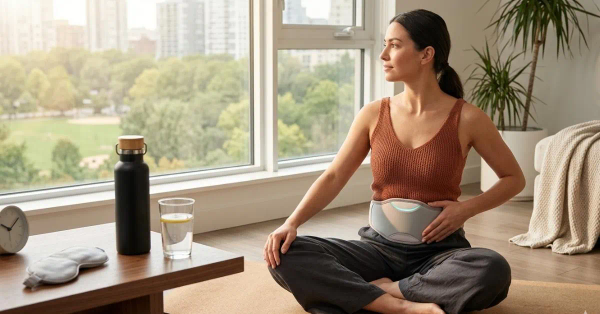
Heat therapy is one of the simplest and most effective non-medication approaches for menstrual cramp relief. Applying warmth to the lower abdomen or lower back can help relax uterine muscles and reduce pain sensations.
A heating pad, hot water bottle, or warm compress can be used during the morning routine while getting ready, having breakfast, or completing quiet activities.
Heat works through multiple mechanisms:
It improves local blood circulation.
It relaxes tense muscles.
It reduces the perception of pain signals reaching the brain.
It provides comfort by reducing abdominal tightness.
Clinical studies have shown that local heat application can be effective in reducing menstrual pain and may provide relief comparable to some commonly used pain-relief approaches for mild to moderate cramps.
While heat therapy is generally safe, it should be used correctly:
Use a comfortable temperature that feels warm, not burning.
Avoid placing a heat pad directly on bare skin for prolonged periods.
Limit continuous use according to the product instructions.
Avoid sleeping with a heating pad switched on.
A warm shower in the morning can also provide similar muscle-relaxing benefits and may help reduce stiffness.
Hydration plays an important role in overall menstrual wellness. During periods, hormonal changes can influence fluid balance, digestion, and energy levels. Many people experience bloating, constipation, headaches, or tiredness, which may become worse when fluid intake is inadequate.
Starting the day with a glass of water can be a simple way to support the body.
Adequate fluid intake may help:
Reduce dehydration-related fatigue.
Support normal digestion.
Prevent constipation, which can increase abdominal discomfort.
Maintain circulation and overall energy levels.
Warm fluids such as warm water or caffeine-free herbal beverages may feel soothing for some individuals. However, hydration should not replace medical treatment when symptoms are severe.
Keep a water bottle near your bed as a reminder.
Drink water after waking up.
Include water-rich foods such as fruits and vegetables.
Avoid excessive caffeine if it worsens breast tenderness, anxiety, or bloating.
There is no specific “period drink” that can cure menstrual pain, but consistent hydration supports normal body functions and can improve comfort.
When experiencing cramps, many people naturally want to stay still. However, gentle movement can often improve menstrual discomfort.
Physical activity stimulates the release of endorphins, which are natural pain-relieving chemicals produced by the body. Movement also improves blood circulation and can reduce muscle stiffness.
A morning routine does not need to involve intense exercise. Even five to fifteen minutes of gentle activity can be beneficial.
Try activities such as:
Slow stretches targeting the lower back, hips, and pelvic region can help release muscle tension.
Examples include:
Child’s pose
Cat-cow stretches
Gentle spinal twists
Hip-opening stretches
A short walk can improve circulation and increase energy levels without putting excessive stress on the body.
Slow breathing can help relax the nervous system and reduce stress-related muscle tension.
A comfortable menstrual morning can follow a simple sequence:
Drink a glass of water after waking. Give your body time to gradually become active.
Use a heating pad or warm compress on the lower abdomen for approximately 15–20 minutes if cramps are present.
Spend a few minutes stretching or walking to improve circulation and reduce stiffness.
Have a balanced breakfast containing complex carbohydrates, protein, and essential nutrients. Skipping meals during periods may worsen fatigue and low energy for some individuals.
This routine is not about eliminating every menstrual symptom. Instead, it supports the body and creates a more comfortable start to the day.
Although menstrual discomfort is common, severe pain should not be ignored.
Seek medical advice if:
Period pain prevents normal daily activities.
Pain suddenly becomes worse than usual.
Bleeding is unusually heavy.
Periods become irregular.
Pain occurs outside menstruation.
Over-the-counter medicines are not providing relief.
Conditions such as endometriosis, fibroids, adenomyosis, or pelvic infections can sometimes cause significant menstrual pain and require medical evaluation.
Menstrual comfort often comes from small, consistent habits that support the body naturally. A simple morning routine involving heat therapy, hydration, and gentle movement can help many individuals manage common period discomfort and begin their day with greater ease.
A heat pad can relax cramps, water can support energy and hydration balance, and gentle movement can improve circulation and reduce muscle tension. These steps are easy to follow, affordable, and can be adapted according to individual comfort.
Periods are a normal biological process, but pain and discomfort deserve attention and care. Listening to the body, maintaining healthy routines, and seeking medical guidance when symptoms are severe can help make menstrual experiences healthier and more manageable.
Proctor ML, Farquhar CM. Diagnosis and management of dysmenorrhoea. BMJ. 2006;332(7550):1134–1138. Available through PubMed.
Akin MD, Weingand KW, Hengehold DA, Goodale MB, Hinkle RT, Smith RP. Continuous low-level topical heat in the treatment of dysmenorrhea. Obstetrics & Gynecology. 2001;97(3):343–349. Available through PubMed.
NHS. Period pain (dysmenorrhoea): causes, symptoms, and treatment guidance. National Health Service, UK.
Iacovides S, Avidon I, Baker FC. What we know about primary dysmenorrhea today: a critical review. Human Reproduction Update. 2015;21(6):762–778. Available through PubMed.
About PeriodSakhi
PeriodSakhi is your trusted companion for understanding your menstrual health. With easy-to-use tools, it helps you track your periods, ovulation, fertility, moods, and symptoms, while providing insights into your overall reproductive and hormonal health. PeriodSakhi also serves as a supportive online community where women can share experiences, find reliable information, and access expert-backed guidance on menstrual health, PCOS, pregnancy, lifestyle, and more.
Disclaimer
The views, thoughts, and opinions expressed in this article/blog are solely those of the author and do not necessarily reflect the views of PeriodSakhi. Any omissions, errors, or inaccuracies are the responsibility of the author. PeriodSakhi assumes no liability or responsibility for any content presented. Always consult a qualified medical professional for specific advice related to menstrual health, fertility, pregnancy, or related conditions.