
“Strength is not only about pushing your body harder. It is also about respecting your body when the workout is over.”
Every woman who walks into a gym, steps onto a running track, practices yoga, or trains for a sport is building a stronger relationship with her body. The sweat after a workout is a sign of effort, discipline, and progress but what happens after the workout is just as important as the workout itself.
Many people focus on choosing the right shoes, following the right exercise routine, or tracking fitness goals but forget one simple habit: changing out of damp workout clothes quickly.
That sweaty T-shirt, sports bra, leggings, or gym shorts may feel like a small thing, but staying in moist clothing for hours can create an uncomfortable environment for the skin and intimate area.
Women athletes across the world have shown that caring for the body is part of performance. As Indian sports champions such as Mary Kom and Sakshi Malik have demonstrated, discipline is not only about training harder; it is also about recovery, hygiene, and understanding the body.
Your body works hard for you during exercise. Post-workout care is one way of returning that care.
During physical activity, your body temperature rises. To cool itself, the body produces sweat.
Sweating is a completely normal and healthy process. It helps regulate temperature and prevents overheating.
However, after sweating, problems may occur when:
Sweat remains trapped on the skin.
Clothes stay wet for long periods.
Friction continues between damp fabric and skin.
Bacteria and fungi get an ideal environment to multiply.
The issue is not sweat itself. The concern is prolonged moisture and friction.
Fungi naturally exist on the skin. Under normal conditions, they do not cause problems. However, warm and moist environments can encourage fungal overgrowth.
Damp workout clothes create conditions where fungi can thrive, especially in areas such as:
Inner thighs
Groin region
Under the breasts
Feet
Areas where skin folds touch
Common fungal problems may include:
Itching
Redness
Burning sensation
Peeling skin
Rash-like patches
Changing into dry clothes reduces prolonged moisture exposure and supports healthier skin.
The intimate area has a delicate balance of moisture, bacteria, and natural protection.
After exercise, especially intense workouts, sweat can accumulate around the groin area. Tight, damp clothing may increase irritation due to:
Friction
Heat
Moisture
Reduced airflow
This does not mean workout clothes directly cause infections every time. However, remaining in sweaty clothing for extended periods may increase discomfort and create conditions that favour irritation.
Simple steps can help:
Change underwear after heavy sweating.
Choose breathable fabrics.
Avoid staying in wet leggings for hours.
Keep the intimate area clean and dry.
Many active women experience chafing, especially during:
Running
Cycling
Long workouts
Outdoor sports
Chafing happens when repeated friction damages the skin barrier.
Damp fabric increases friction, making irritation more likely.
Symptoms may include:
Burning sensation
Tender skin
Red patches
Discomfort while walking or exercising
Changing into dry clothes allows the skin to recover.
Sweat does not have a strong smell by itself. Body odour develops when bacteria on the skin break down sweat components.
Staying in sweaty clothes gives bacteria more time to multiply and can lead to unpleasant odour.
A quick change after exercise helps you feel:
Fresh
Comfortable
Confident
Sports bras provide essential support during exercise, but they also trap sweat because they fit closely against the skin.
After a workout:
Remove sweaty sports bras when possible.
Allow the skin to dry.
Wash workout clothing regularly.
This is especially important for women who exercise daily or participate in high-intensity training.
A strong body deserves comfortable care.
Ideally, change out of sweaty clothes soon after finishing your workout.
If you cannot shower immediately:
Change into clean, dry clothes.
Use a fresh towel.
Allow your skin to dry.
Even this small step can make a difference.
A simple habit can prevent many problems.
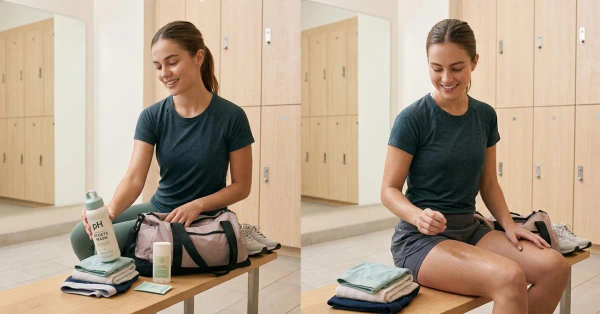
Keep:
Fresh underwear
Dry workout clothes
A clean towel
in your gym bag.
This is especially useful for people who go to the gym before work, college, or travel.
Workout clothing should allow sweat to evaporate.
Look for:
Moisture-wicking fabrics
Comfortable fits
Breathable materials
Avoid clothes that remain wet for long periods after exercise.
A post-workout shower helps remove:
Sweat
Dirt
Excess oil
Use gentle cleansers and avoid aggressive scrubbing, especially in sensitive areas.
For intimate hygiene:
Clean the external genital area with water and mild products if needed.
Avoid harsh fragrances or unnecessary intimate washes.
Do not wash inside the vagina, as it naturally maintains its own balance.
Workout clothes should ideally be washed after every use.
Good practices include:
Do not leave sweaty clothes inside a closed gym bag.
Dry clothes before placing them in laundry baskets.
Wash sports bras and leggings regularly.
Clean clothing supports healthier skin.
Sweat does not directly cause fungal infections. However, prolonged moisture and warmth can create conditions where fungi grow more easily.
Well-fitted workout clothes are safe and often provide support. The concern is staying in tight, damp clothes for extended periods.
Harsh soaps can damage the skin barrier and cause dryness or irritation. Gentle cleansing is usually sufficient.
The intimate area does not require fragranced products. These may disturb the natural balance and cause irritation.
Good hygiene is preventive care. Healthy habits reduce the chance of discomfort and skin problems before they occur.
For generations, women have sometimes been taught to ignore their bodies or feel uncomfortable discussing normal health concerns.
But fitness is also about awareness.
The woman lifting weights, running a marathon, practising yoga, or training professionally is not just building physical strength. She is learning to listen to her body.
Taking a few minutes to change sweaty clothes is not a small act. It is a reminder that caring for yourself is part of becoming stronger.
Seek medical advice if you experience:
Persistent itching
Recurrent fungal infections
Painful rashes
Unusual discharge
Burning sensation
Skin changes that do not improve
Early evaluation can help identify the cause and provide appropriate treatment.
A workout does not end when the last repetition is completed or when you leave the gym. Recovery and hygiene are equally important parts of a healthy fitness routine.
Changing out of damp clothes quickly is a simple habit that protects your skin, supports intimate health, reduces irritation, and keeps you comfortable.
Your sweat represents your effort. But your body deserves care after that effort too.
A strong woman is not only someone who challenges her body; she is someone who listens to it, understands it, and takes care of it.
Centers for Disease Control and Prevention (CDC). Prevention of skin infections in athletic settings.
American Academy of Dermatology (AAD). Skin care before and after exercise.
National Health Service (NHS). Skin hygiene and prevention of infections.
World Health Organization (WHO). Personal hygiene and infection prevention guidance.
Dr. Akanksha is a dedicated dental professional and health educator who believes that healthcare goes beyond treatment-it is about creating awareness, building trust, and empowering individuals to make informed decisions about their well-being. Alongside her clinical expertise in dentistry, she is deeply passionate about public health education, with a special focus on menstrual health, hygiene, and women's wellness.
About PeriodSakhi
PeriodSakhi is your trusted companion for understanding your menstrual health. With easy-to-use tools, it helps you track your periods, ovulation, fertility, moods, and symptoms, while providing insights into your overall reproductive and hormonal health. PeriodSakhi also serves as a supportive online community where women can share experiences, find reliable information, and access expert-backed guidance on menstrual health, PCOS, pregnancy, lifestyle, and more.
Disclaimer
The views, thoughts, and opinions expressed in this article/blog are solely those of the author and do not necessarily reflect the views of PeriodSakhi. Any omissions, errors, or inaccuracies are the responsibility of the author. PeriodSakhi assumes no liability or responsibility for any content presented. Always consult a qualified medical professional for specific advice related to menstrual health, fertility, pregnancy, or related conditions.