
Menstruation is a natural biological process, yet for generations, countless women and girls across rural and economically disadvantaged communities managed their periods in conditions marked by silence, shame, and severe lack of resources.
Today, sanitary pads, menstrual cups, and reusable cloth pads are increasingly discussed in schools, clinics, and online platforms. But not very long ago, many menstruating individuals had no access to safe menstrual products at all. In some remote areas, women relied on materials that were never meant to come in contact with the body including sand, old sacks, ash, hay, newspaper, and in extreme cases, even cow dung.
These practices were not based on comfort or preference. They emerged from poverty, lack of education, deep-rooted menstrual taboos, and the absence of healthcare access. Understanding this history is important because menstrual health is not only about hygiene. It is closely connected to dignity, education, gender equality, and public health.
For decades, menstruation in many Indian households was treated as something impure or embarrassing. Girls often entered puberty without knowing what periods were.
When menstruation began, many were told:
Not to speak about it openly
Not to let men know
Not to dry menstrual cloth outside
Not to enter kitchens or temples
Not to touch food items like pickles
This silence created fear and confusion. Because menstrual health was rarely discussed, women often used whatever absorbent material was available nearby without understanding the health risks involved.
In many rural regions, affordability was another major issue. For low-income families struggling to afford food and daily essentials, sanitary pads were viewed as unaffordable luxury items rather than basic healthcare necessities.
The most commonly used menstrual material in rural communities was old cloth.
Women reused:
Torn saree pieces
Old towels
Blouse fabric
Cotton scraps
Worn-out garments
Reusable cloth itself can be safe if cleaned properly with soap, dried completely in sunlight, and stored hygienically. However, due to stigma and lack of privacy, many women dried cloth secretly indoors in damp corners where bacteria and fungi could grow easily.
Improperly maintained cloth increased the risk of:
Vaginal infections
Skin irritation
Urinary tract infections
Reproductive tract infections
Even today, studies show that reusable cloth remains common in several rural regions due to cost and accessibility barriers. (frontiersin.org)
In certain extremely under-resourced areas, dry sand or mud was used to absorb menstrual blood.
Women sometimes wrapped sand inside cloth or sacks to create makeshift absorbents. While sand could temporarily absorb moisture, it carried enormous health risks because it could contain:
Dirt
Parasites
Bacteria
Sharp particles
Chemical contaminants
The rough texture also caused friction and skin damage in sensitive areas.
Community reports and menstrual hygiene studies have documented the use of sand and soil-based materials where commercial menstrual products were unavailable. (business-standard.com)
Another practice involved cutting pieces from old jute sacks or grain bags.
These rough materials were:
Poorly absorbent
Difficult to clean
Harsh on the skin
Since sacks were often previously used for storing grains, fertilizers, or agricultural products, they could contain dust, fungal spores, pesticide residue, or dirt.
Prolonged contact sometimes caused:
Rashes
Itching
Chafing
Allergic reactions
Many women continued using these materials simply because there was no alternative available nearby.
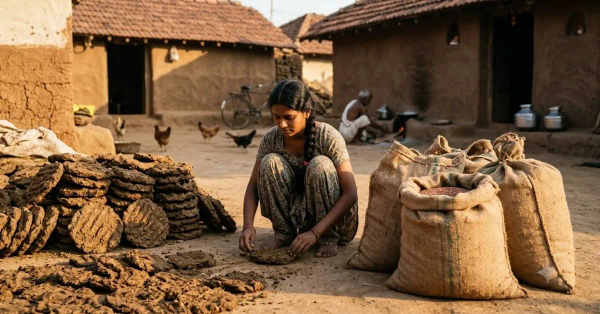
Among the most alarming traditional practices reported in some marginalized communities was the use of dried cow dung mixed with cloth or other materials.
Cow dung has historically been used in rural settings for fuel, flooring, and agricultural purposes. In certain communities influenced by poverty and traditional beliefs, it was mistakenly considered “natural” or “clean.”
However, medically, cow dung is unsafe for intimate use.
It may contain:
Harmful bacteria
Parasites
Fungal organisms
Environmental contaminants
Direct exposure to such material near the genital area can significantly increase infection risk.
Healthcare experts have repeatedly warned against the use of animal waste products in menstrual management because the genital region is highly sensitive and vulnerable to microbial contamination.
While this practice was never widespread across all communities, its existence reflects the extreme lack of menstrual resources and education faced by some women.
For many rural families:
Pads were too expensive
Nearby shops did not stock menstrual products
Women felt embarrassed buying pads from male shopkeepers
Transportation to towns was difficult
As a result, women relied on locally available materials regardless of safety.
According to menstrual hygiene studies, affordability remains one of the biggest barriers to safe menstrual practices in rural India even today. (frontiersin.org)
Many girls simply did not know:
What materials were hygienic
How often absorbents should be changed
How infections develop
Why drying cloth in sunlight matters
The absence of menstrual education allowed unsafe practices to continue for generations.
Mothers often passed down methods they themselves had learned during childhood because no better information was available.
Unsafe menstrual absorbents can lead to serious health problems, especially when combined with poor sanitation and limited healthcare access.
Vaginal infections
Fungal infections
Reproductive tract infections
Urinary tract infections
Skin ulcers and rashes
Chronic irritation
When infections remained untreated, they sometimes became severe enough to affect daily functioning and reproductive health.
Experts also emphasize that poor menstrual hygiene can negatively affect mental wellbeing, confidence, mobility, and educational participation.
The emotional effects were often invisible but deeply painful.
Many girls:
Felt ashamed of menstruation
Missed school during periods
Avoided social gatherings
Feared staining clothes publicly
Experienced embarrassment while changing absorbents
Periods became associated with secrecy and restriction rather than health and self-care.
In communities where menstruating girls were isolated or forbidden from participating in daily activities, feelings of inferiority and stigma became deeply internalized.
Over the last two decades, healthcare workers, NGOs, teachers, and women’s groups have played a major role in improving menstrual awareness.
ASHA workers and Anganwadi workers began conducting menstrual education sessions in villages and schools, teaching:
Safe menstrual hygiene practices
Importance of changing absorbents regularly
Hand hygiene
Safe disposal methods
Infection warning signs
Government programs also introduced subsidized sanitary pads for adolescent girls in several rural areas.
Social media campaigns, documentaries, and films helped break long-standing silence around menstruation.
The film Pad Man became an important cultural moment by bringing conversations about menstrual hygiene into mainstream Indian society.
Public health advocates and influencers also began discussing:
Period poverty
Sustainable menstrual products
Reusable sanitary pads
Menstrual health rights
Organizations across India started manufacturing low-cost pads locally, often employing rural women and creating community-based menstrual health solutions. (glamour.com)
India has made meaningful progress in menstrual awareness, but challenges still remain.
Many girls in remote areas continue to face:
Lack of clean toilets
Limited pad accessibility
Social stigma
Poor disposal systems
However, one important change is visible:
Menstruation is no longer completely hidden.
More schools now conduct menstrual awareness programs. Mothers are becoming more open with daughters. Healthcare professionals are encouraging safe practices and breaking harmful myths.
The conversation is slowly shifting from shame to health and dignity.
The history of unsafe menstrual absorbents — from sand and sacks to cow dung and ash — reflects the painful reality of menstrual inequality faced by generations of women.
These practices were never signs of ignorance alone. They were symptoms of poverty, silence, lack of education, and absence of healthcare support.
Remembering this history matters because millions of women worldwide still struggle with period poverty today.
Menstrual hygiene is not simply about products. It is about safety, education, dignity, and the right to manage one’s body without fear or shame.
The efforts of healthcare workers, teachers, NGOs, public influencers, and brave women speaking openly about menstruation are gradually changing lives.
And with continued awareness, education, and accessibility, future generations may never have to choose between unsafe materials and their own health.
Frontiers in Global Women’s Health – Menstrual hygiene practices in rural communities (frontiersin.org)
Business Standard – Menstrual hygiene and unsafe alternatives in rural India (business-standard.com)
Times of India – Menstrual taboos and changing awareness (timesofindia.indiatimes.com)
Glamour – Grassroots menstrual hygiene initiatives in India (glamour.com)
About PeriodSakhi
PeriodSakhi is your trusted companion for understanding your menstrual health. With easy-to-use tools, it helps you track your periods, ovulation, fertility, moods, and symptoms, while providing insights into your overall reproductive and hormonal health. PeriodSakhi also serves as a supportive online community where women can share experiences, find reliable information, and access expert-backed guidance on menstrual health, PCOS, pregnancy, lifestyle, and more.
Disclaimer
The views, thoughts, and opinions expressed in this article/blog are solely those of the author and do not necessarily reflect the views of PeriodSakhi. Any omissions, errors, or inaccuracies are the responsibility of the author. PeriodSakhi assumes no liability or responsibility for any content presented. Always consult a qualified medical professional for specific advice related to menstrual health, fertility, pregnancy, or related conditions.