
Menstruation is a natural biological process, yet for millions of girls in rural India, it has long been associated with shame, silence, poor hygiene, and limited access to sanitary products. Lack of awareness, social stigma, and poverty have historically forced many adolescent girls to use unsafe materials such as old cloth, ash, husk, or leaves during menstruation. This not only affects their health but also their education, confidence, and overall well-being.
Recognizing this public health and social challenge, the Government of India launched the Menstrual Hygiene Scheme (MHS) in 2011 under the Ministry of Health and Family Welfare. The scheme was introduced primarily to improve menstrual hygiene among adolescent girls aged 10–19 years living in rural areas. Over the years, the scheme has become an important step toward menstrual health awareness, access to affordable sanitary products, and breaking taboos surrounding menstruation.
The Menstrual Hygiene Scheme is a national initiative implemented under the National Health Mission (NHM). Its main goal is to ensure that rural adolescent girls have access to hygienic menstrual practices and affordable sanitary napkins while also creating awareness about menstrual health.
The scheme focuses on three major objectives:
Increasing awareness about menstrual hygiene among adolescent girls.
Improving access to quality sanitary napkins at affordable prices.
Promoting safe and environmentally friendly disposal of menstrual waste.
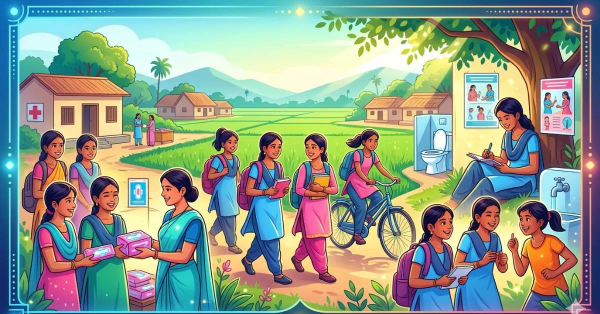
Initially, the scheme was launched in selected districts across India. Rural girls were provided subsidized sanitary napkins called “Freedays” through Accredited Social Health Activists (ASHAs). A pack of six sanitary napkins was made available at a low cost, making menstrual hygiene products more accessible to economically weaker populations.
Today, states and union territories implement the scheme through decentralized procurement systems under NHM funding. ASHA workers continue to play a central role in distributing pads, conducting awareness sessions, and guiding adolescent girls on menstrual health practices.
Menstrual hygiene management is closely linked to girls’ physical health, mental well-being, dignity, and educational opportunities. In many rural communities, menstruation is still considered taboo. Girls often receive little or no information before menarche, leaving them frightened and confused during their first period.
Poor menstrual hygiene can lead to several health problems, including:
Reproductive tract infections
Urinary tract infections
Skin irritation
Poor reproductive health outcomes
Emotional stress and low self-esteem
Additionally, many girls miss school during menstruation because of discomfort, fear of leakage, lack of toilets, or absence of sanitary products. Some eventually drop out of school altogether.
The Menstrual Hygiene Scheme attempts to address these challenges through a combination of product distribution, education, and community engagement.
One of the strongest aspects of the MHS is the involvement of ASHA workers. These frontline healthcare workers act as a bridge between healthcare systems and rural communities.
Under the scheme, ASHAs:
Distribute subsidized sanitary napkins
Conduct monthly meetings with adolescent girls
Educate girls about menstrual hygiene and reproductive health
Help reduce stigma and misinformation around menstruation
The government has also developed educational materials, audio-visual campaigns, and awareness programs to spread information about safe menstrual practices.
Community-level discussions are especially important in rural areas where cultural restrictions and myths are deeply rooted. Awareness campaigns encourage girls to speak openly about menstruation and seek hygienic solutions without shame.
Before the scheme, sanitary pads were either unavailable or unaffordable for many rural families. The subsidized distribution model significantly improved access to menstrual products among adolescent girls.
Studies have shown that states with active implementation of MHS witnessed a notable increase in sanitary pad usage among rural girls. Research from Northeast India demonstrated a significant rise in hygienic menstrual product use among girls aged 15–19 years after regular sanitary pad distribution under the scheme.
Affordable sanitary pads help girls maintain hygiene safely and comfortably during menstruation, reducing dependency on unhygienic traditional methods.
The scheme has played an important role in spreading menstrual awareness in villages and schools. Many girls now have better knowledge about:
Menstrual cycles
Personal hygiene
Safe disposal practices
Infection prevention
Awareness sessions have also helped normalize conversations around menstruation. Girls are gradually becoming more confident discussing menstrual issues with mothers, teachers, and healthcare workers.
Government campaigns and school-based initiatives have further contributed to reducing stigma associated with periods.
Menstrual hygiene directly affects education. Girls lacking sanitary products often avoid attending school during menstruation due to fear of embarrassment or discomfort.
With better access to pads and improved awareness, school absenteeism during periods has reduced in several areas. Girls are more likely to attend classes regularly and participate confidently in school activities.
The government has also promoted menstrual hygiene facilities in schools through policies supporting pad vending machines, disposal systems, and separate toilets for girls.
The use of hygienic menstrual products reduces the risk of infections caused by unsafe absorbents. Girls receiving proper guidance under the MHS are more aware of:
Changing pads regularly
Washing hands properly
Maintaining genital hygiene
Safe disposal of menstrual waste
The National Family Health Survey (NFHS) data has shown a significant increase in the use of hygienic methods during menstruation among young women in India over recent years. According to recent policy documents, hygienic method use among girls aged 15–19 increased from 58% in NFHS-4 to 78% in NFHS-5.
Menstrual dignity is closely related to women’s empowerment. Access to menstrual products and education helps girls feel more confident and independent.
Girls who understand menstruation scientifically are less likely to internalize shame or restrictions associated with periods. This contributes positively to mental health, body confidence, and participation in social and educational activities.
The scheme also promotes gender equity by acknowledging menstrual hygiene as a public health and human dignity issue.
Despite its positive impact, the Menstrual Hygiene Scheme still faces several challenges.
Implementation varies across states and districts. Some regions experience irregular supply of sanitary pads, logistical issues, or lack of adequate funding.
Deep-rooted social stigma continues to prevent open discussion about menstruation in many rural communities. Some girls still face restrictions related to food, movement, education, or religious participation during periods.
Improper disposal of sanitary pads is an emerging challenge. Rural areas often lack waste management systems and incineration facilities.
There is growing discussion around introducing sustainable menstrual products such as menstrual cups and reusable cloth pads to reduce environmental burden.
While product distribution is important, menstrual hygiene management also requires proper education for boys, teachers, parents, and communities. Addressing myths and misinformation remains essential for long-term behavioral change.
The Government of India has recently strengthened its menstrual health initiatives through the National Menstrual Hygiene Policy for School-Going Girls approved in 2024. The policy focuses on awareness, affordable products, sanitation facilities, safe disposal systems, and inter-ministerial coordination.
Other government efforts include:
₹1 sanitary pads through Jan Aushadhi Kendras
Installation of pad vending machines in schools
Awareness campaigns under Swachh Bharat and Mission Shakti
Promotion of eco-friendly menstrual products in some states
These steps indicate growing recognition of menstrual health as an essential part of adolescent healthcare and gender equality.
The Government of India’s Menstrual Hygiene Scheme has emerged as a transformative initiative for rural adolescent girls. By improving access to affordable sanitary products, increasing awareness, and promoting menstrual dignity, the scheme has positively influenced health, education, and confidence among young girls in rural India.
Although challenges such as stigma, unequal implementation, and waste disposal remain, the progress achieved so far is significant. The rise in hygienic menstrual practices, growing school participation, and increased public conversation around menstruation reflect the impact of sustained government intervention.
Menstrual hygiene is not merely a health issue; it is a matter of dignity, equality, and empowerment. Continued investment in education, accessibility, sanitation infrastructure, and sustainable menstrual solutions will be crucial in ensuring that every girl in India can manage menstruation safely and confidently without fear or shame.
Dr. Shreya Karan is a dedicated oral and maxillofacial surgeon who brings over ten years of experience to her practice, combining surgical expertise with genuine care for her patients. She is dedicated to empowering women with accurate, evidence-based health information, helping them make informed decisions about their well-being.
About PeriodSakhi
PeriodSakhi is your trusted companion for understanding your menstrual health. With easy-to-use tools, it helps you track your periods, ovulation, fertility, moods, and symptoms, while providing insights into your overall reproductive and hormonal health. PeriodSakhi also serves as a supportive online community where women can share experiences, find reliable information, and access expert-backed guidance on menstrual health, PCOS, pregnancy, lifestyle, and more.
Disclaimer
The views, thoughts, and opinions expressed in this article/blog are solely those of the author and do not necessarily reflect the views of PeriodSakhi. Any omissions, errors, or inaccuracies are the responsibility of the author. PeriodSakhi assumes no liability or responsibility for any content presented. Always consult a qualified medical professional for specific advice related to menstrual health, fertility, pregnancy, or related conditions.