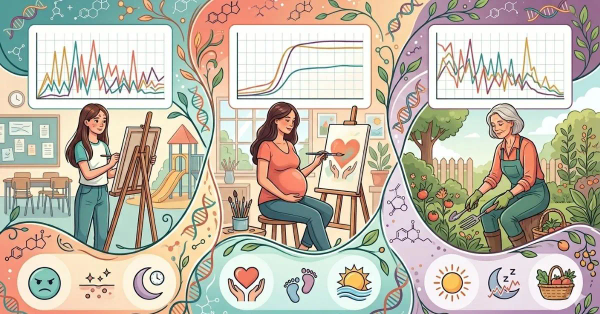

A woman’s body undergoes remarkable hormonal changes throughout life. From the first menstrual period during adolescence to the transition into menopause, hormones play a central role in regulating growth, reproduction, metabolism, mood, bone health, and overall well-being.
Menstruation is not just a monthly event; it is part of a complex hormonal process controlled by communication between the brain, ovaries, and uterus. Understanding these changes helps women recognize what is normal, identify health concerns early, and make informed decisions about their bodies.
Every woman’s hormonal journey is unique. The timing of puberty, menstrual patterns, pregnancy experiences, and menopause can vary widely, but the underlying biological processes follow a common pattern.
The journey begins during puberty, when the body starts preparing for reproductive maturity.
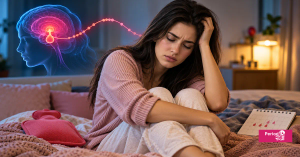
Puberty occurs due to activation of the hypothalamic-pituitary-ovarian (HPO) axis, a hormonal communication system involving:
The hypothalamus in the brain
The pituitary gland
The ovaries
The hypothalamus releases gonadotropin-releasing hormone (GnRH), which stimulates the pituitary gland to release:
Follicle-stimulating hormone (FSH)
Luteinizing hormone (LH)
These hormones stimulate the ovaries to produce estrogen and begin the process of ovulation.
The first period, medically called menarche, usually occurs between the ages of 10 and 16, although timing can vary.
Before the first period, many changes occur, including:
Breast development
Growth of body hair
Changes in body shape
Increased activity of reproductive hormones
Early menstrual cycles after menarche may be irregular because the hormonal system is still developing. Regular ovulation may take time to establish.
During the reproductive years, hormones regulate the menstrual cycle, preparing the body for a possible pregnancy each month.
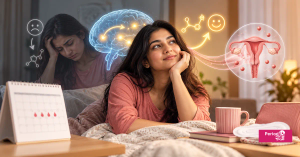
A menstrual cycle involves coordinated changes in estrogen, progesterone, FSH, and LH.
The cycle begins on the first day of menstruation.
During this phase:
FSH stimulates ovarian follicles to develop.
Estrogen levels gradually rise.
The uterine lining begins rebuilding.
Around the middle of the cycle, a rise in LH triggers the release of a mature egg from the ovary.
Ovulation is the most fertile time of the menstrual cycle.
After ovulation:
The ovary produces progesterone.
The uterine lining prepares for possible implantation.
If pregnancy does not occur, hormone levels fall, leading to menstruation and the beginning of a new cycle.
Changes in hormone levels throughout the cycle can influence how women feel physically and emotionally.
Common experiences include:
Breast tenderness
Mild abdominal cramps
Changes in energy levels
Mood fluctuations
Food cravings
Bloating
These symptoms are often related to normal hormonal changes. However, severe pain, extremely heavy bleeding, or major changes in menstrual patterns may require medical evaluation.
Pregnancy brings some of the most significant hormonal changes in a woman’s life.
After conception, hormones support the development of the pregnancy.
Important pregnancy hormones include:
hCG is produced after implantation and is the hormone detected by pregnancy tests.
It supports early pregnancy by maintaining progesterone production.
Estrogen levels increase significantly during pregnancy and support:
Growth of the uterus
Development of blood supply
Breast changes
Progesterone helps:
Maintain the uterine lining
Support pregnancy development
Prevent uterine contractions in early pregnancy
Hormonal changes during pregnancy can contribute to:
Morning sickness
Breast tenderness
Fatigue
Emotional changes
Changes in skin and hair
After delivery, pregnancy hormone levels drop rapidly.
This transition can contribute to:
Mood changes
Breast milk production
Changes in menstrual cycles
The hormone prolactin plays an important role in breastfeeding by stimulating milk production.
During breastfeeding, higher prolactin levels may temporarily suppress ovulation, although pregnancy can still occur before regular periods return.
The postpartum period is a time of significant physical and emotional adjustment, and support is important.
As women approach menopause, ovarian hormone production gradually changes. This transitional phase is called perimenopause.
It usually begins in the 40s but can vary among individuals.
During perimenopause:
Estrogen levels fluctuate.
Ovulation becomes less predictable.
Menstrual cycles may become irregular.
Common symptoms include:
Hot flashes
Night sweats
Sleep disturbances
Mood changes
Changes in menstrual flow
Vaginal dryness
These symptoms occur because the body is adapting to changing hormone levels.
Menopause is defined as the point when a woman has not had a menstrual period for 12 consecutive months.
The average age of menopause is around 45–55 years, with many women experiencing it around age 51.
After menopause:
Ovarian estrogen production decreases.
Ovulation stops.
Natural pregnancy is no longer possible.
However, hormonal changes continue to influence health, especially:
Bone strength
Heart health
Vaginal and urinary health
Metabolism
Estrogen is often associated with fertility, but it has many roles throughout life.
It supports:
Estrogen helps maintain bone density. Lower estrogen levels after menopause can increase the risk of osteoporosis.
Estrogen influences blood vessels and cholesterol metabolism.
Hormonal changes may influence mood, sleep, and cognitive function.
Estrogen helps maintain vaginal tissue health and lubrication.
Healthy lifestyle choices support hormonal balance throughout life.
Important habits include:
A nutrient-rich diet supports hormone production and overall health.
Include:
Protein-rich foods
Fruits and vegetables
Whole grains
Calcium-rich foods
Healthy fats
Exercise supports:
Bone strength
Heart health
Healthy weight management
Mood regulation
Poor sleep can affect stress hormones and overall hormonal regulation.
Routine healthcare visits help monitor:
Menstrual concerns
Reproductive health
Thyroid function
Bone health after menopause
Consult a healthcare professional if you experience:
Very irregular periods
Extremely heavy bleeding
Severe menstrual pain
Bleeding after menopause
Early menopause symptoms
Severe mood changes affecting daily life
Hormonal symptoms are common, but they should not interfere significantly with quality of life without support.
A woman’s hormonal journey is a continuous process that begins with puberty and extends throughout life. From the first period to menopause, hormones influence reproduction, physical changes, emotions, and long-term health.
Understanding these changes helps women recognize their bodies as they evolve through different stages of life. Menstruation, pregnancy, and menopause are natural biological transitions that deserve awareness, care, and open conversations.
With accurate information, healthy lifestyle choices, and appropriate medical support when needed, women can navigate every stage of their hormonal journey with confidence.
Critchley HOD, Babayev E, Bulun SE, et al. Menstruation: science and society. American Journal of Obstetrics and Gynecology. 2020.
National Health Service (NHS). Menopause: symptoms, diagnosis, and treatment.
American College of Obstetricians and Gynecologists (ACOG). Hormonal changes and women’s health.
Santoro N. Perimenopause: From research to practice. Journal of Women’s Health. Available through PubMed.
The North American Menopause Society (NAMS). Menopause and healthy aging guidance.
Dr. Akanksha is a dedicated dental professional and health educator who believes that healthcare goes beyond treatment-it is about creating awareness, building trust, and empowering individuals to make informed decisions about their well-being. Alongside her clinical expertise in dentistry, she is deeply passionate about public health education, with a special focus on menstrual health, hygiene, and women's wellness.
About PeriodSakhi
PeriodSakhi is your trusted companion for understanding your menstrual health. With easy-to-use tools, it helps you track your periods, ovulation, fertility, moods, and symptoms, while providing insights into your overall reproductive and hormonal health. PeriodSakhi also serves as a supportive online community where women can share experiences, find reliable information, and access expert-backed guidance on menstrual health, PCOS, pregnancy, lifestyle, and more.
Disclaimer
The views, thoughts, and opinions expressed in this article/blog are solely those of the author and do not necessarily reflect the views of PeriodSakhi. Any omissions, errors, or inaccuracies are the responsibility of the author. PeriodSakhi assumes no liability or responsibility for any content presented. Always consult a qualified medical professional for specific advice related to menstrual health, fertility, pregnancy, or related conditions.