
Every civilization can be measured by how openly it addresses the realities of human life. Menstruation, despite being one of the most natural biological processes, remained hidden behind silence, stigma, and misinformation for centuries. Across cultures, periods were often treated not as a health matter but as a social taboo. Women and girls were excluded from conversations, education, workplaces, and even religious spaces because of myths associated with menstruation. Against this historical silence, May emerged as a month of global menstrual awareness and advocacy.
May is internationally recognized for promoting menstrual awareness primarily because of Menstrual Hygiene Day, observed every year on May 28. The movement aims to normalize conversations about menstruation, improve menstrual hygiene management, and ensure access to safe sanitary products and education for all. Over time, the entire month of May has become associated with campaigns, educational drives, healthcare initiatives, and public discussions focused on menstrual health and dignity.
The roots of Menstrual Awareness Month can be traced back to the work of WASH United, a Germany-based non-profit organization focused on sanitation and hygiene advocacy. In 2013, the organization launched a social media campaign called “May #MENSTRAVAGANZA,” a 28-day initiative designed to bring menstruation into public discussion. The campaign generated unprecedented engagement and revealed a global willingness to discuss menstrual health more openly. Encouraged by the response, the organization established Menstrual Hygiene Day, first officially observed on May 28, 2014.
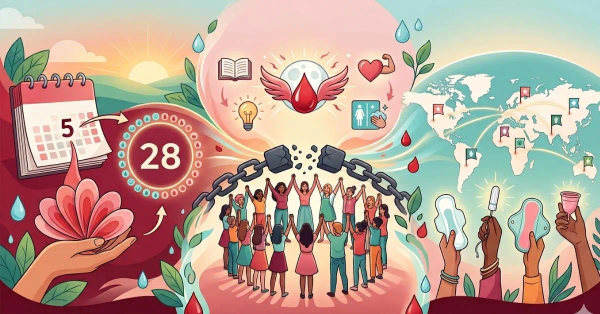
The date itself carries symbolic significance. May is the fifth month of the year, representing the average five-day duration of menstruation, while the number 28 symbolizes the average menstrual cycle of 28 days. This thoughtful symbolism transformed May 28 into a globally recognizable date for menstrual awareness advocacy.
What began as a modest awareness campaign quickly evolved into a worldwide movement involving governments, educational institutions, healthcare organizations, NGOs, and activists. Today, thousands of organizations participate in campaigns promoting menstrual health, period equity, and access to sanitation. According to campaign reports, the movement has expanded dramatically since its inception, generating widespread media attention and public engagement across multiple countries.
The core idea behind Menstrual Awareness Month is simple yet transformative: menstruation should never be a source of shame, discrimination, or disadvantage.
The movement is built around several interconnected goals:
In many societies, menstruation has historically been associated with impurity or secrecy. Women and girls are often discouraged from discussing periods openly, which creates fear and misinformation. Menstrual awareness campaigns challenge these beliefs by encouraging open dialogue in homes, schools, workplaces, and public spaces.
Menstrual hygiene management refers to the ability to manage menstruation safely, hygienically, and with dignity. This includes access to sanitary products, clean water, private toilets, soap, and safe disposal systems. Lack of these essentials can lead to infections, discomfort, and emotional stress.
Millions of girls worldwide miss school during their menstrual cycles due to inadequate sanitation facilities or lack of menstrual products. Menstrual awareness campaigns emphasize that periods should never interrupt education or opportunities.
The movement also seeks institutional change. Governments are encouraged to create policies supporting menstrual health through subsidized sanitary products, school awareness programs, improved sanitation infrastructure, and healthcare access.
Menstrual awareness is not solely about hygiene; it is also about bodily autonomy and gender dignity. By normalizing conversations around periods, societies move toward greater gender equality and informed healthcare practices.
Globally, nearly 800 million people menstruate every day. Yet access to menstrual products and accurate health information remains uneven. In low-income communities, many women rely on unsafe alternatives such as old cloth, ash, newspaper, or sand due to financial limitations or social stigma. Poor menstrual hygiene can contribute to infections, reduced mobility, and mental stress.
Another critical issue is “period poverty,” which refers to the inability to afford menstrual products and sanitation facilities. Period poverty affects school attendance, workplace participation, and overall quality of life. Menstrual awareness initiatives draw attention to these inequalities and encourage governments and organizations to address them systematically.
The movement also has psychological importance. For generations, many girls experienced fear and confusion during their first menstruation because they received little or no prior education. Menstrual awareness programs aim to ensure that menstruation is understood as a healthy biological process rather than a frightening experience.
The importance of menstrual awareness becomes even more profound in the Indian context, where cultural taboos surrounding menstruation continue to influence social behavior.
India has made significant progress in menstrual health awareness over the past decade, yet challenges remain substantial. In many parts of the country, menstruation is still treated as a private or shameful topic. Girls are often told not to discuss periods openly, and several restrictive customs continue to exist in both rural and urban communities.
In some households, menstruating women are restricted from entering kitchens, temples, or participating in family rituals. Such practices reinforce the idea that menstruation is impure rather than biological. These beliefs can deeply affect confidence and emotional well-being.
A major challenge in India is inadequate menstrual education before puberty. Many girls encounter menstruation without understanding what is happening to their bodies. Studies and awareness campaigns have repeatedly emphasized the need for comprehensive menstrual education in schools and communities.
Poor sanitation infrastructure in schools contributes to absenteeism among adolescent girls. Lack of clean toilets, privacy, disposal facilities, and access to sanitary products discourages regular attendance during menstruation. Menstrual awareness campaigns in India increasingly focus on making schools “period-friendly” environments.
While sanitary napkin usage has increased in India, affordability remains a concern for many low-income households. Government initiatives and NGOs have worked toward distributing low-cost or free sanitary products, especially in rural and underserved areas. Awareness programs also promote sustainable menstrual products such as reusable cloth pads and menstrual cups.
India has witnessed several important menstrual health initiatives in recent years. Schools, municipalities, NGOs, and healthcare organizations organize awareness drives every May to educate girls and communities about safe menstrual practices. Public campaigns increasingly emphasize that menstruation should be viewed as a health indicator rather than a social stigma.
The removal of GST on sanitary napkins in 2018 was also seen as a symbolic and practical step toward menstrual equity in India.
An important evolution in Menstrual Awareness Month is the inclusion of men and boys in the conversation. Historically, menstruation was treated exclusively as a “women’s issue,” which reinforced secrecy. Modern awareness campaigns encourage fathers, brothers, teachers, and male students to understand menstruation scientifically and empathetically.
When society collectively acknowledges menstruation as a normal biological process, stigma weakens. Open conversations create healthier environments in schools, workplaces, and families.
The future of menstrual awareness lies in normalization, accessibility, and sustainability. Around the world, innovators are developing eco-friendly menstrual products, governments are introducing menstrual health policies, and schools are integrating reproductive health education into curricula.
Digital platforms and social media have also transformed menstrual advocacy. Hashtags, educational campaigns, documentaries, and public storytelling have helped dismantle decades of silence. What was once whispered about privately is now increasingly discussed publicly and scientifically.
Yet the mission is far from complete. Millions still lack safe sanitation, affordable products, and accurate information. Menstrual awareness remains not merely a health campaign but a human rights movement.
May is celebrated as Menstrual Awareness Month because it symbolizes a global effort to replace silence with understanding and stigma with dignity. The observance of Menstrual Hygiene Day on May 28 serves as a reminder that menstrual health is deeply connected to education, equality, healthcare, sanitation, and human rights.
What began as a social media campaign by a hygiene advocacy organization has evolved into an international movement challenging centuries of misinformation and discrimination. In India especially, menstrual awareness carries immense social significance because it intersects with education, gender equality, public health, and cultural reform.
The true success of Menstrual Awareness Month will not be measured only by campaigns or hashtags, but by the day menstruation is discussed without embarrassment, girls attend school confidently during their periods, and menstrual health becomes an accepted part of public health policy and everyday conversation. In that vision lies the deeper purpose of May’s menstrual awareness movement.
Dr. Akanksha is a dedicated dental professional and health educator who believes that healthcare goes beyond treatment-it is about creating awareness, building trust, and empowering individuals to make informed decisions about their well-being. Alongside her clinical expertise in dentistry, she is deeply passionate about public health education, with a special focus on menstrual health, hygiene, and women's wellness.
About PeriodSakhi
PeriodSakhi is your trusted companion for understanding your menstrual health. With easy-to-use tools, it helps you track your periods, ovulation, fertility, moods, and symptoms, while providing insights into your overall reproductive and hormonal health. PeriodSakhi also serves as a supportive online community where women can share experiences, find reliable information, and access expert-backed guidance on menstrual health, PCOS, pregnancy, lifestyle, and more.
Disclaimer
The views, thoughts, and opinions expressed in this article/blog are solely those of the author and do not necessarily reflect the views of PeriodSakhi. Any omissions, errors, or inaccuracies are the responsibility of the author. PeriodSakhi assumes no liability or responsibility for any content presented. Always consult a qualified medical professional for specific advice related to menstrual health, fertility, pregnancy, or related conditions.