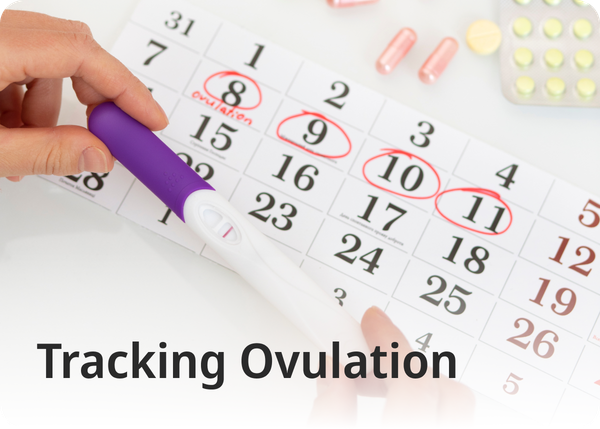

Tracking ovulation helps you understand when you are most fertile.
It can be useful for trying to conceive, avoiding pregnancy, or simply learning more about your menstrual cycle.
Ovulation usually happens once per cycle, but the exact timing can vary.
People track ovulation to:
Identify their fertile window
Increase chances of pregnancy
Avoid pregnancy (with proper methods)
Understand hormonal patterns
Detect irregular cycles
Tracking builds awareness of how your body changes throughout the month.
This method involves tracking your cycle length over several months.
Steps:
Record the first day of each period.
Calculate your average cycle length.
Estimate ovulation about 14 days before your next period.
This method works best for people with regular cycles.
It is less accurate for irregular cycles.
Cervical mucus changes as ovulation approaches.
During the fertile window:
Mucus becomes clear and stretchy.
It feels slippery or wet.
After ovulation, it becomes thicker or dry.
This method helps identify approaching ovulation.
Basal body temperature is your resting temperature taken first thing in the morning.
Temperature rises slightly after ovulation.
The rise is caused by progesterone.
It confirms ovulation has already occurred.
BBT tracking requires consistency for accurate results.
These tests detect the LH surge in urine.
A positive result suggests ovulation may occur within 24–36 hours.
They are widely used for conception planning.
OPKs help predict ovulation before it happens.
Some people notice additional signs around ovulation:
Mild lower abdominal pain
Increased libido
Breast tenderness
Increased social or emotional energy
These signs vary from person to person.
Many apps allow you to log:
Period dates
Symptoms
Temperature readings
Ovulation test results
Apps can help identify patterns over time.
However, predictions are estimates and not always exact.
Ovulation timing can change due to:
Stress
Illness
Travel
Sleep disruption
Hormonal imbalances
No single method is 100% accurate on its own.
Combining multiple tracking methods can improve accuracy.
Ovulation can be tracked using:
Calendar calculations
Cervical mucus changes
Basal body temperature
Ovulation predictor kits
Physical symptoms
Tracking helps increase awareness of your body’s natural cycle and fertility patterns.
Dr. Akanksha is a dedicated dental professional and health educator who believes that healthcare goes beyond treatment-it is about creating awareness, building trust, and empowering individuals to make informed decisions about their well-being. Alongside her clinical expertise in dentistry, she is deeply passionate about public health education, with a special focus on menstrual health, hygiene, and women's wellness.
About PeriodSakhi
PeriodSakhi is your trusted companion for understanding your menstrual health. With easy-to-use tools, it helps you track your periods, ovulation, fertility, moods, and symptoms, while providing insights into your overall reproductive and hormonal health. PeriodSakhi also serves as a supportive online community where women can share experiences, find reliable information, and access expert-backed guidance on menstrual health, PCOS, pregnancy, lifestyle, and more.
Disclaimer
The views, thoughts, and opinions expressed in this article/blog are solely those of the author and do not necessarily reflect the views of PeriodSakhi. Any omissions, errors, or inaccuracies are the responsibility of the author. PeriodSakhi assumes no liability or responsibility for any content presented. Always consult a qualified medical professional for specific advice related to menstrual health, fertility, pregnancy, or related conditions.