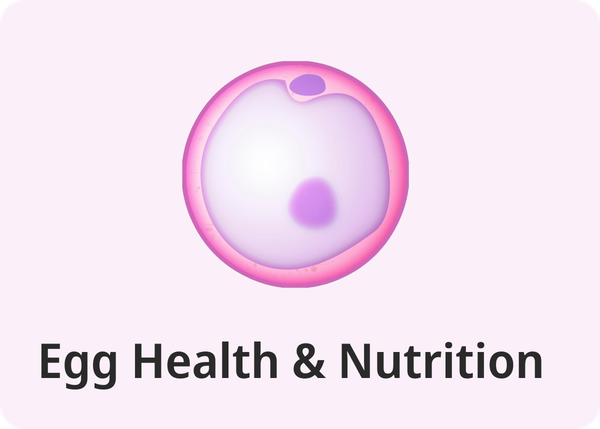

Egg health plays an important role in fertility and reproductive wellness.
While a person is born with all the eggs they will ever have, lifestyle and nutrition can influence the quality of those eggs over time.
Egg health refers to the overall quality and viability of an egg.
Healthy eggs are more likely to:
Be successfully fertilized
Develop into a healthy embryo
Support early pregnancy
Egg quality is influenced by:
Age
Hormonal balance
Overall health
Nutrition
Environmental exposures
Age is one of the most significant factors affecting egg quality.
Egg quantity and quality naturally decline over time.
Fertility gradually decreases after the early 30s.
A more noticeable decline often occurs after age 35.
This is a natural biological process.
A balanced diet supports hormone production and cellular health.
Key nutrients include:
Folate (Vitamin B9)
Supports cell division and DNA production.
Found in leafy greens, beans, and fortified grains.
Iron
Supports oxygen transport in the blood.
Found in lean meats, spinach, and legumes.
Omega-3 Fatty Acids
Support cell membrane health.
Found in fatty fish, flaxseeds, and walnuts.
Vitamin D
Plays a role in hormone regulation.
Obtained from sunlight and fortified foods.
Antioxidants (Vitamins C & E)
Help protect eggs from oxidative stress.
Found in fruits, vegetables, nuts, and seeds.
Staying well-hydrated supports:
Healthy circulation
Hormone transport
Cervical mucus production
Proper blood flow to reproductive organs supports ovarian function.
Healthy lifestyle habits can support egg quality.
Helpful practices include:
Maintaining a healthy weight
Managing stress
Getting regular moderate exercise
Avoiding smoking
Limiting excessive alcohol intake
Getting enough sleep
These habits support hormonal balance and overall reproductive health.
Certain environmental exposures may impact egg health over time.
Examples include:
Smoking
Heavy alcohol use
Exposure to certain chemicals
Chronic stress
Reducing harmful exposures may support long-term reproductive wellness.
While nutrition and lifestyle matter, egg health is influenced by many factors beyond personal control.
Not all fertility challenges are caused by diet or habits.
Focusing on overall health supports the body as a whole, including reproductive function.
Egg health is influenced by:
Age
Hormonal balance
Nutrition
Lifestyle choices
Environmental factors
A nutrient-rich diet and healthy habits can support overall reproductive health and hormonal balance.
Dr. Akanksha is a dedicated dental professional and health educator who believes that healthcare goes beyond treatment-it is about creating awareness, building trust, and empowering individuals to make informed decisions about their well-being. Alongside her clinical expertise in dentistry, she is deeply passionate about public health education, with a special focus on menstrual health, hygiene, and women's wellness.
About PeriodSakhi
PeriodSakhi is your trusted companion for understanding your menstrual health. With easy-to-use tools, it helps you track your periods, ovulation, fertility, moods, and symptoms, while providing insights into your overall reproductive and hormonal health. PeriodSakhi also serves as a supportive online community where women can share experiences, find reliable information, and access expert-backed guidance on menstrual health, PCOS, pregnancy, lifestyle, and more.
Disclaimer
The views, thoughts, and opinions expressed in this article/blog are solely those of the author and do not necessarily reflect the views of PeriodSakhi. Any omissions, errors, or inaccuracies are the responsibility of the author. PeriodSakhi assumes no liability or responsibility for any content presented. Always consult a qualified medical professional for specific advice related to menstrual health, fertility, pregnancy, or related conditions.