
For millions of women and girls across rural India, menstruation was never just a biological process. It was silence. It was shame. It was fear hidden behind closed doors and whispered conversations.
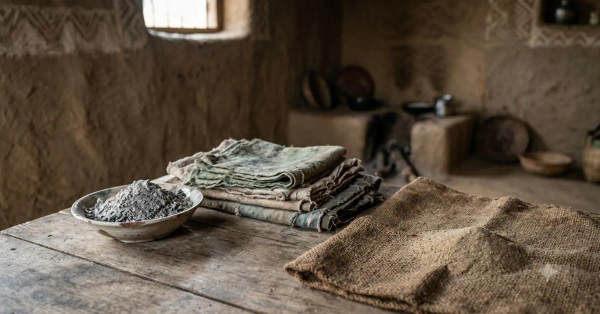
Long before sanitary pads became more accessible, many menstruating girls had no safe option to manage their periods. In villages with limited healthcare facilities, poor sanitation, and deep-rooted taboos, periods were handled using whatever was available nearby — old torn cloth, ash, hay, sand, newspapers, or even dried leaves. These practices were not choices made out of comfort. They were acts of survival.
Even today, some rural communities continue to struggle with period poverty and lack of menstrual education, though awareness has improved significantly over the years.
Imagine a young girl getting her first period in a small village decades ago.
No one had explained menstruation to her. Suddenly, she notices blood on her clothes and panics. Many girls believed they were sick or injured because menstruation was considered too “shameful” to discuss openly. Mothers often handed them an old piece of cloth quietly, with strict instructions:
“Do not tell anyone.”
“Do not dry it outside.”
“Hide it carefully.”
In many homes, girls washed menstrual cloth secretly at night and dried them behind doors, under beds, or in dark corners to avoid being seen by men or neighbors. Without sunlight and proper drying, damp cloth became a breeding ground for bacteria and fungal growth.
This secrecy turned menstruation into something dirty rather than natural.
One of the most widespread menstrual practices in rural India involved using old sarees, blouse pieces, towels, or worn-out fabric as absorbents.
Reusable cloth itself is not unsafe if washed properly with soap, dried in sunlight, and stored hygienically. However, the problem was that many women lacked access to clean water, private toilets, soap, and education about menstrual hygiene.
As a result, cloth was often:
Reused repeatedly without proper washing
Dried indoors in damp spaces
Stored in hidden, unclean corners
Shared among family members in extreme poverty
This increased the risk of:
Reproductive tract infections
Skin irritation
Urinary tract infections
Vaginal itching and rashes
Research shows that unhygienic menstrual absorbents were significantly more common in rural areas due to poverty, social stigma, and lack of accessibility to sanitary products.
In some extremely underprivileged communities, women used ash from chulhas (traditional mud stoves) during menstruation.
Ash was cheap and easily available. It absorbed moisture temporarily, but it was highly unsafe for intimate skin. It could contain:
Dirt
Sharp particles
Chemicals
Bacteria
Continuous exposure sometimes caused severe irritation and infections.
Reports and community discussions over the years have documented the use of ash, sand, and hay as alternatives where menstrual products were unavailable or unaffordable.
In certain tribal and remote regions, women used dry grass, hay, newspaper scraps, or leaves folded inside cloth.
These materials lacked absorbency and hygiene. They often caused discomfort, leakage, and infections. Many girls avoided school during periods because they feared staining their clothes publicly.
Poor menstrual hygiene was directly linked to school absenteeism among adolescent girls. Even today, inadequate menstrual facilities continue to affect girls’ education in several areas.
For many families, buying sanitary pads every month was impossible. Menstrual products were treated as a luxury rather than a necessity.
In remote villages:
Shops rarely stocked pads
Male shopkeepers created embarrassment
Women hesitated to ask openly
Transportation to towns was limited
Studies continue to show that affordability and accessibility remain major barriers in rural menstrual health management.
Menstruation was surrounded by myths and restrictions.
Many girls were told:
Not to enter kitchens
Not to touch pickles
Not to attend temples
Not to sleep beside family members
Not to discuss periods openly
These beliefs made girls feel impure and isolated during menstruation. The silence around periods prevented accurate health education from reaching communities.
The physical discomfort was only one part of the struggle.
Many women remember feeling:
Embarrassed
Dirty
Scared of leaking
Ashamed to buy menstrual products
Isolated during periods
Some girls stopped attending school altogether after puberty because schools lacked toilets, water, or disposal systems.
Others developed infections but never sought treatment because reproductive health discussions were considered inappropriate.
The emotional burden of silence often passed from one generation to another.
Unsafe menstrual practices can contribute to:
Bacterial infections
Fungal infections
Urinary tract infections
Reproductive tract infections
Skin irritation and rashes
Experts have repeatedly highlighted that improperly cleaned cloth and unhygienic absorbents increase infection risks, especially when combined with poor sanitation facilities.
Lack of awareness also meant many women ignored symptoms until conditions became severe.
Over the last two decades, India has seen major efforts to improve menstrual awareness and access.
Government initiatives such as the Menstrual Hygiene Scheme under the Ministry of Health aimed to provide subsidized sanitary pads to adolescent girls in rural areas.
ASHA workers, Anganwadi workers, school teachers, NGOs, and healthcare professionals have played a major role in changing conversations around menstruation.
Today, awareness sessions are conducted in:
Government schools
Village health camps
Community centers
Self-help groups
Healthcare workers teach girls:
How to use menstrual products safely
Importance of changing absorbents regularly
Proper washing and drying methods
Infection warning signs
Disposal practices
Public awareness increased significantly through:
Social campaigns
Grassroots NGOs
Educational workshops
Digital media
Films and influencers speaking openly about periods
The Bollywood film Pad Man helped normalize conversations around menstrual hygiene in mainstream Indian society.
Organizations across India also began producing low-cost sanitary pads locally, creating employment opportunities for rural women while improving access to menstrual products.
Recent campaigns are also promoting:
Reusable cloth pads
Sustainable menstrual products
Menstrual cups
Eco-friendly disposal systems
Several districts have even launched menstrual cup awareness programs through village-level healthcare workers.
India has made progress, but the journey is not over.
Research still shows that many rural women continue using cloth due to cost, habit, and lack of access.
However, there is an important difference today:
Conversations are finally happening.
Girls are learning about periods earlier. Mothers are becoming more open. Schools are slowly improving facilities. Healthcare workers are reaching villages that were once completely disconnected from menstrual education.
The silence is breaking.
The story of menstrual hygiene in rural communities is not just about ash, old rags, or unsafe practices. It is a story of inequality, silence, and resilience.
For decades, countless women managed menstruation with whatever they had because society failed to provide them with education, dignity, and healthcare support.
Understanding these realities matters because period poverty still exists. Menstrual health is not merely a “women’s issue.” It is connected to education, public health, gender equality, and human dignity.
The progress seen today is the result of persistent work by healthcare workers, teachers, NGOs, public influencers, and brave women who chose to speak openly about menstruation despite years of stigma.
And perhaps the biggest change of all is this:
Young girls are slowly learning that periods are not something to hide in shame, they are a natural part of life.
Frontiers in Global Women’s Health – Menstrual hygiene management practices in rural Odisha
BMC Women’s Health – Unhygienic menstrual practices among young women in India
Times of India – Menstrual health in rural India
Business Standard – Menstrual hygiene drive and unsafe practices
Reddit community discussions on menstrual stigma and unsafe practices
About PeriodSakhi
PeriodSakhi is your trusted companion for understanding your menstrual health. With easy-to-use tools, it helps you track your periods, ovulation, fertility, moods, and symptoms, while providing insights into your overall reproductive and hormonal health. PeriodSakhi also serves as a supportive online community where women can share experiences, find reliable information, and access expert-backed guidance on menstrual health, PCOS, pregnancy, lifestyle, and more.
Disclaimer
The views, thoughts, and opinions expressed in this article/blog are solely those of the author and do not necessarily reflect the views of PeriodSakhi. Any omissions, errors, or inaccuracies are the responsibility of the author. PeriodSakhi assumes no liability or responsibility for any content presented. Always consult a qualified medical professional for specific advice related to menstrual health, fertility, pregnancy, or related conditions.