Learn whether you can get pregnant on your period, the chances of pregnancy during menstruation, how ovulation affects fertility, and whether any days are truly safe from pregnancy.
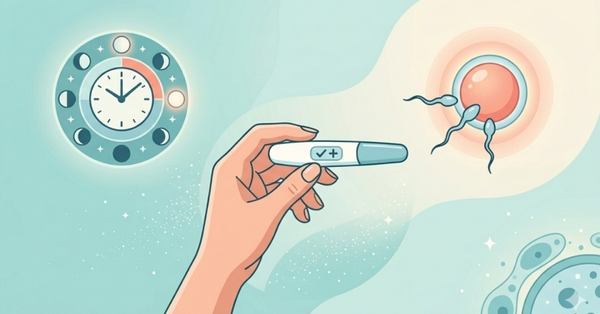

Many people grow up hearing that you can’t get pregnant during your period and that these days are completely safe. But in real life, that’s not always true. Doctors do see cases where pregnancy happens after sex during or around menstrual bleeding. Pregnancy during your period is less likely than around ovulation, but it’s still possible. Understanding why can help you make safer, more informed decisions about contraception and planning a pregnancy.
A clinical review published in the journal Human Reproduction examined fertility patterns among women tracking their menstrual cycles and sexual activity. The researchers analysed thousands of menstrual cycles to understand when conception was most likely to occur. One striking observation from the data was that a small percentage of women reported pregnancies from intercourse that occurred very close to, or even during, menstruation.
Although the probability was lower compared with the fertile window around ovulation, it was not zero. This finding has changed the way many healthcare professionals counsel women about fertility and contraception. For years, the belief that menstruation is a completely “safe” time for intercourse was widely circulated. Modern reproductive research now shows that this assumption is not always correct.
This article explains, in simple language, how your cycle works, when pregnancy is more or less likely, and in which real-life situations you can get pregnant during your period.
A period is the shedding of the lining of the uterus (endometrium) at the end of a cycle in which pregnancy has not occurred. Estrogen and progesterone hormones decrease, and the developed lining disintegrates to exit the body in the form of blood and tissues.
So if the old egg is gone, how does pregnancy during period days ever happen? The answer lies in ovulation timing and sperm survival. This can feel confusing at first, especially if you’ve always been told your period is a “safe time.”
A menstrual cycle begins on the first day of menstrual bleeding and ends on the day before the next period starts. The average cycle length is about 28 days, but many women naturally have cycles ranging from 21 to 35 days.
The cycle includes several hormonal phases that prepare the body for potential pregnancy.
During the follicular phase, the body releases follicle stimulating hormone. This hormone helps an ovarian follicle mature and eventually release an egg.
The ovulation phase occurs when the ovary releases the egg into the fallopian tube. This is the most fertile time in the cycle. This usually happens around day 14, but in real life, ovulation can occur earlier or later, even in regular cycles.
After ovulation, the luteal phase begins. If the egg is not fertilized, hormone levels fall and menstruation occurs.
The fertile window is roughly:
The 5 days before ovulation, and
The day of ovulation.
This is because:
It is possible for sperm to survive inside the female reproductive tract for about 3–5 days in favorable conditions.
The egg, once released, lives for about 12–24 hours.
If live sperm are already waiting in the fallopian tubes when ovulation happens, pregnancy can occur - even if intercourse was a few days earlier.
Pregnancy typically occurs when sperm fertilizes the egg during the fertile window, which includes the five days before ovulation and the day of ovulation itself.
However, variations in cycle length and sperm survival can make the situation more complex.
Although menstruation generally indicates that the previous cycle did not result in pregnancy, intercourse during bleeding can still lead to conception under certain circumstances.
Medical literature shows that sperm can remain alive in the female reproductive tract for up to five days.
If intercourse occurs near the end of a period and ovulation happens earlier than expected, surviving sperm may fertilize the egg.
Women with shorter cycles may ovulate soon after menstruation ends.
For example, in a 21-day cycle, ovulation may occur around day 7. If intercourse occurs on day 4 or 5 during the final days of menstrual bleeding, sperm could still be present when ovulation occurs.
Irregular cycles can make ovulation unpredictable. Some women ovulate earlier or later than expected, which may increase the chance of pregnancy even during bleeding.
Sometimes bleeding that resembles a period may actually be caused by:
Ovulation spotting
Hormonal fluctuations
Implantation bleeding
Breakthrough bleeding due to hormonal contraception
In these situations, intercourse during bleeding could occur close to ovulation without the person realizing it.
A large fertility study published in The British Medical Journal examined menstrual cycle data from more than 200 women who were trying to conceive.
Researchers found that:
The fertile window varied widely between individuals.
Ovulation did not always occur on day 14 of the cycle.
Only about 30 percent of women had their fertile window entirely between days 10 and 17.
This means that in some cycles, ovulation occurred earlier than expected.
Another analysis published in Human Reproduction evaluated thousands of cycles and estimated that around 2 to 5 percent of women could potentially conceive from intercourse during menstruation, particularly if their cycles were short.
While the probability is relatively low, these findings confirm that pregnancy during menstruation is biologically possible.
For most women with regular cycles, the likelihood of pregnancy during menstruation is low. Menstrual bleeding typically occurs several days after ovulation, when the egg is no longer viable. An egg survives only about 12 to 24 hours after ovulation.
Because of this limited lifespan, fertilization during active menstruation is uncommon. However, biological variation in ovulation timing means that no point in the cycle can be considered completely risk-free without contraception.
If intercourse occurs during menstruation and pregnancy is possible, early signs may appear within the following weeks.
Common early symptoms include:
Missed period
Breast tenderness
Nausea
Fatigue
Frequent urination
Mild abdominal cramping
However, these symptoms are not reliable for confirming pregnancy.
The most accurate method is a pregnancy test that detects the hormone human chorionic gonadotropin.
Medical guidelines recommend taking a home pregnancy test after the first missed period. Testing too early may lead to a false negative result because hormone levels may still be low.
If pregnancy is suspected despite a negative test, repeating the test after several days or consulting a healthcare provider is advisable. A doctor may confirm pregnancy using a blood test or ultrasound examination.
Healthcare professionals recommend seeking medical advice if:
A pregnancy test is positive
Periods are repeatedly irregular
Unusual bleeding occurs
Severe abdominal pain develops
There are symptoms of possible ectopic pregnancy
Early medical care is important to ensure a healthy pregnancy and to rule out complications.
Because pregnancy during menstruation is possible, relying on the “safe period” method alone is not considered reliable contraception.
According to guidelines from the World Health Organization, effective contraceptive options include:
Condoms
Oral contraceptive pills
Intrauterine devices
Hormonal implants
Injectable contraceptives
These methods significantly reduce the risk of unintended pregnancy when used correctly.
Reproductive health specialists consistently emphasize that menstrual cycles vary greatly between individuals.
Ovulation timing can shift due to factors such as:
Stress
Illness
Travel
Hormonal changes
Lifestyle factors
Because of these variations, predicting completely safe days without fertility tracking or contraception can be difficult.
Education about reproductive health and accurate menstrual tracking can help individuals make informed decisions about fertility and family planning.
Pregnancy during a period is not the most common pathway to conception, but it remains biologically possible. The combination of sperm survival, variations in ovulation timing, and irregular cycles can create circumstances in which fertilization occurs after intercourse during menstruation. Understanding how the menstrual cycle functions allows women to better interpret their bodies and manage reproductive health. Reliable contraception and awareness of fertility patterns remain the most effective ways to prevent unintended pregnancy.
Knowledge, rather than assumptions about “safe days,” is the key to informed reproductive choices. If you have questions about your menstrual cycle, fertility, or the chances of pregnancy during different phases of the cycle, seeking accurate medical advice can make a significant difference. Every woman’s body and cycle pattern is unique, and personalized guidance helps in making informed reproductive health decisions. If you are experiencing irregular cycles, unusual bleeding, or concerns about possible pregnancy, it is best to speak with a qualified gynaecologist.
Understand your cycle better with trusted guidance on periods, fertility, and reproductive health from Period Sakhi. Track periods, symptoms, and cycle patterns easily with the Period Sakhi App for smarter, stress-free health management.
Yes, it is possible to get pregnant during your period, although the chances are generally low. Pregnancy can occur if you ovulate earlier than expected and sperm survive in the reproductive tract for up to five days after intercourse. Women with short or irregular menstrual cycles are more likely to experience this scenario, making pregnancy during menstruation biologically possible.
For most women with regular menstrual cycles, the chance of getting pregnant during menstruation is low but not zero. Research suggests that approximately 2–5% of women may conceive from intercourse during their period, particularly if they have shorter menstrual cycles or unpredictable ovulation. Since sperm can survive for several days, intercourse during the last days of a period may still result in pregnancy if ovulation occurs soon afterward.
There are no completely 'safe' days in the menstrual cycle if you are trying to avoid pregnancy without using contraception. While the risk of pregnancy is generally lowest during menstruation and just after it for women with regular cycles, ovulation timing can vary due to stress, illness, hormonal changes, or naturally irregular cycles. Because sperm can live inside the female reproductive tract for up to five days, relying on the calendar or 'safe period' method alone is not considered a reliable form of birth control. Using condoms or other effective contraceptive methods provides much better protection against unintended pregnancy.
American College of Obstetricians and Gynecologists. Menstrual Cycle and Ovulation Guidelines.
World Health Organization. Family Planning and Contraception Guidelines.
National Health Mission India. Reproductive and Maternal Health Program.
Wilcox AJ et al. Timing of sexual intercourse in relation to ovulation. British Medical Journal.
Stanford JB et al. Probability of conception during menstrual cycles. Human Reproduction.
Berek and Novak. Gynecology, 16th Edition.
Williams Obstetrics. McGraw Hill Medical.
Dr. Akanksha is a dedicated dental professional and health educator who believes that healthcare goes beyond treatment-it is about creating awareness, building trust, and empowering individuals to make informed decisions about their well-being. Alongside her clinical expertise in dentistry, she is deeply passionate about public health education, with a special focus on menstrual health, hygiene, and women's wellness.
About PeriodSakhi
PeriodSakhi is your trusted companion for understanding your menstrual health. With easy-to-use tools, it helps you track your periods, ovulation, fertility, moods, and symptoms, while providing insights into your overall reproductive and hormonal health. PeriodSakhi also serves as a supportive online community where women can share experiences, find reliable information, and access expert-backed guidance on menstrual health, PCOS, pregnancy, lifestyle, and more.
Disclaimer
The views, thoughts, and opinions expressed in this article/blog are solely those of the author and do not necessarily reflect the views of PeriodSakhi. Any omissions, errors, or inaccuracies are the responsibility of the author. PeriodSakhi assumes no liability or responsibility for any content presented. Always consult a qualified medical professional for specific advice related to menstrual health, fertility, pregnancy, or related conditions.