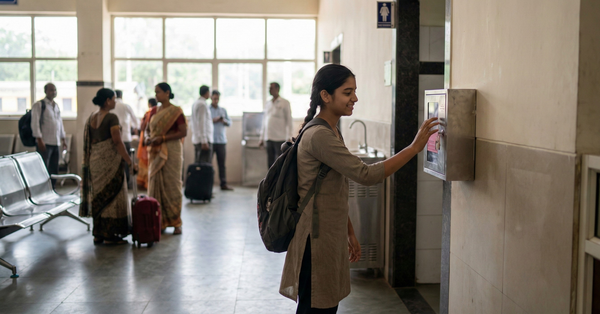
Periods do not arrive with prior notice, nor do they wait for convenient circumstances. They can start during school hours, in the middle of a workday, while travelling, or during long queues at airports and public transport hubs. Yet, across India, the systems designed to support women in such moments remain largely absent. When a woman is caught unprepared during her period, the lack of access to sanitary products is not a minor inconvenience. It becomes a matter of dignity, health, and basic human comfort.
Pad vending machines in public spaces are often framed as an optional amenity or a “nice-to-have” facility. This framing is deeply flawed. In reality, pad vending machines are a public necessity much like clean toilets, drinking water, or first-aid kits.
Menstruation affects nearly half the population for almost 40 years of their lives. In India alone, millions of women and adolescent girls menstruate every day. Despite this, public infrastructure is designed as if periods either do not exist or should be managed invisibly.
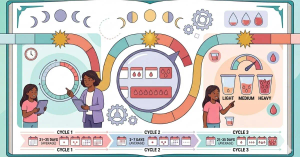
Unlike hunger or thirst, periods cannot be postponed. Bleeding can begin suddenly, especially in:
Expecting women to always carry sanitary products ignores the unpredictable nature of menstrual cycles.
When sanitary pads are unavailable in public spaces, women are forced into unsafe or distressing alternatives.
Common consequences include:
For school-going girls, a sudden period without access to pads often leads to absenteeism. For working women, it can mean lost productivity or leaving work early. These are preventable outcomes.
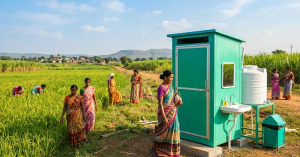
Pad vending machines are especially important in:
These are places where women spend long hours and may not be able to leave easily to buy sanitary products.
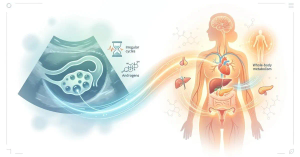
Inadequate menstrual hygiene is linked to:
Public health systems invest heavily in disease prevention, yet menstrual hygiene support is often overlooked. Pad vending machines act as a preventive health measure by ensuring timely access to clean, safe products.
From a public health perspective, providing sanitary pads is no different from providing soap, clean water, or medical waste disposal facilities.
A city or institution that fails to provide menstrual products is indirectly excluding women from public life.
When women fear:
They modify their behaviour—avoiding travel, long meetings, or public spaces altogether.
True gender-inclusive infrastructure recognises that women’s biological needs require specific solutions. Pad vending machines are a simple yet powerful step toward making public spaces genuinely inclusive.
Periods already come with physical discomfort for many women. The added stress of not having a pad can trigger:
These emotional effects are rarely discussed, but they matter. Access to a pad at the right moment restores not just comfort, but composure and self-respect.
One of the common arguments against installing pad vending machines is cost. However, the reality is different.
Pad vending machines:
Compared to the economic loss caused by absenteeism, reduced productivity, and health complications, the investment is small and sustainable.
There have been multiple instances in public discourse where women or even male family members have struggled to find sanitary pads during emergencies at airports, railway stations, or delayed travel situations. These moments expose how fragile our systems are.
A father searching helplessly for a pad for his daughter, or a woman stuck during a long delay without access to hygiene products, highlights a simple truth: periods do not pause for infrastructure gaps.
Pad vending machines prevent such crises before they happen.
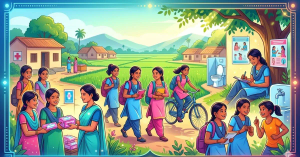
For adolescent girls, access to pads in school can:
Many girls experience their first period in school. A pad vending machine in a school washroom is not a luxury—it is basic support during a formative moment.
Sanitary pad distribution is often treated as charity or welfare. This approach reinforces stigma.
Pad vending machines shift the narrative:
Menstrual hygiene should be viewed as a right, not a favour.
Pad vending machines are not about convenience. They are about preparedness, dignity, and equity. When periods cannot wait, infrastructure must be ready. Public spaces that claim to serve everyone must acknowledge menstruation as a normal biological process and respond accordingly.
Installing pad vending machines is a small structural change with a massive social impact. It tells women and girls that their bodies are considered, their needs are valid, and their presence in public spaces is respected.
In a truly inclusive society, access to menstrual hygiene products is not optional. It is essential.
About PeriodSakhi
PeriodSakhi is your trusted companion for understanding your menstrual health. With easy-to-use tools, it helps you track your periods, ovulation, fertility, moods, and symptoms, while providing insights into your overall reproductive and hormonal health. PeriodSakhi also serves as a supportive online community where women can share experiences, find reliable information, and access expert-backed guidance on menstrual health, PCOS, pregnancy, lifestyle, and more.
Disclaimer
The views, thoughts, and opinions expressed in this article/blog are solely those of the author and do not necessarily reflect the views of PeriodSakhi. Any omissions, errors, or inaccuracies are the responsibility of the author. PeriodSakhi assumes no liability or responsibility for any content presented. Always consult a qualified medical professional for specific advice related to menstrual health, fertility, pregnancy, or related conditions.
Start the conversation
No comments yet. Start the conversation by leaving the first comment!