Ovulation is a key part of the menstrual cycle.
It is the process that makes pregnancy possible.
Ovulation is when one ovary releases a mature egg (ovum).
This usually happens once during each menstrual cycle.
Ovulation usually occurs in the middle of the cycle.
Cycle length differences mean ovulation timing is different for everyone.
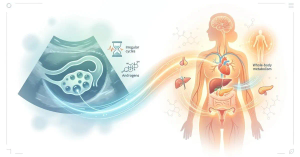
Ovulation is controlled by several hormones.
Some people notice physical changes around ovulation.
Common signs include:
Not everyone feels noticeable symptoms.
The fertile window includes the days when pregnancy is most likely.
Pregnancy can only occur if sperm meets the egg during this window.
After ovulation, the body enters the luteal phase.
Sometimes ovulation does not happen. This is called anovulation.
Possible causes include:
Irregular ovulation can lead to irregular periods.
Ovulation can be tracked in several ways:
Tracking can help understand fertility patterns or detect irregularities.
Ovulation is a normal and essential part of reproductive health.
Not every cycle is identical.
Understanding ovulation helps with family planning, cycle awareness, and recognizing changes in reproductive health.
About PeriodSakhi
PeriodSakhi is your trusted companion for understanding your menstrual health. With easy-to-use tools, it helps you track your periods, ovulation, fertility, moods, and symptoms, while providing insights into your overall reproductive and hormonal health. PeriodSakhi also serves as a supportive online community where women can share experiences, find reliable information, and access expert-backed guidance on menstrual health, PCOS, pregnancy, lifestyle, and more.
Disclaimer
The views, thoughts, and opinions expressed in this article/blog are solely those of the author and do not necessarily reflect the views of PeriodSakhi. Any omissions, errors, or inaccuracies are the responsibility of the author. PeriodSakhi assumes no liability or responsibility for any content presented. Always consult a qualified medical professional for specific advice related to menstrual health, fertility, pregnancy, or related conditions.
Start the conversation
No comments yet. Start the conversation by leaving the first comment!