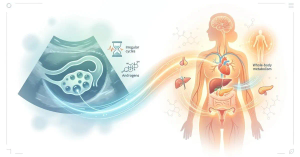
Ovulation is not a random event — it is the result of a carefully coordinated hormonal process between the brain and the ovaries.
This system is known as the hypothalamic–pituitary–ovarian (HPO) axis.
Each month, hormones rise and fall in a specific pattern to mature an egg, release it, and prepare the body for possible pregnancy.
The cycle begins in the brain.
The hypothalamus releases a hormone called GnRH (Gonadotropin-Releasing Hormone).
GnRH signals the pituitary gland to release two key hormones:
These hormones travel through the bloodstream to the ovaries.
At the start of the cycle, FSH levels rise.
FSH stimulates several ovarian follicles (each containing an immature egg) to begin maturing.
As the follicle matures, it produces estrogen.
Estrogen plays a major role before ovulation.
As the dominant follicle grows, estrogen levels steadily increase.
Estrogen’s main functions:
When estrogen reaches a high enough level, it triggers an important hormonal shift.
High estrogen levels cause a sudden and sharp increase in LH.
This is called the LH surge.
Ovulation predictor kits work by detecting this LH surge in urine.
Once the egg is released, the empty follicle becomes a structure called the corpus luteum.
The corpus luteum produces progesterone.
Progesterone’s role includes:
If fertilization does not occur:
Ovulation depends on proper timing and balance between hormones.
If hormones are disrupted, ovulation may not occur. This is called anovulation.
Possible causes include:
When ovulation does not happen regularly, periods may become irregular.
These hormonal shifts affect more than just egg release.
They can influence:
Understanding hormonal changes helps explain why people may feel different at various points in their cycle.
Ovulation is the result of a coordinated hormonal sequence:
This hormonal pattern repeats monthly as part of normal reproductive health.
About PeriodSakhi
PeriodSakhi is your trusted companion for understanding your menstrual health. With easy-to-use tools, it helps you track your periods, ovulation, fertility, moods, and symptoms, while providing insights into your overall reproductive and hormonal health. PeriodSakhi also serves as a supportive online community where women can share experiences, find reliable information, and access expert-backed guidance on menstrual health, PCOS, pregnancy, lifestyle, and more.
Disclaimer
The views, thoughts, and opinions expressed in this article/blog are solely those of the author and do not necessarily reflect the views of PeriodSakhi. Any omissions, errors, or inaccuracies are the responsibility of the author. PeriodSakhi assumes no liability or responsibility for any content presented. Always consult a qualified medical professional for specific advice related to menstrual health, fertility, pregnancy, or related conditions.
Start the conversation
No comments yet. Start the conversation by leaving the first comment!