“Lock up your libraries if you like; but there is no gate, no lock, no bolt that you can set upon the freedom of my mind.” — Virginia Woolf
Education is not merely about classrooms, textbooks, or examinations. It is about dignity, safety, and the ability to participate fully without fear or shame. For millions of school-going girls in India, menstruation becomes the point where this dignity breaks down. When a girl misses school because she lacks access to sanitary pads, private toilets, or disposal facilities, it is not a personal failure. It is a systemic one.
The denial of menstrual access is not a minor inconvenience. It is a direct violation of a girl’s constitutional right to education, equality, health, and dignity.
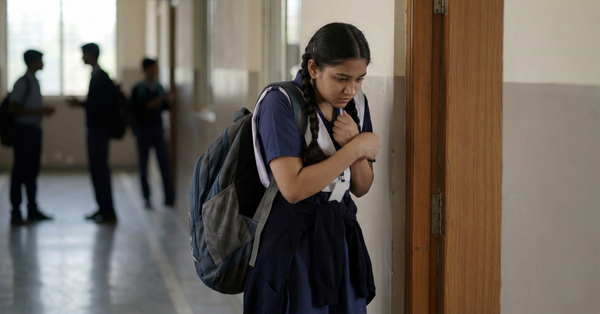
In India, many girls experience their first period between the ages of 10 and 14—often during school hours. When schools fail to provide basic menstrual support, the consequences are immediate and lasting.
Girls may:
Repeated absenteeism leads to learning gaps, falling grades, and increased dropout risk. What begins as a biological event becomes an educational disadvantage.
The Indian Constitution guarantees free and compulsory education for all children aged 6 to 14 years. This right is meaningless if girls cannot physically attend school due to lack of menstrual support.
Education that excludes menstruating girls is not equal education.
The Supreme Court of India has repeatedly interpreted Article 21 to include the right to live with dignity, privacy, and health. Forcing a girl to sit through school hours while bleeding without access to hygiene products is a denial of dignity.
When boys can attend school uninterrupted but girls cannot due to biological neglect, equality before law is compromised.
Discrimination need not be explicit. Policies that ignore menstruation create indirect discrimination based on sex.
Menstrual hygiene is closely linked to health outcomes. Lack of access to sanitary products can lead to:
Article 47 of the Constitution places a duty on the State to improve public health. Ignoring menstrual hygiene in schools directly violates this directive principle.
Health and education are inseparable. A child cannot learn when her health is compromised.
The Right of Children to Free and Compulsory Education Act, 2009 mandates:
Yet, menstrual hygiene infrastructure is rarely specified or enforced. Toilets without pads, disposal bins, or privacy are not “child-friendly” for half the student population.
A law that ensures classrooms but ignores menstrual needs is incomplete.
Silence around menstruation worsens the problem. Girls are taught to hide their periods, not ask for help, and endure discomfort quietly.
This stigma results in:
Education cannot thrive in an environment where a girl is taught that her body is a problem.
Schools are not doing girls a favour by providing sanitary pads. They are fulfilling a constitutional obligation.
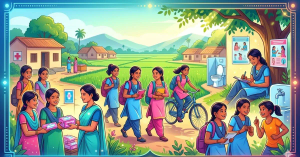
Basic menstrual access in schools should include:
Without these, schools fail in their duty of care.
India has recognised menstrual health through:
Yet, inconsistent implementation leaves millions of girls unsupported. Policy acknowledgment without ground-level action becomes symbolic, not transformative.
No child should have to prove resilience by sitting through pain, bleeding, or humiliation to earn an education.
When a girl drops out because of periods, the system has failed—not her.
Denying menstrual access:
This is not a woman’s issue. It is a constitutional issue.
Justice is not only delivered in courts. It is delivered in classrooms, washrooms, and policies that decide who gets to stay and who is pushed out.
Providing menstrual access:
Anything less is a quiet form of exclusion.
Virginia Woolf spoke of freedom of the mind. But the mind cannot be free when the body is denied dignity. A girl cannot focus on learning when she is worried about bleeding through her uniform or being laughed at.
When schools fail to provide menstrual access, they violate not only health standards but constitutional rights. Education that ignores menstruation is incomplete. Equality that excludes girls’ bodies is hollow.
If India truly believes in education as a fundamental right, menstrual access must become non-negotiable. Dignity cannot wait. Neither can a girl’s future.
About PeriodSakhi
PeriodSakhi is your trusted companion for understanding your menstrual health. With easy-to-use tools, it helps you track your periods, ovulation, fertility, moods, and symptoms, while providing insights into your overall reproductive and hormonal health. PeriodSakhi also serves as a supportive online community where women can share experiences, find reliable information, and access expert-backed guidance on menstrual health, PCOS, pregnancy, lifestyle, and more.
Disclaimer
The views, thoughts, and opinions expressed in this article/blog are solely those of the author and do not necessarily reflect the views of PeriodSakhi. Any omissions, errors, or inaccuracies are the responsibility of the author. PeriodSakhi assumes no liability or responsibility for any content presented. Always consult a qualified medical professional for specific advice related to menstrual health, fertility, pregnancy, or related conditions.
Start the conversation
No comments yet. Start the conversation by leaving the first comment!