Ovulation and fertility are among the most misunderstood topics in women’s reproductive health. While social media and informal discussions have made these subjects more visible, misinformation still spreads rapidly. Understanding how your body’s hormones actually work during the menstrual cycle can help you make informed choices whether your goal is conception, contraception, or simply knowing your body better.
This is one of the most common misconceptions. The “Day 14 rule” comes from the assumption that every woman has a 28-day cycle with ovulation precisely in the middle. In reality, cycle lengths vary greatly from 21 to 35 days and ovulation can occur earlier or later depending on hormonal fluctuations, stress, nutrition, and lifestyle.
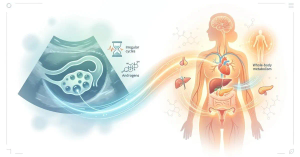
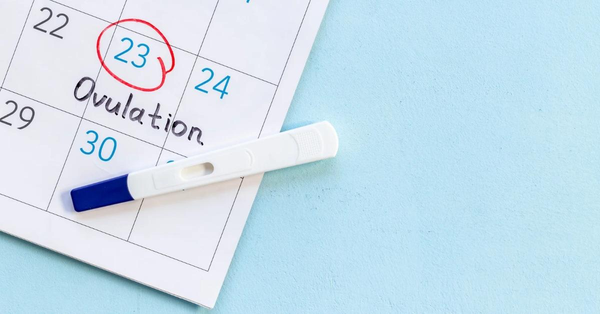
Medically, ovulation is triggered when a surge in luteinizing hormone (LH) follows a gradual rise in estrogen secreted by the developing follicle. This LH surge usually occurs 24–36 hours before the egg is released, and the exact timing differs for every woman. Therefore, tracking symptoms such as cervical mucus changes, basal body temperature, or using ovulation predictor kits (OPKs) offers a more accurate understanding than simply counting days.
The fertile window is broader than most people think. Sperm can survive inside the female reproductive tract for up to five days, while the egg remains viable for about 12–24 hours after ovulation. This means that unprotected intercourse up to five days before ovulation can still result in conception.
Fertility depends not only on the presence of a mature egg but also on the synchronized action of estrogen, LH, and progesterone, which prepare the uterus and cervical environment to support sperm and implantation.
Although it’s uncommon, early ovulation can happen shortly after menstruation, especially in women with shorter cycles. Since sperm can remain active for several days, intercourse during or right after periods can occasionally lead to pregnancy. Hormonal irregularities, stress, or recovery after illness can all shift ovulation timing unpredictably.
Mild ovulation pain (known medically as mittelschmerz) is experienced by many women and usually occurs due to follicular rupture, the moment the egg is released from the ovary. It’s a physiological sign, not a pathology. However, severe or persistent pain could indicate underlying conditions like endometriosis, ovarian cysts, or pelvic inflammatory disease, which may affect fertility and require medical attention.
Stress doesn’t directly prevent ovulation, but chronic stress can alter hypothalamic-pituitary-ovarian (HPO) axis function, the hormonal circuit controlling the menstrual cycle. Elevated cortisol levels can suppress gonadotropin-releasing hormone (GnRH), disrupting the secretion of LH and follicle-stimulating hormone (FSH), leading to delayed or missed ovulation.
Mind-body interventions such as adequate sleep, yoga, and mindfulness have been shown to restore more regular hormonal rhythms in some women.
Hormonal contraceptives temporarily suppress ovulation by maintaining stable levels of estrogen and progestin, preventing the LH surge. Once stopped, most women resume normal ovulatory cycles within one to three months. Temporary post-pill irregularity is common but not permanent. Fertility usually returns to baseline unless other unrelated issues exist, such as polycystic ovary syndrome (PCOS) or thyroid disorders.
Irregular cycles may indicate inconsistent ovulation but don’t automatically mean infertility. Many women with PCOS, thyroid imbalance, or mild luteal phase defects can conceive with lifestyle modifications or medical guidance. Detecting ovulation through ultrasound follicular monitoring or hormonal assays (like serum progesterone on Day 21) helps assess fertility potential more accurately.
Both egg quantity and oocyte quality decline with age, particularly after 35. With advancing age, there is a higher rate of chromosomal abnormalities and reduced mitochondrial efficiency in oocytes, leading to lower implantation and higher miscarriage rates. This decline is driven by natural changes in hormonal sensitivity and ovarian reserve, measured through anti-Müllerian hormone (AMH) and antral follicle count (AFC).
However, healthy lifestyle practices like maintaining optimal weight, avoiding smoking and alcohol, and ensuring adequate micronutrient intake, support better hormonal and reproductive health at any age.
While some women notice clear signs such as clear, stretchy cervical mucus, a slight rise in basal body temperature, or mild lower abdominal discomfort, many others do not experience any noticeable symptoms. The only definitive way to confirm ovulation is through medical evaluation—serum progesterone testing, transvaginal ultrasound, or LH surge testing.
Roughly 40–50% of infertility cases involve male factors. Sperm count, motility, and morphology can all be influenced by lifestyle, infections, heat exposure, and oxidative stress. Healthy ovulation alone cannot result in conception if sperm parameters are compromised. Hence, fertility should always be viewed as a shared responsibility between partners.
Understanding ovulation and fertility requires moving beyond social myths and recognizing the delicate hormonal coordination behind reproduction. From the brain’s hypothalamus to the ovaries, every step is influenced by an interplay of hormones, timing, and lifestyle factors. Whether you’re trying to conceive, avoid pregnancy, or simply learn your cycle better, being informed empowers you to make decisions aligned with your body’s natural rhythm.
About PeriodSakhi
PeriodSakhi is your trusted companion for understanding your menstrual health. With easy-to-use tools, it helps you track your periods, ovulation, fertility, moods, and symptoms, while providing insights into your overall reproductive and hormonal health. PeriodSakhi also serves as a supportive online community where women can share experiences, find reliable information, and access expert-backed guidance on menstrual health, PCOS, pregnancy, lifestyle, and more.
Disclaimer
The views, thoughts, and opinions expressed in this article/blog are solely those of the author and do not necessarily reflect the views of PeriodSakhi. Any omissions, errors, or inaccuracies are the responsibility of the author. PeriodSakhi assumes no liability or responsibility for any content presented. Always consult a qualified medical professional for specific advice related to menstrual health, fertility, pregnancy, or related conditions.
Start the conversation
No comments yet. Start the conversation by leaving the first comment!